Philosophy
fromPsychology Today
9 minutes agoAre You a Nihilist or Anhedonic?
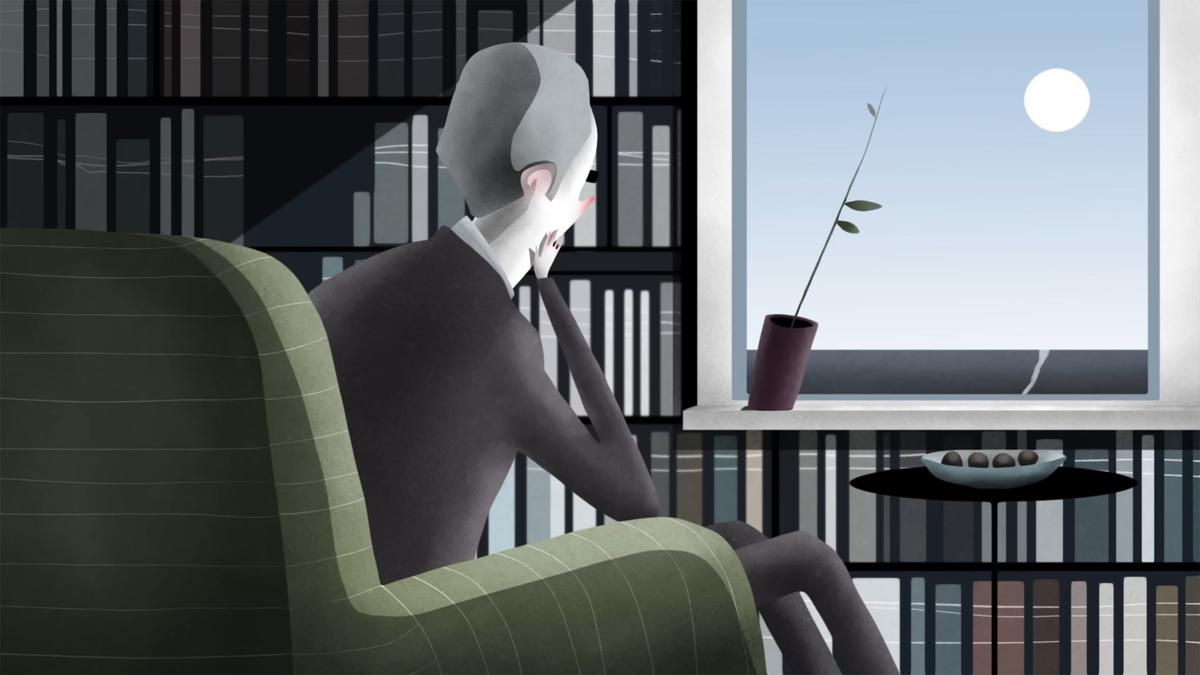
Nihilism questions inherent meaning, while anhedonia, a depression symptom, may overlap with it, posing risks if misinterpreted as a philosophy.
Many reported vivid dreams featuring lost loved ones, while others saw symbols of transition, including doors, stairways and light. According to the researchers, these themes may offer psychological relief and meaning to people facing end of life.
The identity had become so central to who I thought I was that letting it go felt like admitting that entire chapter of my life had been pointless.
The concept album is a response to the brutal murder of Breedlove's father and stepmother at the hands of his stepbrother. The frame—the first song and the last—of the album is about the murders and their aftermath. But this is not a true crime record.

In the afternoon of life, one had to find that meaning from within. This realization struck the author profoundly upon retirement, when all external markers of identity—job sites, customers, crew management—vanished, leaving only the question of personal identity stripped of professional achievement and external validation.
In particular, I have a fascination with one-hit wonders, songwriters who at some point inexplicably produced a morsel of unequivocal genius, a sonic masterpiece, like a portal into an unknown universe... three to five timeless minutes that hover with esoteric intelligence as if heaven itself reached down and caressed a human voice... a song that brushes close enough to the divine to leave us believing in a force greater than our flesh and bones.
So long as I manage to avoid lightbulbs or stay out of wine glasses, the buzzing will inevitably give way to silence. My wings will abruptly stop flapping and I'll careen towards the ground like an asteroid. I'll become a speck on a rug, a bit of debris absent-mindedly vacuumed up by someone who has no idea what adventures I've been on in the past minute.
We were both in our 60s and had no health problems that were about to kill us any time soon, but our parents had recently died, so end of life issues were on our minds. Plus everyone knows writing a will is the responsible thing to do. We'd talked to lawyers. While I considered my friend a close one, we didn't have many friends in common. I knew he had a brother and sister.
Dr. Bessel van der Kolk writes in 'The Body Keeps the Score' that trauma doesn't just live in our minds - it reshapes how our bodies respond to emotion. Sometimes, when we experience significant loss, our nervous system essentially decides that feeling is too dangerous and shuts down the whole operation.
A mentor once told me that, when writing a research statement for a professorship, I had to start with the most ambitious pitch I could imagine - and then go ten times bigger. It's tricky enough to do this as a cosmologist, given that the topic of study is the entire Universe. But there is a quest that is more ambitious still: to find out 'what are we doing here?'
People who had never married 'generally fared as well as, if not better than, married persons.' They also found that people who had no children were no different from parents in the quality of their life in their last month.
Metaphors are linked to how we experience the world around us, according to seminal work by researchers George Lakoff and Mark Johnson. In English, we "move forward" with our lives and don't "retreat into" the past. We speak about people who are "cold as ice" and "heavy" matters we need to resolve. Some of these metaphorical expressions are more than just, well, expressions-they are actually based on our sensory experiences. This mind-body link is called "embodied cognition."
All of us live in an age where we're bombarded by social media and artificial intelligence - when striving to be your authentic self becomes an increasingly difficult task. Yet, even if it has somehow become a common goal, it is unclear how many of us can truly define the "authenticity" that we say we are pursuing.
Have you ever experienced an encounter with an image in the sky or thought that the lyrics to your favourite song related to your personal life? These are examples of having moments that are either unsettling, poetic, or just plain strange. Such experiences are known as apophenia, expressions of our innate tendency to find patterns and attribute meaning to things that are random.
Chronic illness changes everything. At the beginning of many people's chronic illness journey, they may feel as if illness is an annoying detour that will be forgotten as soon as they can heal and get back to business as usual. As it sinks in that illness has changed them irrevocably, they realize that their pre-illness self is gone forever. This painful reckoning with pain, fragility, mortality and identity leads to an existential crisis. In addressing this crisis, existential therapy can be extremely helpful.
This APA Blog series has broadly explored philosophy and technology with a throughline on the influence of technology and AI on well-being. This month's post brings those themes into focus recounting a vital Washington Post Opinion piece by friend of the APA Blog, Samuel Kimbriel. Samuel is the founding director of the Aspen Institute's Philosophy and Society Initiative and Editor at Large for Wisdom of Crowds. We collaborated on a Substack Newsletter about intellectual ambition, building on his essay, Thinking is Risky.
There were perhaps 30 people - mostly elderly, along with a few young families and some teenagers. What struck me was not devotion, but density: a quiet, shared weight of lived suffering. Not dramatic or loud - just present. Many faces seemed marked by difficulty. I had entered seeking calm. Instead, I encountered vulnerability. Then I looked up at the crucifix - Christ suffering on the cross - not as doctrine, but as an image.
I was suspicious, even cynical, about what the world insisted was vital to the life of my unborn child. I was partly sceptical because so much of the advice I was getting was contradictory. But I was also suspicious because I'd spent most of my 20s reading Nietzsche. Nietzsche is not, perhaps, a natural choice for a young mother. But he helps to fuel certain questions about values, and purpose, that are central to questions of care.