#just-in-time-alerts
#just-in-time-alerts
[ follow ]
#automation #observability #ai #devops #robotics #amazon #operational-efficiency #artificial-intelligence

#productivity
Productivity
fromFast Company
2 weeks agoMany productivity programs solve the wrong problem. This is what leaders should do instead
Organizations face work design problems rather than productivity issues, leading to temporary solutions that fail to address underlying conflicts in problem-solving approaches.




fromTheregister
2 weeks agoHumanoid tests humanoid robot for automotive logistics
This proof of concept in the manufacturing industry allows us to demonstrate how humanoid robots can act as extensions of an organization's operations by providing business context awareness and integration with existing workflows.
London startup
#amazon
E-Commerce
fromwww.businessinsider.com
3 weeks agoInside Project Kobe: Amazon's plan to build Walmart-style supercenters powered by warehouse robots and AI
Amazon is developing large-format supercenters that integrate grocery, general merchandise, and robotics-powered fulfillment centers to compete with Walmart.


E-Commerce
fromwww.businessinsider.com
3 weeks agoInside Project Kobe: Amazon's plan to build Walmart-style supercenters powered by warehouse robots and AI
Amazon is developing large-format supercenters that integrate grocery, general merchandise, and robotics-powered fulfillment centers to compete with Walmart.



fromHarvard Business Review
1 month ago4 Capabilities that Drive Operational Improvement
Operational Excellence practices alone don't guarantee success; implementation quality, organizational culture, leadership commitment, and strategic alignment determine competitive outcomes. Banks implementing identical operational improvement methodologies like Lean and Six Sigma achieve vastly different results due to factors beyond the practices themselves. Success depends on how thoroughly organizations embed these approaches into their culture, the quality of implementation execution, leadership commitment to continuous improvement, and alignment with overall business strategy.
Business
#humanoid-robots
Artificial intelligence
fromFuturism
1 month agoFactory Paying Human Worker to Watch Robot Worker All Day
Humanoid robots like Digit are being deployed in factories with human supervisors, with costs expected to drop from $10-$25 per hour to $2-$3 per hour, potentially displacing workers earning $20 per hour.

Artificial intelligence
fromFuturism
1 month agoFactory Paying Human Worker to Watch Robot Worker All Day
Humanoid robots like Digit are being deployed in factories with human supervisors, with costs expected to drop from $10-$25 per hour to $2-$3 per hour, potentially displacing workers earning $20 per hour.
UK news
fromComputerWeekly.com
1 month agoUnreliable fleet connectivity driving employee exodus | Computer Weekly
UK fleet operators face significant connectivity challenges that threaten competitiveness, with unreliable networks causing customer complaints and operational disruptions despite limited failover protections.
Artificial intelligence
fromComputerWeekly.com
1 month agoLab for autonomous agents to drive boost in manufacturing in India | Computer Weekly
IBM Research launches Emergence India Labs to develop autonomous systems for manufacturing, logistics, and infrastructure, positioning India as a frontier AI research hub beyond traditional IT services.
fromMedium
1 month agoFolding in Traceability
In enterprise commerce, totals don't drift because someone forgot algebra. They drift because reality changes: promos expire, eligibility changes when an address arrives, catalog data updates, substitutions happen, and returns unwind prior discounts. When someone asks "why did the total change?" you need more than narration. You need evidence - a trail of facts you can replay and a pure computation that deterministically produces the same result.
Scala
Productivity
fromBusiness Matters
1 month ago7 Best AI Construction Scheduling Tools for What-If Recovery Planning
AI-driven scheduling platforms detect project delays early and run simulations to identify the fastest recovery path, helping construction teams recover time and stakeholder trust before schedules slip.
E-Commerce
fromBusiness Matters
1 month agoSupplier Verification: A Practical Guide for Smarter Global Sourcing
Supplier verification is a strategic necessity in global trade, requiring thorough assessment of legal status, production capability, quality systems, financial stability, and regulatory compliance before establishing business relationships.
fromFuturism
1 month agoAI Is Destroying Grocery Supply Chains
Whole Foods shelves sit empty after a data breach shut down its wholesale distributor. Meat packers working for JBS Foods are paralyzed as an $11 million ransomware attack takes out their processing facilities. Some 2.2 million workers at Stop & Shop and Hannaford have their personal data exposed as the result of a cyberattack on parent company Ahold Delhaize USA. These scenarios, straight from a William Gibson novel, are becoming increasingly common in supply chains across the world.
Food & drink
fromBusiness Matters
2 months agoWhy Tolerance Management Is a Business-Critical Skill in Modern Manufacturing
We are now in a time of manufacturing where precision is more than a technical necessity; it's a business requirement. The more complex, globally dispersed and demanding things get, the less slack remains in the system. Under these circumstances tolerance management has become a decisive competence and affects competitiveness not only in terms of controlling costs, ensuring quality and improving production efficiency but also for long term market success.
Business
fromComputerWeekly.com
1 month agoDelivery comms, intelligent fulfilment, and AI's growing influence | Computer Weekly
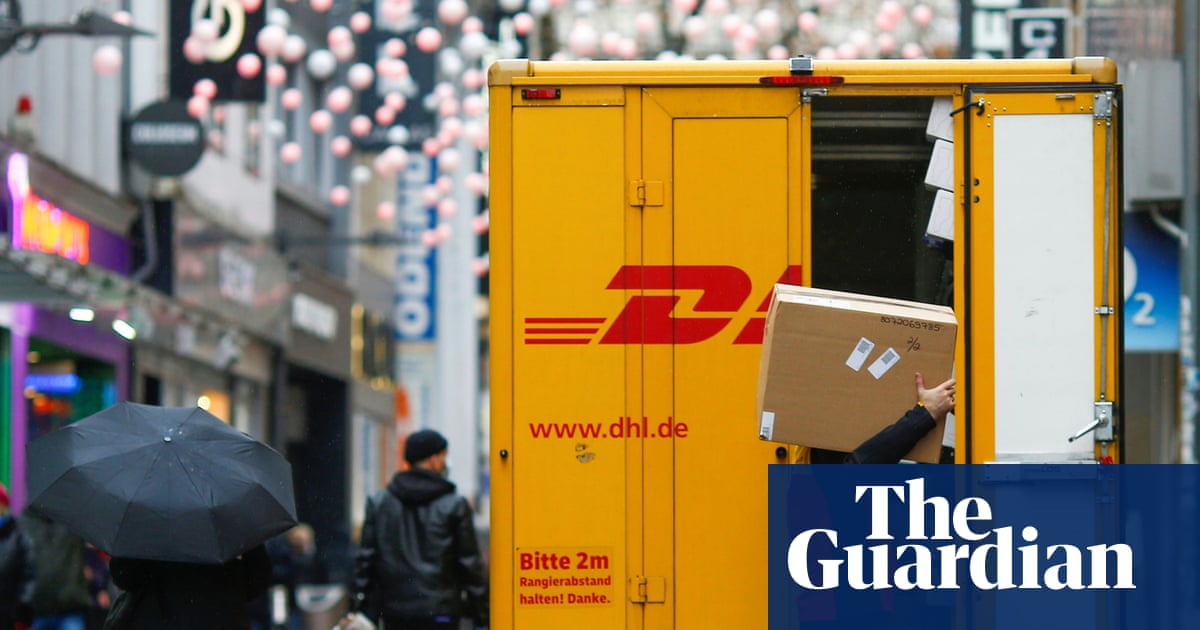
Nine in ten retailers globally are planning to raise their spending on artificial intelligence (AI) to optimise their e-commerce operations over the next 12 to 24 months, with online delivery execution a key area of focus. A total of 38% of European retailers identify speed, tracking and proactive communication around the delivery process as areas where AI can deliver the greatest impact.
E-Commerce
Gadgets
fromComputerWeekly.com
1 month agoConnectivity, AI drive fleet safety, productivity and decision-making | Computer Weekly
AI, connected data, and safety-focused services are transforming fleet operations, with GPS tracking adoption at record highs and AI delivering measurable safety improvements and cost reductions.
fromFortune
2 months agoHow Walmart is using AI to reroute essential supplies ahead of Winter Storm Fern | Fortune
From a meteorological perspective, the winter storm sweeping across the country this weekend is a supply chain disruption in its own right: A high-pressure system from the north is smashing into a low-pressure system from the south, belting large swaths of the US with heavy snow, sleet, and freezing rain. While the snarl in the upper atmosphere could trickle down to the real supply chain on the ground, some retailers are taking steps to anticipate the impact of the storm and position their products accordingly.
Data science
fromFast Company
2 months agoElectronic shelf labels mean grocery stores can now change their prices anytime they want, in seconds
Perusing the grocery aisle in the Westside Market on 23rd Street in Manhattan, you might not even notice the screens. They look just like paper price labels and, alongside a bar code, use a handwriting-style font we've come to associate with a certain merchant folksiness. They're not particularly bright or showy. The only clues that they're not ordinary sticky shelf labels are a barely distinguishable light bulb and, on some, a small QR code.
Marketing tech
Artificial intelligence
fromFortune
1 month agoI help manage one of the world's most constrained supply chains, up close to the defining energy bottleneck of the decade | Fortune
Power transformer shortages are the critical bottleneck limiting AI infrastructure expansion and corporate electrification globally.
Startup companies
fromBusiness Insider
1 month agoHow robotics could upend the US manufacturing industry
Machina Labs promotes distributed, flexible, portable robotics-enabled manufacturing to leapfrog centralized factories and accelerate U.S. reindustrialization in defense, aerospace, and automotive sectors.
fromeLearning Industry
2 months agoARD Logistics Modernizes Compliance Training With Genie: Turning Internal Knowledge Into Microlearning Courses With Up To 96% Completion
ARD began using GoSkills in 2021, looking for an affordable, cloud-based platform to train a distributed workforce. The company needed one centralized place where teams could build skills on demand. Through the GoSkills Learning Management System (LMS) and its built-in Course Library, ARD has trained more than 150 learners, including leaders and employees, in essential hard and soft skills.
Online learning
fromDbmaestro
4 years agoWhat is Database Delivery Automation and Why Do You Need It?
Manual database deployment means longer release times. Database specialists have to spend several working days prior to release writing and testing scripts which in itself leads to prolonged deployment cycles and less time for testing. As a result, applications are not released on time and customers are not receiving the latest updates and bug fixes. Manual work inevitably results in errors, which cause problems and bottlenecks.
Software development
Business
from24/7 Wall St.
3 months agoThe Warehouse Automation Seller Just Turned Profitable While the Retail Giant Builds Its Own
Investors face choosing Symbotic's newly profitable automation-as-a-service with volatile trading and insider selling or Amazon's scale-driven in-house robotics investment.
fromThe Business of Fashion
2 months agoHow Integrated Technology Is Reshaping Retail Operations
The technology underpinning retail operations is under scrutiny in 2026 as fashion executives look to streamline systems with the aim to unlock efficiency, cut costs and meet consumer expectations for speed and personalisation in the shopping journey. At the retail event Lightspeed Edge on 12 January, Lightspeed - the unified point-of-sale (POS) and payments platform for SMEs such as Apricot Lane Boutique and Neal's Yard Remedies - convened industry leaders to explore the strategic imperative for integrated technology ecosystems over siloed systems.
E-Commerce
fromRuslan Osipov
1 month agoArtificial intelligence
Are AI productivity gains fueled by delivery pressure?
AI increases developer output but risks unsustainable workloads when used to demand more work rather than enable better work, especially when prototypes create false expectations about implementation complexity.
Software development
fromInfoQ
1 month agoHow a Small Enablement Team Supported Adopting a Single Environment for Distributed Testing
Reusing one development environment with versioned deployments and proxy routing, enabled by a small enablement team and cultural buy-in, scales distributed-system testing.
fromdzone.com
1 month agoAgile's AI-Driven Paradigm Shift
"I've never felt this much behind as a programmer. The profession is being dramatically refactored as the bits contributed by the programmer are increasingly sparse and between. I have a sense that I could be 10X more powerful if I just properly string together what has become available over the last ~year and a failure to claim the boost feels decidedly like skill issue."
Artificial intelligence

Artificial intelligence
fromSilicon Canals
1 month agoJapan's robotics industry sees record orders as global labor shortages intensify - Silicon Canals
Japan's robotics industry achieved record quarterly orders of ¥324.5 billion in Q1 2025, driven by global labor shortages and aging workforces across Asia, North America, and Europe.
[ Load more ]