#k-tech
#k-tech
[ follow ]
#samsung #technology #ai #south-korea #semiconductors #robotics #innovation #national-security #automation #hyundai



#semiconductors

World politics
fromSilicon Canals
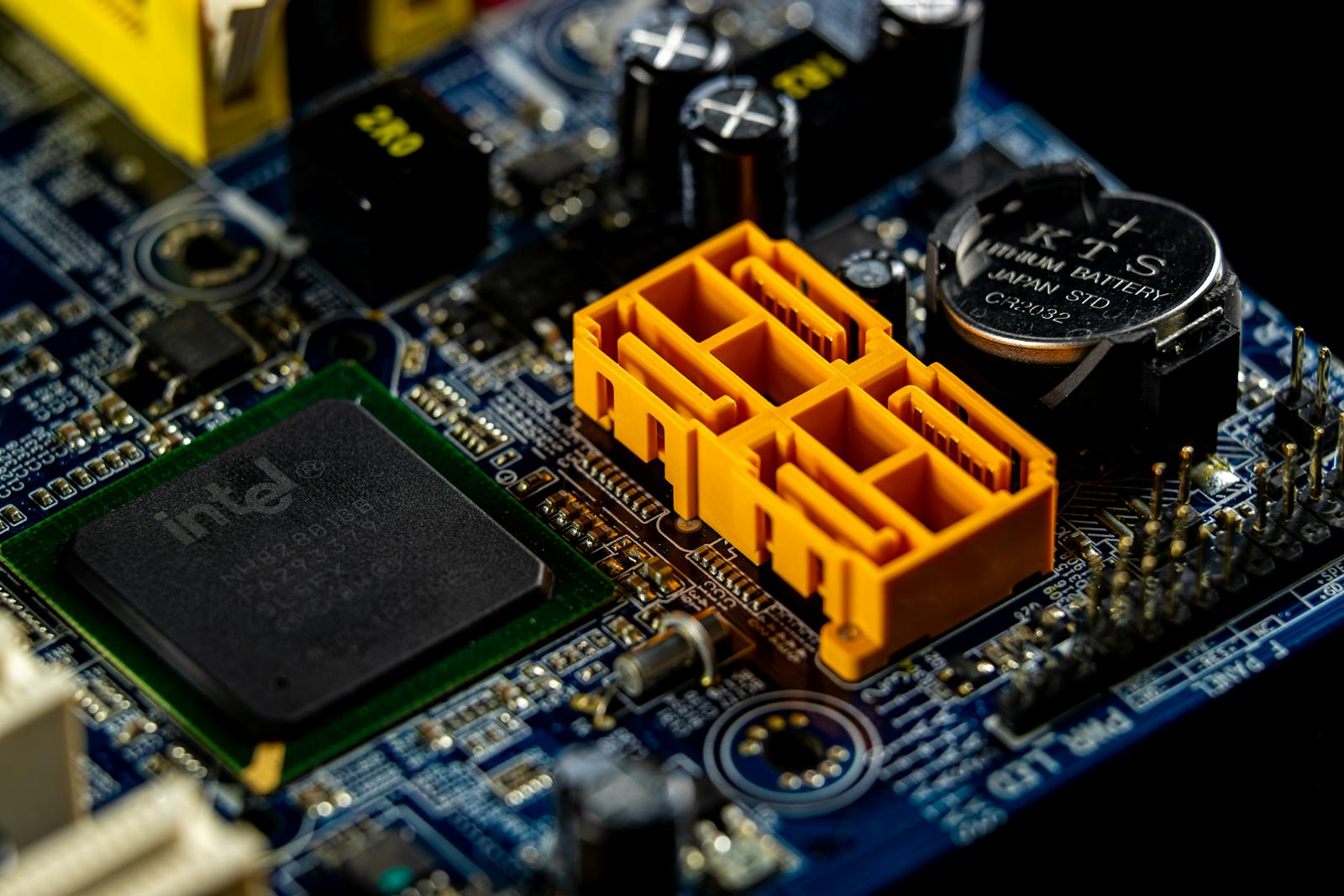
1 month agoInside the quiet restructuring of global semiconductor supply chains: how TSMC, Samsung, and Intel's subsidy race is creating three separate technological civilisations - Silicon Canals
Governments are investing heavily in semiconductor production, leading to the creation of three distinct technological ecosystems.



fromwww.dw.com
2 days agoSouth Korea, India agree to boost trade and defense ties
The level of economic cooperation between South Korea and India is still very low. Going forward, we will expand that space and make the relationship between South Korea and India completely different from what it is now.
World news
Education
fromThe Village Voice
4 days agoThe Builder Who Never Stopped: From a Childhood Website to Four Companies and the Future of Autonomous AI - The Village Voice
Mateusz Kelner is a young software engineer who has achieved significant milestones in technology and entrepreneurship before turning twenty.
fromwww.theguardian.com
6 days agoHow South Korea plans to use the Iran crisis to spur a renewables revolution
The village deliberately chose to spend solar income on welfare rather than individual dividends, a decision Jeon says residents made themselves rather than being persuaded. If you divide money as individual income, people feel disconnected.
Agriculture

fromwww.businessinsider.com
1 day agoTim Cook built Apple's China era
Tim Cook's decision to shift production to China was a radical move that transformed Apple into one of the world's most valuable companies. By leveraging China's manufacturing capabilities, Cook not only reduced costs but also increased efficiency, allowing Apple to scale operations rapidly. The partnership with Foxconn was particularly crucial, as it enabled the production of iconic products like the iPhone, marking a significant turning point in Apple's history.
European startups
fromTNW | Asia
3 weeks agoSouth Korea turns to Russian naphtha as chip supply chain faces Middle East crisis
South Korea imports about 45 percent of its naphtha, a critical petrochemical feedstock, with roughly 77 percent of those imports historically arriving from the Middle East. That supply line is now, for all practical purposes, severed.
World news
fromTechRepublic
1 week agoSamsung Eyes Vietnam for $4B Semiconductor Packaging Project
The ministry is coordinating with other ministries and agencies to finalise and submit to the Prime Minister the Memorandum of Understanding between the Government of Vietnam and Samsung Group regarding the group's semiconductor manufacturing project in Vietnam.
European startups
Retirement
from24/7 Wall St.
1 month agoRetirees Are Using EWY's 40% Surge to Bet on South Korea's AI Chip Recovery
EWY has surged 37% in 2026 driven by AI infrastructure demand for advanced memory chips, but its heavy semiconductor concentration creates cyclical volatility that retirees must evaluate carefully.
fromGSMArena.com
1 month agoSamsung ups R&D investment to lead the AI race
Samsung Electronics plans to invest KRW 110 trillion, or approximately $73 billion, in research and development and facilities "in a bid to lead the semiconductor industry in artificial intelligence". This year's plan would represent an increase in expenditure of over 21% compared to 2025.
European startups
European startups
fromTechRepublic
1 month agoNvidia-Backed Startup Plans Billion-Dollar AI Fortress in South Korea
Reflection AI plans a multi-billion-dollar South Korean data centre backed by Nvidia to develop open-source AI models tailored to Korean language and culture, countering Chinese AI adoption in the region.
European startups
fromTechCrunch
1 month agoExclusive: Samsung bets this island startup can tame the grid with software and batteries | TechCrunch
Grid Beyond uses hardware and software to create virtual power plants that manage renewable energy and industrial loads to address peak electricity demand for data centers and AI operations.
fromTechCrunch
1 month agoSouth Korea opens the door to let Google Maps operate fully | TechCrunch
South Korea has resisted Google's appeals since 2011, arguing that the company's precise satellite maps could endanger national security by exposing sensitive military sites when combined with commercial imagery and online data. Given that South Korea remains technically at war with North Korea, the government is cautious about exposing such locations.
World news
fromGSMArena.com
2 months agoSouth Korea passes the first AI regulations
South Korea has launched a landmark set of laws to regulate AI before any other country or bloc (the EU's regulations are set to go into effect in stages through next year). Under Korea's AI Basic Act, companies must ensure there is human oversight for "high-impact" AI in fields like nuclear safety, drinking water, transport, healthcare, and financial uses like credit evaluation and loan screening.
Artificial intelligence
fromTheregister
2 months agoFlush with cash, SK hynix spawns mysteriously named 'AI Co.'
SK hynix is surfing the AI hype wave by setting up what it nebulously describes as a solutions biz to further exploit the hysteria. The chipmaker is already flying high on the back of booming demand for datacenters. Its share price has quadrupled in the past year as it supplies a vital component, one now in tight supply. Judging by its financials published today, the AI gravy train isn't slowing.
Tech industry
Gadgets
fromEngadget
1 month agoSamsung's S26 and S26+ offer familiar designs, Snapdragon 8 Gen 5 chips and new software features
Samsung's S26 and S26+ are iterative updates featuring design refinements, larger displays, bigger batteries, and software-enhanced camera capabilities rather than hardware upgrades.
fromMiami Herald
2 months agoNaver tops $9.1B in revenue, bets on AI agents and fintech monetization
Naver reported 2025 revenue of 12.35 trillion won ($9.15 billion) and operating profit of 2.21 trillion won ($1.64 billion), up 12.1% and 11.6%, respectively, from a year earlier, during its fourth-quarter earnings call. Fourth-quarter revenue rose 10.7% to 3.20 trillion won ($2.37 billion), while operating profit increased 12.7% to 610.6 billion won ($453 million), lifting the operating margin to 19.1%.
Artificial intelligence
Mobile UX
fromWRAL.com
1 month agoWith many phones in pockets, Samsung stands to gain as uses move from apps to AI
Mobile operating systems are evolving from app launchers into AI-driven intent orchestration layers, but entrenched app store economics will resist this transformation despite its technical and economic efficiency.
[ Load more ]