#leadership-transition
#leadership-transition
[ follow ]
#apple #berkshire-hathaway #tim-cook #john-ternus #warren-buffett #ai-strategy #corporate-governance
#berkshire-hathaway

Business
fromFortune
2 months agoBerkshire Hathaway shareholders just woke up to a letter by someone other than Warren Buffett | Fortune
Greg Abel assumes CEO role at Berkshire Hathaway while maintaining Warren Buffett's established operational culture and investment philosophy with minimal structural changes.
Business
from24/7 Wall St.
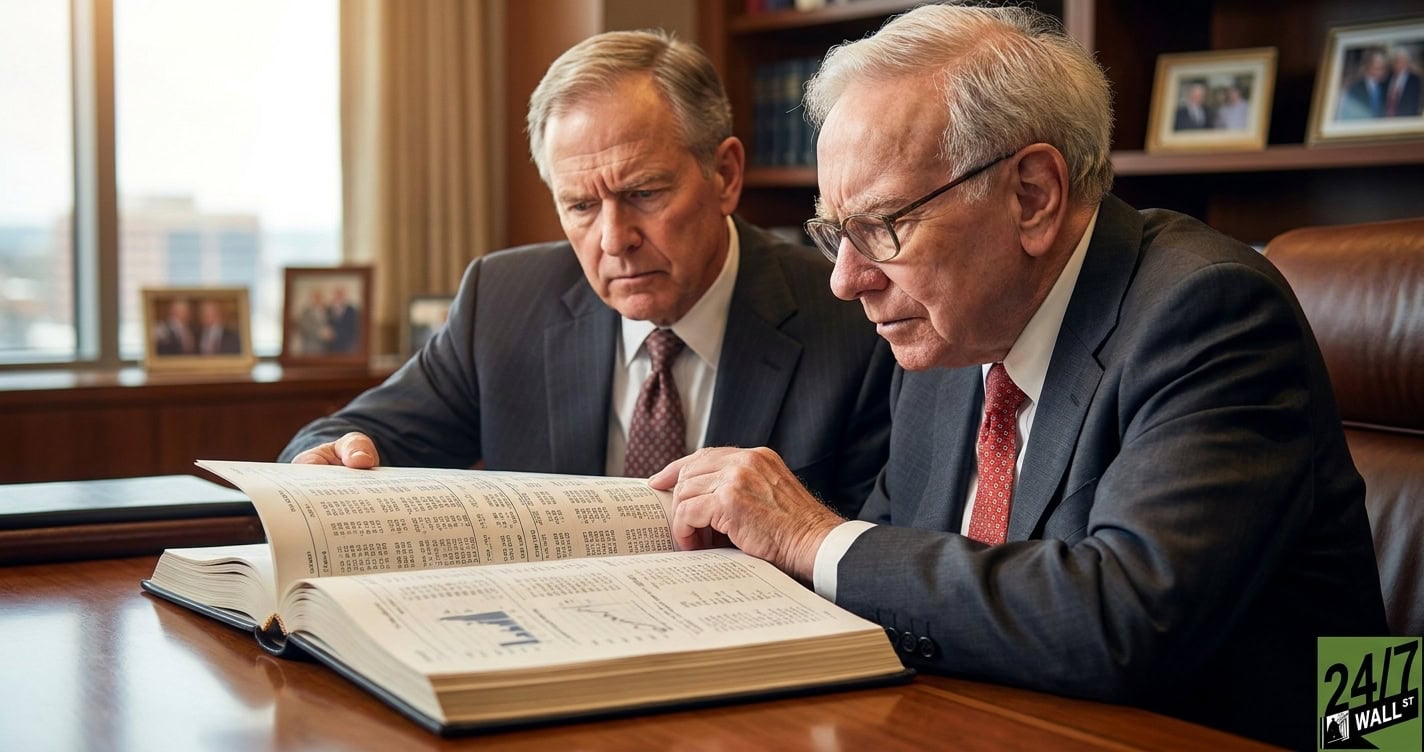
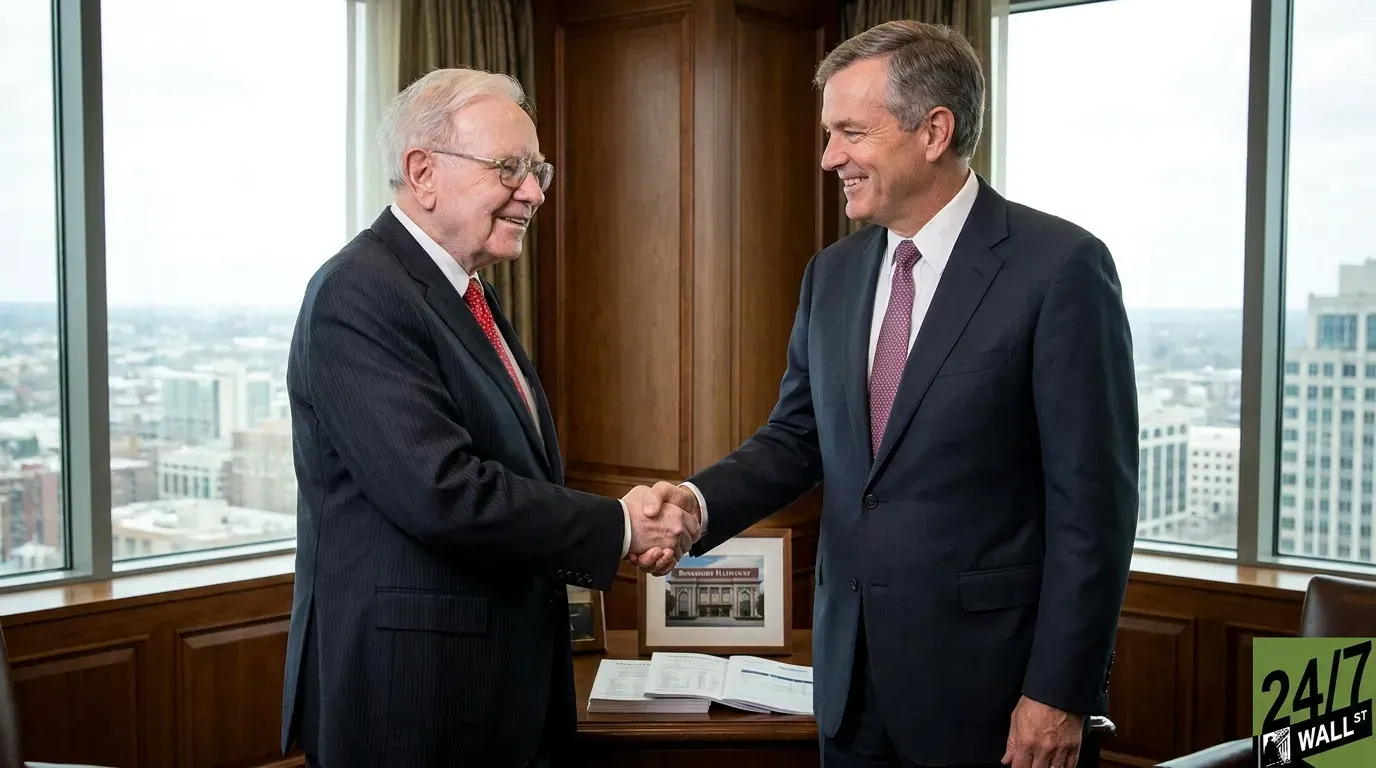
3 weeks agoWarren Buffett: "I'd rather have Greg handling my money than any of the top investment advisors or any of the top CEOs of the United States."
Greg Abel’s long tenure, personal alignment with Buffett, and capital allocation actions signal strong continuity and shareholder-focused management at Berkshire Hathaway.

Business
fromFortune
2 months agoBerkshire Hathaway shareholders just woke up to a letter by someone other than Warren Buffett | Fortune
Greg Abel assumes CEO role at Berkshire Hathaway while maintaining Warren Buffett's established operational culture and investment philosophy with minimal structural changes.
fromIrish Independent
2 days agoExit of AIB CFO shows punitive banker bonus tax an issue for retention, Davy warns
AIB said he stepped down from the board with effect from 26 May 2026, but will saty on in his day job to ensure a smooth handover of responsibilities, including the announcement of the half year results, scheduled for 30 July 2026. AIB said a process to appoint a permanent successor will commence immediately.
Business
fromsfist.com
3 days agoSF Mayor's Chief of Staff and Confidante Staci Slaughter to Step Down
“By every measure, the City is moving in the right direction and, for the first time in a very long time, San Franciscans feel the city is on the right track,” says Slaughter in a statement. “With that foundation in place, I feel this summer is the right time to return to retirement and hand the reins over to our talented Mayor's Office team, who will keep moving San Francisco forward.”
SF politics
fromThe American Conservative
1 week agoTulsi Gabbard Resigns
Tulsi Gabbard announced Friday that she will be resigning from her post as director of national intelligence effective June 30, 2026. In the statement announcing her resignation, Gabbard explained that she was stepping down because her husband has been diagnosed with "an extremely rare form of bone cancer." "He faces major challenges in the coming weeks and months," Gabbard wrote. "At this time, I must step away from public service to be by his side and fully support him through this battle."
Right-wing politics
Higher education
fromInside Higher Ed | Higher Education News, Events and Jobs
1 week agoBard President Didn't Opt to Retire-the Board Voted for It
Bard College president Leon Botstein announced retirement after an investigation into ties to Jeffrey Epstein, while board members reportedly voted to end his tenure.
fromwww.bbc.com
1 week agoBolton to step down as All England Club chief
Sally Bolton will step down as the All England Lawn Tennis Club's (AELTC) chief executive after Wimbledon following six years in the role. Bolton became the first female chief executive of the All England Club when she was appointed in December 2019, replacing Richard Lewis. The 51-year-old oversaw Wimbledon's return after the tournament was cancelled in 2020 because of the Covid pandemic.
Women
Beer
fromwww.brewbound.com
2 weeks agoHow Lawson's Stays on Brand, and Rhinegeist's Plans Amid Hemp-Bev Prohibition
Lawson’s and Rhinegeist leadership transitions in 2023 shaped brand clarity, community impact, distribution changes, and new beer and THC/NA product strategies amid regulatory uncertainty.
AC Milan
fromSustainable Bus
2 weeks agoSolaris appoints Riccardo Cornetto as Italy's General Manager, Alberto Fiore moves to commercial head - Sustainable Bus
Riccardo Cornetto became Managing Director of Solaris Italy, succeeding Alberto Fiore, who remains Commercial Director to ensure continuity and support.
fromFast Company
2 weeks agoCrumbl's founders just made a surprise announcement that could change the chain forever
The letter added that moving forward, the company will "focus on scale" and the kinds of "innovation" that makes it a stand-out brand. Regardless of the haters, the brand, which was founded by McGowan and Hemsley in 2017 has grown to become a giant in the dessert industry. Currently, there are around 1,100 Crumbl locations across the U.S. However, the brand fell victim to mass layoffs in 2023, cutting about 10% off its corporate workforce that year.
Business
fromFast Company
2 weeks agoBuzzFeed stock doubles on news that Byron Allen will buy a controlling stake in the onetime digital media giant
BuzzFeed is selling a controlling stake to Allen Family Digital for $120 million-$100 million of which isn't due for five years. Allen Family Digital, associated with Byron Allen, will control about 52% of BuzzFeed's outstanding shares at $3 each. BuzzFeed's shares were up more than 101% to over $1.49 on Tuesday morning. The stock has been trading at under a dollar a share for most of this year.
Media industry
Venture
fromFortune
2 weeks agoInside Initialized Capital's next moves as co-founder and star investor Garry Tan steps back | Fortune
Initialized Capital’s leadership transition is framed as continuity, with new partners maintaining investment and portfolio support while leveraging Garry Tan’s Y Combinator role for introductions and deal support.






Music production
fromFortune
1 month agoSpotify just turned 20. Here's how founder Daniel Ek built it into a $100 billion music empire by being the 'least powerful person' at the company | Fortune
Spotify celebrates 20 years with co-founders stepping into new leadership roles as the company evolves in the music and podcasting industry.

fromFortune
2 months agoWhen Jamie Dimon was fired from Citigroup, his daughters asked: 'Will we be homeless? Can I still go to college? Can I have your phone?' | Fortune
They said they wanted to make a few changes [and] had three of them: 'One, we want to make this person in charge of that.' I said OK, well that didn't make sense to me. The second one, they wanted to put someone in charge of the global investment bank which I was running, I thought it was another stupid decision. And the third they said 'And we want you to resign.'
NYC startup
fromThe Motley Fool
2 months agoAdobe (ADBE) Q1 2026 Earnings Call Transcript | The Motley Fool
Revenue $6.40 billion, rising 12% as reported and 11% in constant currency; record for fiscal Q1 performance. GAAP EPS $4.60, growing 11% year over year; Non-GAAP EPS $6.06, growing 19% year over year, both outpacing revenue growth. Operating margins GAAP operating margin of 37.8% and non-GAAP operating margin of 47.4% reported for the quarter.
Apple
Washington Capitals
fromRMNB
2 months agoMatt Roy to serve as an alternate captain for Capitals against Flyers: 'Guys really respect him a lot with how he plays, how he leads by example'
Matt Roy will serve as alternate captain for the Capitals against Philadelphia, stepping into leadership following John Carlson's trade to Anaheim.
Snowboarding
fromSnowBrains
2 months agoSki Industry Giants Shake Up Continues: Alterra CEO Jared Smith to Step Down After 2025-26 Season - SnowBrains
Alterra Mountain Company CEO Jared Smith is stepping down at the end of the winter season after overseeing significant company expansion, with the board beginning a search for his replacement.
fromwww.housingwire.com
2 months agoHunt-backed View Homes names Natasha Gandhi CEO to drive growth
Randy has built a foundation of capability, of strong trusted homebuilding brands, an entrepreneurial deep local roots culture, and a strong talent bench. There's so much to work with, and now, as part of the Hunt Companies' family, the opportunity to bring deeper resources and processes into play, the promise for sustainable growth is a present reality.
Real estate
Washington Capitals
fromRMNB
2 months agoJohn Carlson and Nic Dowd told Capitals 'not to give up hope' after trade-deadline deals: 'There's a lot of belief in this group, still'
The Capitals defeated Calgary 7-3 despite trading veteran leaders Carlson and Dowd, with remaining players drawing motivation from their departing teammates' encouragement to stay competitive for a playoff push.
Higher education
fromInside Higher Ed | Higher Education News, Events and Jobs
2 months agoPressure Mounts on Botstein
Bard College Faculty Senate urges the Board of Trustees to develop a leadership transition plan to replace President Leon Botstein, citing concerns about his ties to Jeffrey Epstein without demanding immediate resignation.
World news
fromIrish Independent
2 months agoSecretive figure Khamenei's son chosen as next Supreme Leader; Saudi Arabia warns Iran it will be 'the biggest loser' from attacks
Saudi Arabia warned Iran of severe consequences for continued attacks on Arab states following Iran's announcement of a new supreme leader and renewed drone strikes on regional targets.
World news
fromwww.theguardian.com
2 months agoAppointing a new leader is the least of Iran's troubles
Iran's Assembly of Experts has reportedly selected Mojtaba Khamenei, son of Ayatollah Ali Khamenei, as the next supreme leader, though announcement is delayed amid procedural disputes and international opposition.
East Bay (California)
fromwww.berkeleyside.org
2 months agoBerkeley mayor taps onetime interim police oversight director to return
Berkeley Mayor Adena Ishii appointed former Interim Director Kathy Lee to return as interim director of police accountability following Director Hansel Aguilar's dismissal, pending City Council confirmation on March 24.
fromwww.aljazeera.com
2 months agoTrump says he must be involved' in choosing Iran's next supreme leader
They are wasting their time. Khamenei's son is a lightweight. I have to be involved in the appointment. He added that he would prefer to have a leader similar to Venezuelan President Delcy Rodriguez, who succeeded Nicolas Maduro after he was abducted by US forces in January.
World news
fromLos Angeles Times
2 months agoJanisse Quinones, head of the L.A. Department of Water and Power, resigns
During her tenure, LADWP reinforced electric grid and water system reliability, enhanced coordination during wildfire events, and advanced investments to strengthen resilience amid increasing climate pressures. Quiñones brought steady leadership and engineering expertise to LADWP.
Los Angeles
US news
fromwww.npr.org
2 months agoTrump's new reasoning for Iran strikes. And, takeaways from the first 2026 primaries
CENTCOM claims destruction of Iranian navy while Iran expands retaliatory strikes amid Supreme Leader Khamenei's funeral preparations, with missile and drone attacks on Israel and the Gulf declining significantly.
fromTasting Table
2 months agoThe Big Changes Coming To Jersey Mike's In 2026 - Tasting Table
Morrison is no stranger to the restaurant industry, with 36 years of experience at well-known companies such as Pizza Hut and Wingstop. While Jersey Mike's is doing just fine, Morrison wants to keep it that way and has slowly been bringing in people he can trust to keep the company moving in a positive direction, enhancing and optimizing what already exists.
Toronto startup
World news
fromIrish Independent
2 months agoUp to 22,000 Irish in war-stricken Gulf region with no evacuation plans in place, minister says
US and Israeli strikes killed Iran's Supreme Leader Ayatollah Ali Khamenei, triggering regional retaliation and opening potential diplomatic channels as new Iranian leadership signals willingness to negotiate.
fromEntrepreneur
3 months agoYou Built the Company - Now Don't Be the One Holding It Back
When you take the leap of faith to bring your vision, your idea, to life and start your company, you wear many hats and take on many tasks. You develop the business plan and deck pitch, help build a great product or service offering, create and implement the marketing strategies, make sales, handle customer service and get take-out for everyone during the late nights they're working.
Business
fromwww.housingwire.com
3 months agoDeCaro Auctions names Mario Vargas CEO
Luxury auctions are about more than speed. They are about trust, positioning and creating real competitive urgency for extraordinary assets. DeCaro has a legacy built on integrity and results. My focus is on strengthening our relationships with sellers and top agents while scaling the platform thoughtfully and globally.
Real estate
Startup companies
fromSilicon Canals
3 months agoPsychology says founders who scale past 10M in revenue almost always do this one uncomfortable thing early - Silicon Canals
Founders must transition from hands-on operators to strategic leaders around €5-10 million in revenue, or their early-stage skills become growth bottlenecks.
fromESPN.com
3 months agoClark's 'unforeseen' MLBPA exit won't hurt CBA plan, exec says
I'm not going to say this is a great thing; this is unforeseen. At the end of the day, leadership is important and leadership comes and goes, but what remains is the players. Our union is strong and always has been strong because of the solidarity of our members, of our players. That is going to continue, and as I've said in the past in different contexts, anybody who underestimates the strength of the MLB Players Association does so at their own peril.
Major League Baseball
US politics
fromwww.theguardian.com
3 months agoTurmoil at US constitution museum as leader exits ahead of 250th anniversary
Jeffrey Rosen abruptly stepped down as president of the National Constitution Center after 12 years, prompting internal dispute over motives and interim leadership by Vince Stango.
fromsfist.com
3 months agoOakland Pride Dissolves Its Board And Goes Kaput, New Oakland Pride Will Be Mid-August
The Oakland Pride Parade and party just declared itself finished, but a new leadership organization immediately sprang up in its place, and the long and the short of it is that Oakland Pride will now be Sunday, August 16. You know that San Francisco always holds its giant SF Pride Weekend festivities at the end of the Pride Month of June, but you may have noticed that other Bay Area municipalities do their own Pride Weekends at different points in the summer.
LGBT
fromFast Company
3 months agoKB Home CEO: Homebuilders are slowing spec builds in weaker housing markets
"When the supply chain crashed [during the pandemic] and our build times significantly extended, it was very difficult to sell a built-to-order home to a buyer when it was going to take 10 or 11 months to build... You can't lock the interest rate for that long," Mezger tells . So they did more spec. That's over now. "We've significantly compressed our build times... We're back down to four months or less, which is our historical level," Mezger tells ResiClub.
Real estate
Education
fromBoston.com
3 months agoMass. Education Secretary Patrick Tutwiler to step down in latest departure from Healey cabinet
Massachusetts Education Secretary Patrick Tutwiler is leaving to lead Walker Therapeutic & Educational Programs; Gov. Maura Healey appointed Salem Superintendent Stephen Zrike as his replacement.
[ Load more ]