Navies across the world contribute to international security by protecting maritime trade routes. A strong navy is capable of projecting national power far beyond a country's borders. Each navy reveals a nation's resources and priorities, and goals. These groups of men and women range from small coastal patrol forces to massive fleets with a variety of technologically advanced vessels like aircraft carriers, submarines, and destroyers. Aside from military purposes, navies also aid in things like disaster relief.
Following the seizure of a tanker carrying Venezuelan oil in waters off the country's coastin a spectacular operation that the U.S. government sought to publicize extensivelyWashington announced sanctions on Thursday against half a dozen other similar vessels, opening the door to further seizures. In addition, it imposed sanctions on three of the Chavista leader's nephews. The new phase has heightened existing tensions in the Caribbean, where Washington maintains its largest military presence in decades.
"All of global data exchange flows through these cables," said Johannes Peters, the head of the Center for Maritime Strategy and Security at the Christian Albrechts University in Kiel. "The internet, payment orders, any kind of information you can think of, any kind of spoken communication, it runs almost exclusively through these cables," Peters told DW. "On a global level, we are dependent on them."
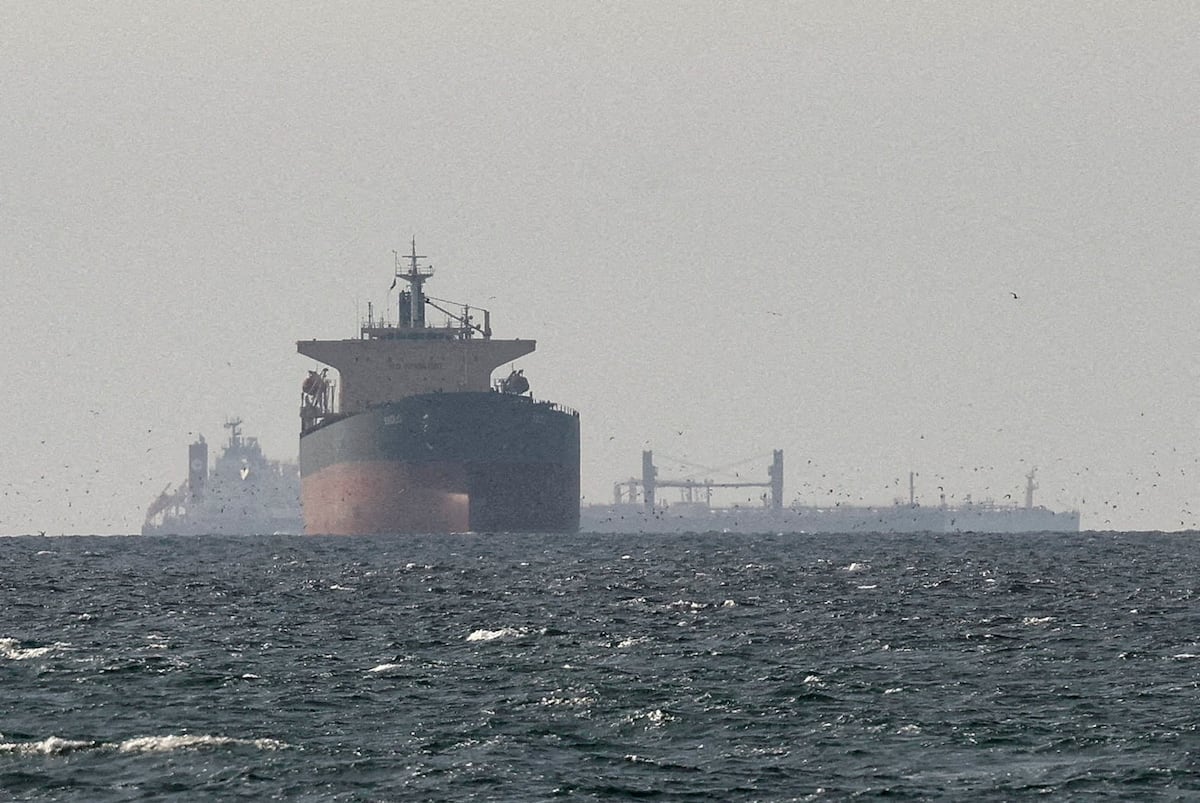
A ship has caught fire in the Gulf of Aden off Yemen after being struck by a projectile, the British military said, with one report suggesting its crew was preparing to abandon the vessel. The incident on Saturday comes as Yemen's Houthi rebels have maintained their military campaign of attacking ships through the Red Sea corridor in solidarity with Palestinians under fire in Israel's genocidal war in Gaza.
Oil prices declined on Friday, after settling around 1.6% lower in the previous session, as the market's risk premium faded after Israel and Hamas agreed to the first phase of a plan to end the war in Gaza. "Finally having some kind of peace process in the Middle East is lowering the shoulders a little bit," said Bjarne Schieldrop, chief commodities analyst at SEB. This could ease fears about crude carriers passing through the Suez Canal and the Red Sea, he said.
President Donald Trump said Tuesday that the U.S. has carried out a strike in the southern Caribbean against a drug-carrying vessel that departed from Venezuela. The president offered scant details on the operation. When you leave the room, you'll see that we just, over the last few minutes, literally, shot a boat a drug-carrying boat, Trump told reporters during an unrelated Oval Office event. He added there were a lot of drugs on the vessel.
"The Colombian navy announced the seizure of an autonomous semisubmersible, the first of its kind in the country's waters... believed to be on a trial run to transport cocaine to the US or Europe."
The vehicle is fully autonomous. We set it, kind of a routing, a waypoint, basically give it an area in which it can operate and then it autonomously decides where to go and how to get there. We've got 20 different sensors per vehicle. There's ranges from radars to cameras, optical, infrared, acoustics, RF. And we have an onboard ML, AI running on GPU compute.
The presence of clandestine Russian vessels has caused alarm over the vulnerability of key underwater infrastructure, especially since Vladimir Putin's invasion of Ukraine.