#nautiloid
#nautiloid
[ follow ]
#paleontology #marine-biology #fossil-discovery #evolutionary-biology #evolution #foskeia-pelendonum
fromwww.scientificamerican.com
1 week agoBizarre fossils reveal that complex life evolved far earlier on Earth than we thought
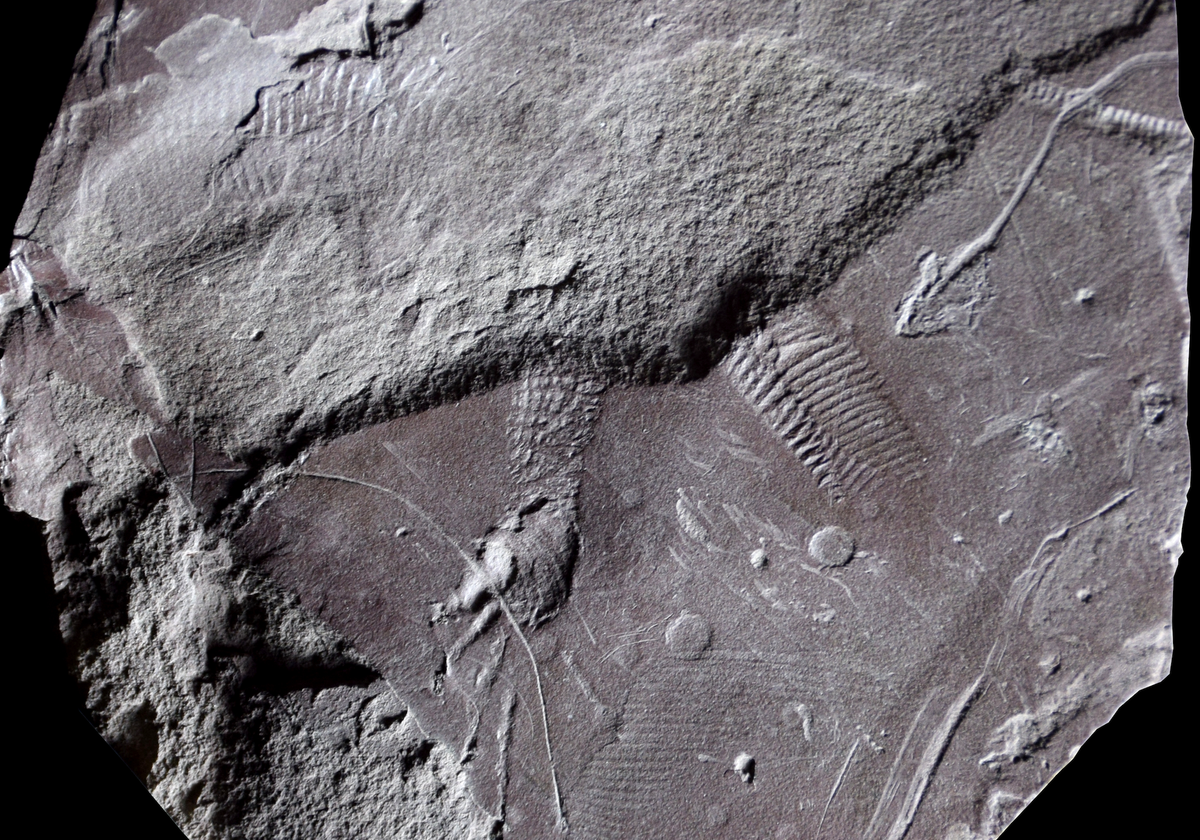
Hundreds of fossils uncovered in southern China's province of Yunnan reveal that at least some of the life-forms scientists had thought arose in the Cambrian period were alive and thriving millions of years earlier, in an era known as the Ediacaran period.
OMG science
fromArs Technica
1 week agoNew fossil deposits show complex animal groups predating the Cambrian
Four protrusions appear to be arranged in pairs, each consisting of two connected branches surrounding a central depression. We really don't understand what any of these features represent anatomically.
OMG science
Agriculture
fromEater
1 month agoHow One Farm Raises the Rarest, Most Expensive Mollusk in America
The Cultured Abalone Farm in Santa Barbara is the primary source of commercially farmed red abalone in the U.S., supplying restaurants nationwide while supporting conservation efforts for nearly extinct wild populations.
fromenglish.elpais.com
1 month agoAnts trapped in amber reveal what diminutive life was like millions of years ago
Although there are many amber stones containing a single creature, there are fewer that include two or more, as is the case with a pair of mosquitoes trapped in amber 130 million years ago which tell us that, back then, males also sucked blood. Even more extraordinary is when several organisms can be seen interacting, either eating the other, acting as a parasite, or cooperating.
Science
fromSFGATE
1 month agoRare footage captures a 'glass' animal deep in Monterey Bay
We've documented sightings of glass squids to better understand the remarkable transformations they undergo from hatchlings to adults. This new observation, captured in ultra high-resolution 4K, allowed us to zoom in on a juvenile likely no bigger than a baby carrot and reveal more details than we have been able to see before.
OMG science
fromNature
2 months agoDaily briefing: The battle over the identity of the first animals
Wooden objects carrying the marks of carving and use could be the oldest wooden tools ever found. Researchers dated the artefacts, found in what is now Greece, to 430,000 years ago - and suggest they might have been made by early Neanderthals or their ancestors, Homo heidelbergensis. A separate study describes 480,000-old flint-knapping tools made from antler and elephant bone, from what is now the United Kingdom.
Science
fromNature
2 months agoWhat were the first animals? The fierce sponge-jelly battle that just won't end
Which animals came first? For more than a century, most evidence suggested that sponges, immobile filter-feeders that lack muscles, neurons and other specialized tissues, were the first animal lineages to emerge. Then, in 2008, a genomic study pointed to a head-scratching rival: dazzling, translucent predators called comb jellies, or ctenophores, with nerves, muscles and other sophisticated features. That single study ignited a debate that has raged for nearly 20 years, sparking fierce arguments about how complexity evolved in animals.
Science
Science
fromwww.nature.com
2 months agoFour camera-type eyes in the earliest vertebrates from the Cambrian Period
Vertebrate vision evolved via diversification of phototransduction components and eye structures, documented by molecular data and exceptional fossil evidence from Cambrian to mammalian ancestors.
fromArs Technica
1 month agoScientists hunting mammoth fossils found whales 400 km inland
At first glance, it looked like Wooller and his colleagues might have found evidence that mammoths lived in central Alaska just 2,000 years ago. But ancient DNA revealed that two "mammoth" bones actually belonged to a North Pacific right whale and a minke whale-which raised a whole new set of questions. The team's hunt for Alaska's last mammoth had turned into an epic case of mistaken identity, starring two whale species and a mid-century fossil hunter.
Science
fromwww.mercurynews.com
2 months agoFrom fuzzy flowers to see-through sea slugs, here are some of the new species discovered last year by California scientists
But as he swept his flashlight through the dark waters, something unexpected emerged. Inching through the beam of light, an alien creature crawled across the surface of the sand, resembling an inch-long cluster of ghostly leaves fringed with silvery filigree and capped with a pair of antennae-like stalks. It immediately caught my eye, said Gosliner, Invertebrate Zoology Curator for the California Academy of Sciences. I've been diving there for 30 years and this one immediately struck me as different.
Science
[ Load more ]