Graphic design
fromThe Verge
22 hours agoYour article about AI doesn't need AI art
The New Yorker uses AI-generated art, raising questions about artistic integrity and the role of human creativity in the process.
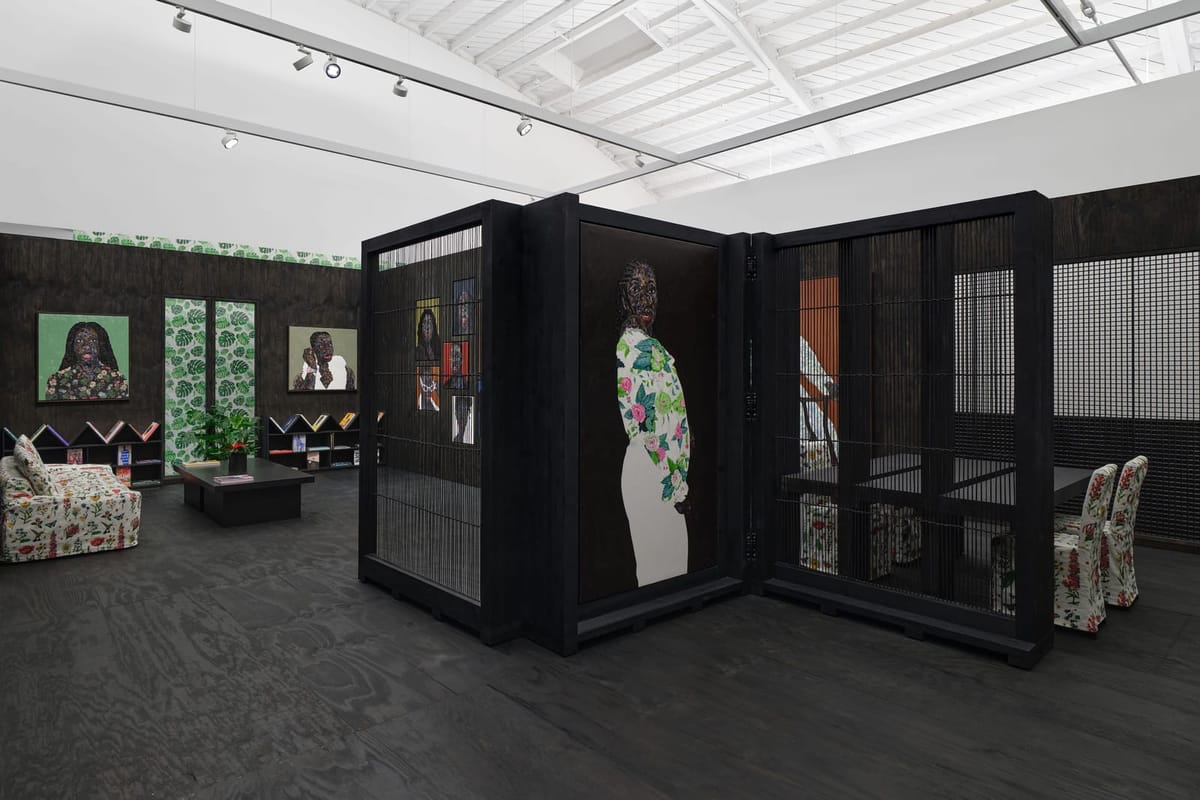
The Sanctuary of Dreams operates as a collective framework for imagining futures, developed within the universe of Toguna World to reactivate dreaming as a shared cultural practice rather than an individual act.
Oshatz worked on a monumental scale to represent underwater scenes, creating a full stage silk backdrop. He also designed hand painted silk waves that dancers moved across the stage.
"It's bizarre to watch people in this way - even in gay cruising areas you wouldn't stare at other bodies this intensely. Now, whenever I go to a concert, especially at the Berliner Philharmonie with its encircling seating, my gaze hovers over the audience as well as the stage."
Seeing the Alhambra in Granada was an extraordinary experience for me. It was the first time that I understood painting as something other than an object hanging on a wall. I thought that paintings could be in a fixed place, made for that place, made for the light of the place, experienced kinesthetically.
Upon entry, Kent's "IF" (1965) lures the eye upward. The serigraph-a silkscreen print in fine art parlance-hangs high on the wall with a subtle vulnerability. Two orange letters hover toward the composition's top edge, as if pushing to transcend the picture plane. A feeling of possibility emerges through the conjunction and its visual form.
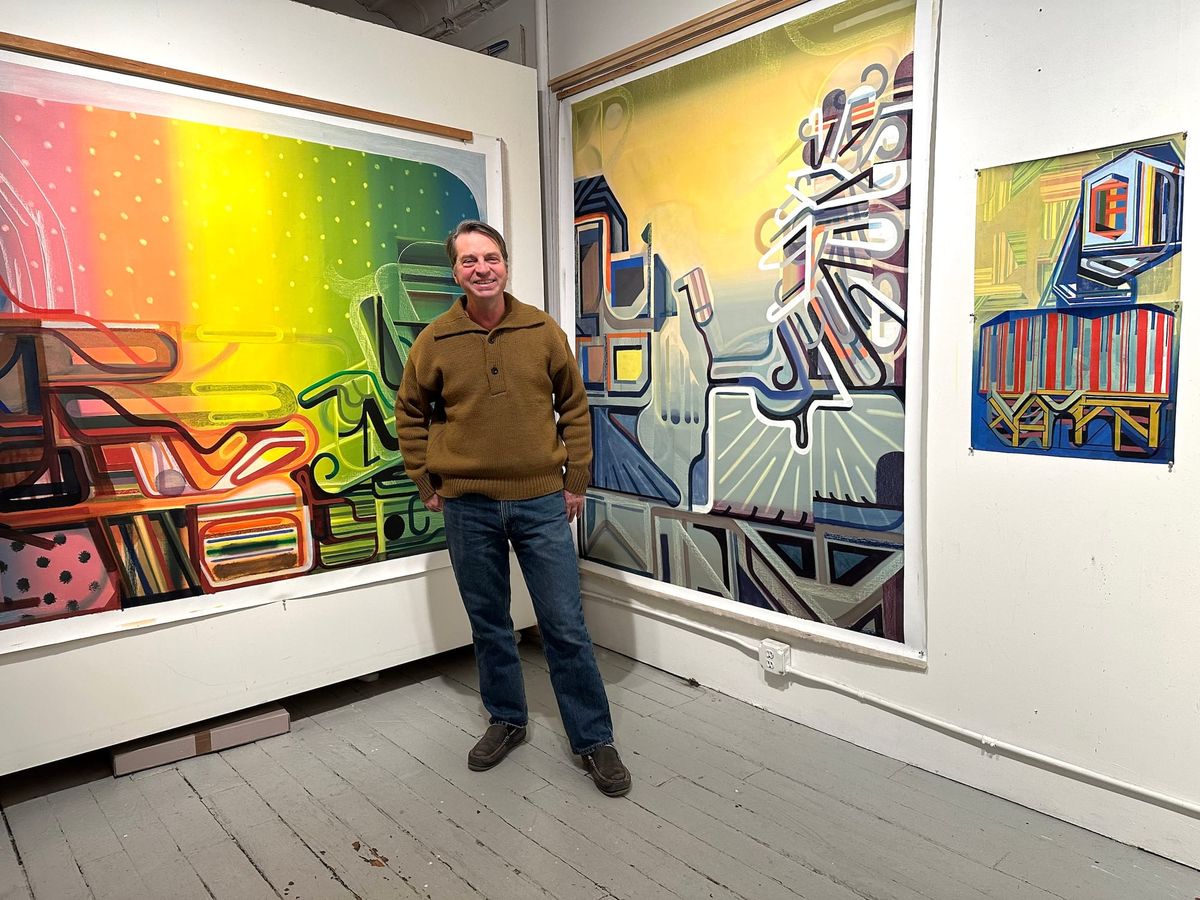
The first things that struck me about Jason Gubbiotti's paintings at RecRoom were the small dimensions of the work, the relationship of their modest size to the artist's elaborately precise, often lattice-like geometric compositions, and their brilliant beguiling color. The work is also audaciously, unapologetically beautiful, and deeply pleasurable to look at.
On Franklin Street in Brooklyn's Greenpoint neighborhood, one non-commercial gallery fosters 'a small, stubbornly human space for friction.' Friction—the ubiquitous buzzword that captures the simultaneous delight and discomfort of doing things the slow way—is at the heart of artists Pap Souleye Fall and Char Jeré's current show at Subtitled NYC. It also reflects the overall spirit of this little exhibition space and of a burgeoning movement to reject our culture of optimization in favor of a bumpier, more intimate, less alienating experience.
One recent weekday morning, the British painter Peter Doig arrived at a bonded warehouse-a cavernous brick building-about a mile south of the River Thames, but not subject to the import taxes of the United Kingdom. He buzzed through security and entered a windowless white room, where he settled in for a long day. Awaiting him were a series of etching prints that had been brought over from the United States to be signed by Doig before being put up for sale.
One of the great things about making art is discovering something that sprang from seemingly nowhere. In retrospect it looks logical but in the moment it's an epiphany and suddenly it's exciting to explore it. My studio is across the street from Creative Woodworking and they have a box where they put scrap wood for anyone who wants it and it's irresistible to me.
Disembodied heads, eyes, and hands meet spindly trees, dragonflies, and vibrant blossoms in the folk-art inspired works of Michael McGrath. Based in Rhinebeck, New York, McGrath melds a variety of media-most pieces contain a mixture of graphite, ink, and oil and acrylic paints-into dynamic compositions suffuse with mystery. Recurring symbols and objects lend themself to a distinctive visual language that captures both the wondrous and puzzling.
Modern Art is pleased to present Polygrapher, the first solo exhibition by Joseph Yaeger since announcing his representation by the gallery, and the inaugural exhibition at their Bennet Street gallery. Polygrapher denotes both the exhibition title and a text written by the artist, published in the exhibition's accompanying booklet. Taking the form of an interrogation the artist underwent attached to a Stoelting UltraScribe--and in which only the answers have been transcribed--it creates a framework for the experience of the subsequent paintings.
Our new line of Colossal merchandise is finally hitting the (digital) shelves in the Colossal Shop. We're big fans of repping publications that inspire us, and we're excited to finally offer our own goods to this special community of readers. Hats and mugs are now available, and all proceeds directly support our ongoing commitment to make art accessible to everyone. You can also receive a mug by joining us with an annual Patron of the Arts membership.