#philosophical-aphorisms
#philosophical-aphorisms
[ follow ]
#relationships #philosophy #stoicism #personal-growth #identity #psychology #mental-health #critical-thinking
Careers
fromSilicon Canals
1 day agoI'm 66 and I spent forty years being extremely good at my job and last spring I realized I had optimized my entire existence for the approval of people I didn't particularly like - Silicon Canals
Professional dedication can sometimes mask a deeper need for approval from others, leading to personal sacrifices and a loss of self-identity.
Writing
fromSilicon Canals
1 day agoI'm 66 and the most important relationship of my adult life has been with solitude - not as a consolation for the company I didn't have, but as the place where I have always been most honest, most creative, and most recognizably myself, and I spent too many years being embarrassed about that before I understood it was simply how I was built - Silicon Canals
Solitude allows for self-discovery and personal reflection, free from societal expectations and external pressures.
#relationships
Relationships
fromSilicon Canals
3 days agoPsychology says people who crave both complete freedom and deep companionship aren't confused - they're experiencing the central tension of the human condition, and the people who resolve it aren't the ones who choose a side but the ones who stop treating it like a choice - Silicon Canals
The autonomy-connection paradox highlights the human need for both independence and intimacy in relationships.
Mindfulness
fromSilicon Canals
3 days agoPsychology says the most important life lesson isn't learning to make better decisions - it's learning to live peacefully with the ones you can't undo - Silicon Canals
Irreversible choices shape our lives and learning to coexist with them is crucial for mental well-being.
Psychology
fromSilicon Canals
6 days agoNobody prepares you for the hardest lesson of your 50s - that some of the people you sacrificed for genuinely don't remember what you gave up, and it's not cruelty, it's just the way memory works when you were never the main character in their story - Silicon Canals
Sacrifices made for others often go unremembered, as people focus on their own narratives and experiences.
fromSilicon Canals
2 days agoI'm 66 and I spent four decades chasing the version of happiness I saw in other people's living rooms - and the day I stopped, I noticed I'd been happy in my own kitchen all along - Silicon Canals
I was stealing other people's definitions of happiness and trying to make them fit my life. I'd walk past neighbors' houses at night, see their living rooms lit up through the windows, and think that's what I was missing.
Writing
Relationships
fromSilicon Canals
3 days agoI'm 66 and I finally learned the hardest lesson isn't that people will disappoint you - it's that you'll disappoint yourself by pretending you don't need what you need until you forget what that even was - Silicon Canals
Neglecting emotional needs leads to a profound sense of loss and disconnection from oneself and others.
Mindfulness
fromSilicon Canals
5 days agoI'm 37 and I realized I wasn't actually a good person the day my wife said "you're kind to strangers and cruel to the people closest to you" - and the worst part wasn't the accusation, it was that I couldn't argue because I'd been using up all my patience on people who didn't matter and coming home empty - Silicon Canals
Kindness should be abundant at home, not rationed for public interactions, to foster authentic connections with loved ones.
Psychology
fromSilicon Canals
6 days agoI'm 66 and the thing I learned too late isn't that I should have traveled more or worked less - it's that I spent forty years waiting for permission to want things - Silicon Canals
Waiting for permission to want things can lead to missed opportunities and unfulfilled desires.
Writing
fromSilicon Canals
3 days agoI was quietly unhappy with my life for years and the most unsettling part wasn't the unhappiness - it was how functional I remained inside it, how well I performed contentment, how convincingly I answered fine to every person who asked, including myself - Silicon Canals
Pretending to be okay while feeling empty can trap individuals in a cycle of unhappiness.

Writing
fromSilicon Canals
4 days agoI'm 66 and the loneliest I've ever felt wasn't after my children left or my friends moved away - it was the morning I woke up and realized I had nothing that needed me, nothing that depended on my showing up, and the whole day stretched ahead like a road with no destination - Silicon Canals
Loneliness can stem from feeling unnecessary, not just from being alone.


fromBig Think
1 month agoHow our view of "fundamental" has evolved over time
In antiquity, many opined about "the elements" in combination. Around 2500 years ago, Leucippus and Democritus founded the idea of atoms. Perhaps everything, they opined, was composed of indivisible building blocks. In the late 1700s, hydrogen and oxygen were discovered. Circa 1804, John Dalton revived atomism to explain chemical behavior. Then in 1869, Mendeleev developed the periodic table: organizing the atoms.
Science
fromNature
1 month ago'What are we doing here?' The polymaths who searched for the meaning of life
A mentor once told me that, when writing a research statement for a professorship, I had to start with the most ambitious pitch I could imagine - and then go ten times bigger. It's tricky enough to do this as a cosmologist, given that the topic of study is the entire Universe. But there is a quest that is more ambitious still: to find out 'what are we doing here?'
Books
fromFuncheap
2 months agoAtomic vs Satori
Come join us for the clash (more like a love-fest) of two beloved San Jose staple nights! Satori and Atomic have been putting on memorable dance parties in San Jose full of new and classic Goth, Darkwave, New Wave, Electro, Indie and Industrial for decades. For one night only, we unite to play all the bangers until you just can't dance anymore!
Music
fromPsychology Today
2 months agoThe Link Between Thinking and Being
Metaphors are linked to how we experience the world around us, according to seminal work by researchers George Lakoff and Mark Johnson. In English, we "move forward" with our lives and don't "retreat into" the past. We speak about people who are "cold as ice" and "heavy" matters we need to resolve. Some of these metaphorical expressions are more than just, well, expressions-they are actually based on our sensory experiences. This mind-body link is called "embodied cognition."
Science
fromThe Conversation
1 month agoToday's obsession with authenticity isn't new - being true to yourself has troubled philosophers for centuries
All of us live in an age where we're bombarded by social media and artificial intelligence - when striving to be your authentic self becomes an increasingly difficult task. Yet, even if it has somehow become a common goal, it is unclear how many of us can truly define the "authenticity" that we say we are pursuing.
Philosophy
fromPsychology Today
1 month agoThe Cave You Didn't Build
Plato's choice of this word is deliberate. He is not describing neutral carriers. He is describing people whose job is manufacturing a convincing reality for an audience that cannot see behind the curtain. Here is what matters clinically: the conjurers are not necessarily villains. They may be devoted parents, conscientious teachers, or well-meaning community leaders.
Philosophy
fromThe Conversation
1 month agoWhat is happiness? A philosopher looks for answers
Happiness today is narrowly defined by some positive psychologists as a joyous state of mind or well-being. The happiness sciences see it as something you can calculate and quantify. They developed a Happiness Index and the World Happiness Report. These basically measure happiness as satisfaction, with criteria like gross domestic product per capita (money) and life expectancy (health) as some of the factors considered.
Philosophy
Philosophy
fromApaonline
1 month agoThe Humanities Challenge: Expanding the Circle of Philosophy
Philosophy offers transformative insights and vision into human life, and public humanities must evolve beyond traditional academic formats to make philosophy accessible to broader audiences through innovative, engaging methods.
fromwww.theguardian.com
1 month agoMove over stoics! Why we should all embrace nihilism and discover what really matters in life | Gemma Parker
I was suspicious, even cynical, about what the world insisted was vital to the life of my unborn child. I was partly sceptical because so much of the advice I was getting was contradictory. But I was also suspicious because I'd spent most of my 20s reading Nietzsche. Nietzsche is not, perhaps, a natural choice for a young mother. But he helps to fuel certain questions about values, and purpose, that are central to questions of care.
Philosophy
fromPsychology Today
2 months agoWhat's the Point of Philosophy?
Unlike me, Dan Dennett, or-I suspect-most scientists studying the brain, Richard maintains that science is: i) neutral between the view that consciousness is (to simplify) identical to parts of your brain and what goes on inside of it, and the view that consciousness is a fundamental property of reality, found in all particles of matter (or, for that matter, other theories such as dualism and idealism) and ii) to be sharply distinguished from philosophy.
Philosophy
fromPsychology Today
2 months agoA Third Kind of Philosophy
Many philosophers strike me as like Polish apparatchiks in 1983-they turn up to work and do what they did yesterday just because they don't know what else to do, not because they seriously believe in the system they are maintaining. I think it's not been fully appreciated how much of a blow it is to the confidence of the field's youth that scientific ambitions are increasingly abandoned as untenable.
Philosophy
fromApaonline
1 month agoPhilosophy, Technology, and Mortality
This APA Blog series has broadly explored philosophy and technology with a throughline on the influence of technology and AI on well-being. This month's post brings those themes into focus recounting a vital Washington Post Opinion piece by friend of the APA Blog, Samuel Kimbriel. Samuel is the founding director of the Aspen Institute's Philosophy and Society Initiative and Editor at Large for Wisdom of Crowds. We collaborated on a Substack Newsletter about intellectual ambition, building on his essay, Thinking is Risky.
Philosophy
fromPsychology Today
1 month agoIf Justice Doesn't Exist, Then Numbers Don't Either
A drawn circle is at least something physical. You can see it, touch it, erase it. The skeptic can still say, "Circles are grounded in physical reality. Justice is different; it's just an idea in your head." So let's talk about the number two. Point to it. Not two apples, not two fingers, not a numeral on a page-that's just a symbol.
Philosophy
fromApaonline
2 months agoWhy We Should Doubt that Academic Philosophy Benefits the Broader Public
A professional philosopher outside the academy walls can act as a popularizer (the goal here is to make philosophy more accessible to the general public), an applied ethicist (the major task is to offer an analysis of various specific moral issues that arise within a society), and a public intellectual (I limit this role to questions that have political connotation). Of course, there are overlaps between these roles and they certainly do not exhaust all possible forms of public engagement of a professional philosopher.
Philosophy
Philosophy
fromThe Conversation
2 months agoSeeking honor is a double-edged sword - from ancient Greece to samurai Japan, thinkers have wrestled with whether it's the way to virtue
The pursuit of honor shapes warrior identity: it can motivate true virtue or distort behavior, reflecting a long debate about proper warrior ethics across cultures.
fromPsychology Today
2 months agoThe Mystery of Evil
It is easy to be good in a good world. What is difficult is to be good in an evil world, where the egoism of others and the egoism built into the institutions of society attack us and threaten to annihilate us. Under such conditions, the only possible reaction would seem to be to oppose evil with evil, egoism with egoism, hate with hate; in short, to annihilate the aggressor with his own weapons.
Philosophy
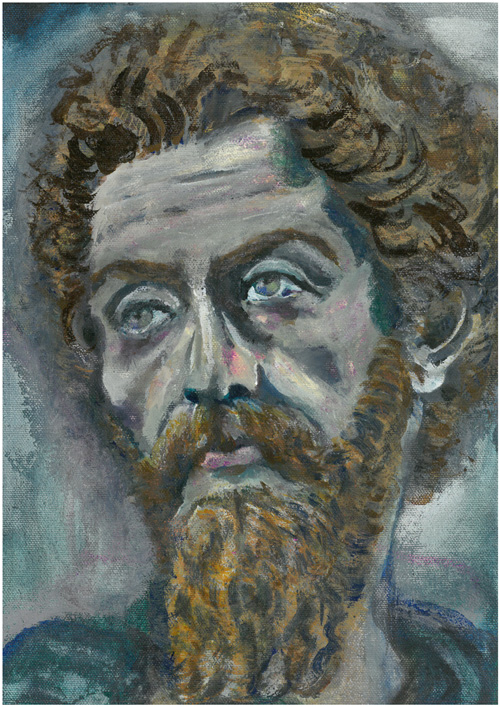


fromPsychology Today
2 months agoWhy You Can't Rely on Your Own Morality Alone
What does it mean to say that you are restrained solely by your own morality, by your own mind? The conscience is often described as an inner voice telling us what to do when others may be opposed. A moral compass is that which distinguishes between right and wrong, good and bad. Our conscience, our moral compass, sets the groundwork for doing the right thing.
Philosophy
[ Load more ]