#regional-distribution
#regional-distribution
[ follow ]
#consumer-behavior #ecommerce #e-commerce #remote-work #labor-market #last-mile-delivery #market-trends


fromTasting Table
4 days agoFor Cheaper Gas, Look For Stations That Serve Fresh Food - Tasting Table
Gasoline doesn't have a particularly high profit margin, which is partly why most gas stations double as convenience stores or offer fresh food. If chains like Buc-ee's and Sheetz can make more money by selling food, they can afford to lower their margins on gasoline.
Food & drink
#urban-logistics

Alternative transportation
fromLondon Business News | Londonlovesbusiness.com
1 week agoThe 2026 urban logistics challenge: Managing delivery hubs in the city - London Business News | Londonlovesbusiness.com
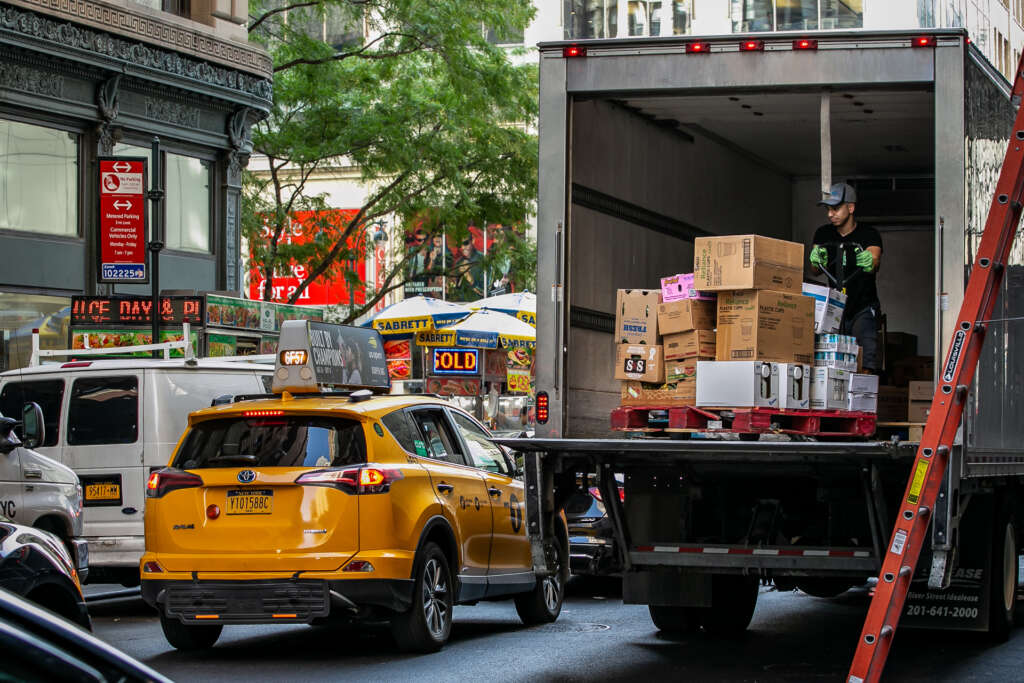
Cities are becoming critical for delivery management due to e-commerce growth, requiring innovative logistics solutions to meet consumer expectations.

fromFast Company
4 weeks agoIf you want housing abundance, let the market work
Good urbanism should transcend politics. Socialists and capitalists can walk the same neighborhood and agree it's a pleasant place to live. They can each appreciate the tree canopy, the corner café with people spilling onto the sidewalk, the mix of ages on bikes and on foot, the architectural details of older buildings, and so on.
Philosophy
fromwww.cbc.ca
1 month agoThinking of moving to a more 'affordable' part of the country? Consider this | CBC News
I lost a lot of money while I was in Alberta. I had quite a lot of debt. Sure, you might save $4 or $5 on your bills, but ultimately, that's not what saved me money at all. Moving to Montreal in the summer of 2024 helped replenish the family's budget, even though la belle province is notorious for its higher taxes.
Canada news
Business intelligence
from24/7 Wall St.
1 month agoGrocery Outlet and Scholastic Face New Analyst Scrutiny on Consumer Trends
Wall Street shows divergent sentiment on consumer stocks: Grocery Outlet faces structural headwinds with analyst downgrades, while Scholastic is downgraded due to positive news already priced into the market.
Public health
fromEurasia Review
1 month agoDigital Transformation Of Food Retail Is Reshaping Food Access For Consumers
Digital retail transformation reshapes food access through online platforms and AI, creating both health promotion opportunities and risks of targeted unhealthy food marketing to vulnerable populations.
Real estate
fromInc
4 weeks agoWhy Connectivity Is the New 'Location' in Commercial Real Estate
Digital infrastructure and connectivity now rival or surpass traditional location as the primary factor determining real estate value for business properties, with 96% of U.S. business leaders willing to pay premium prices for reliable connectivity.
fromTechCrunch
1 month agoAmazon adds 1-hour and 3-hour delivery options in the US | TechCrunch
Our customers are busier than ever and are looking for new ways to save time while keeping their households running. We saw an opportunity to use our unique operational expertise and delivery network to help make customers' lives a little easier while unlocking even more value for Prime members.
E-Commerce
#amazon-delivery

E-Commerce
fromEngadget
1 month agoAmazon launches one- and three-hour delivery options in the US
Amazon launched one-hour and three-hour delivery options across 2,000+ locations, covering 90,000 products including essentials and discretionary items, with costs ranging from $5-$20 depending on membership and speed.
fromwww.theguardian.com
1 month agoThe digital colonization of flyover states': how datacenters are tearing small-town America apart
Amazon has sought a tax abatement that would see its datacenter exempt from paying property taxes for 30 years in exchange for the funding of local schools and infrastructure projects. The people up on city council are, for the most part, good people. They care about the community, [but] they have been taken advantage of by these companies.
Online Community Development
fromThedrum
2 months agoHyper-local measurement to optimise catalogue effectiveness
They were trying to get to the bottom of how to diminish catalogue distribution without having a negative impact on store and online sales. They were also keen to define the geographic areas where digital content would work best and how to profile those areas to classify digital purchase behaviour. Together with Analytic Partners they were able to uncover opportunities to eliminate 22% of catalogues with negligible sales impact and increasing digital support in high-performing topologies, preserving€ 294 million in sales.
Marketing tech
fromThe Salt Lake Tribune
2 months agoOpinion: Want more babies? Abolish commutes.
The Trump administration really wants Americans to have more kids. President Trump, the self-proclaimed " fertilization president," has called for a new " baby boom." Transportation Secretary Sean Duffy says communities with big families should get more government funds. The on-again-off-again Trump ally Elon Musk, father of at least 14, has warned that "civilization will disappear" if we don't get busy.
US politics
Alternative transportation
fromArchDaily
1 month agoRural Transportation Hubs: Infrastructure Design, Access, and Regional Mobility
Rural transportation hubs are vital national infrastructure anchors that require distinct architectural and operational models reflecting dispersed populations and freight-dominant needs, not urban replicas.
fromEntrepreneur
2 months agoWhy Global Brands Struggle When Local Markets Push Back
Companies enter new markets with momentum. Press coverage looks promising. Campaigns launch on schedule. Local teams are hired. Early dashboards suggest traction. Then progress slows. Customer interest plateaus. Partnerships take longer than expected. Internally, the conversation almost always turns to execution. Messaging must not be clear enough. The market probably needs more education. What I have learned is that this conclusion is usually wrong. What looks like market resistance is more often a signal that the brand is communicating from the wrong position.
Venture
fromArchDaily
2 months agoMoving Capitals Across Global Contexts: From Strategic Planning to Environmental Necessity
Across history, the relocation of capital cities has often been associated with moments of political rupture, regime change, or symbolic nation-building. From Brasília to Islamabad, new capitals were frequently conceived as instruments of centralized power, territorial control, or ideological projection. In recent decades, however, a different set of drivers has begun to shape these decisions. Rather than security or representation alone, contemporary capital relocations are increasingly tied to structural pressures such as demographic concentration, infrastructural saturation, environmental risk, and long-term resource management.
World news
fromSFGATE
1 month agoThis Bay Area river town is the most interesting strip mall in California
The tiny town of Duncans Mills is a tribute to kinship. Named after two brothers, a pair of 19th-century Scotsmen who sailed lumber down the Russian River for building homes in San Francisco, the unincorporated Sonoma County community is now run by three sisters. Their parents started rescuing buildings from dilapidation in the area in 1970 and ever since, the family has safeguarded the revival of the rustic yet boutique village by the river.
California
fromCornell Chronicle
2 months agoMaps offer neighborhood-level insight into American migration | Cornell Chronicle
That local exodus is documented by Cornell-led research that mapped annual moves between U.S. neighborhoods from 2010 to 2019 in detail 4,600 times greater than standard public data. Called MIGRATE, the new, publicly available dataset revealed that most of those displaced remained within the affected county - moves not captured in county-level public migration data aggregated every five years.
Data science
Business
fromHarvard Business Review
2 months agoFor Multinational Companies, Localization Matters More Than Ever
Global companies must localize core operations, duplicating supply chains and integrating regional suppliers to meet data-sovereignty and local sourcing mandates, sacrificing scale for resilience.
fromBusiness Matters
1 month agoThe impact of road signs on economic development
When routes are well organized, there are clear directional signs, and speed limits become reasonable. The early installation of warning signs allows transport companies to plan deliveries more accurately and avoid delays. For businesses, time is money. When a truck carrying goods does not spend hours detouring due to an unclear traffic scheme or stuck in traffic where it could have been avoided thanks to competent traffic management, fuel costs, driver wages, and vehicle maintenance costs are reduced.
Alternative transportation
Food & drink
fromTasting Table
2 months agoWhy Your Aldi Store Might Not Carry The Same Products Your Friends Are Raving About - Tasting Table
Aldi U.S. stores vary significantly in product selection and prices between nearby locations due to local demand, traffic patterns, and a limited-assortment strategy.
Food & drink
fromTasting Table
1 month agoNot Aldi Or Trader Joe's: The Pennsylvania Grocery Chain That Has Cheaper Groceries - Tasting Table
Sharp Shopper offers substantially lower prices than Aldi and Trader Joe's by selling grocery closeouts, but its deep discounts are limited to Pennsylvania and Virginia.
US news
fromSan Jose Spotlight
2 months agoFact Brief: Is San Jose on its way to having the most Costcos of any U.S. city? - San Jose Spotlight
San Jose Spotlight is an award-winning nonprofit newsroom producing fearless, community-supported journalism that uplifts marginalized voices, holds power accountable, and strengthens local democracy.
fromBusiness Facilities Magazine
1 month agoWhy Corporate Real Estate Leaders Are Choosing Secondary Cities - Business Facilities Magazine
C orporate real estate strategy has entered a new phase. Expansion decisions are no longer driven by brand prestige or default gateway markets. Today's environment demands cost discipline, workforce stability, operational resilience, and long-term flexibility. For companies considering expansion or relocation, smaller metros - often called secondary cities - are increasingly landing on the shortlist. Not as compromises. As competitive, strategic options.
Real estate
fromInc
1 month agoThe New Rules of Big-Box Retail
The outlook for 2026 I'm watching 2026 with equal parts optimism and urgency. Optimism because consumer demand is still there. Retail sales have remained resilient in recent data. Urgency because the operating environment is only getting tighter. Coming out of FY2025, large retailers demonstrated resilience amid inflation pressure, shifting consumer behavior, and global supply-chain complexity. Walmart raised its outlook and leaned further into a model that blends physical stores, e-commerce scale, and execution discipline.
E-Commerce
fromwww.independent.co.uk
1 month agoDoes free shipping actually exist? Marketing ploys experts want to warn you about
You're scrolling through an online retailer, like Amazon, Shein or eBay, and spot a shirt on sale for $40. You add it to your cart, but at checkout, a $10 shipping fee suddenly appears. Frustrated, you close the tab. But what if that same shirt was priced at $50 with free shipping? The likelihood that you would have bought it without a second thought is much higher.
E-Commerce
[ Load more ]