#star-axis
#star-axis
[ follow ]
#astronomy #exoplanets #nasa #space-exploration #planetary-alignment #artemis-ii #planet-formation #stargazing




:max_bytes(150000):strip_icc()/TAL-zodiacal-light-APRILSKYGUIDE0326-da3e7f01cfd249569fbb5c57cf7d5836.jpg)
Science
fromenglish.elpais.com
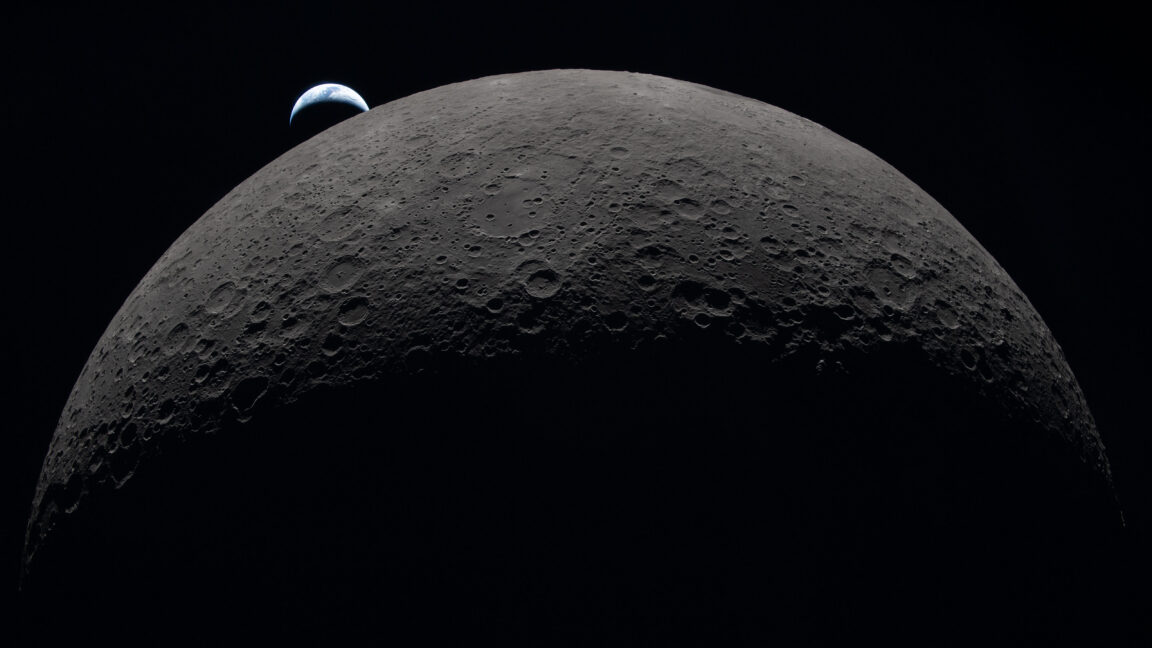
3 days agoArtemis 2 begins its return to Earth after exploring previously unseen areas of the far side of the Moon
Orion spacecraft lost contact with Earth during its mission, achieving significant milestones including record distance from Earth and witnessing a total solar eclipse.
OMG science
fromFuturism
3 weeks agoScientists Spot Two Planets That Collided, Resulting in Carnage That Will Send Prickles Through Your Scalp
Astronomers detected a planetary collision around star Gaia20ehk through unusual brightness fluctuations and infrared signatures consistent with massive debris and extreme heat from impact.
fromdesignboom | architecture & design magazine
1 month agomechanical clock with rotating discs can tell what time it is on other planets
Since every planet spins at a different speed, the gears are built with different ratios: Earth takes about 24 hours to spin once, Mars takes about 24.6 hours, Jupiter spins much faster, and Saturn spins fast too. Because of this, each dial shows the real day cycle of that planet, so the clock doesn't calculate time digitally.
Gadgets
Science
fromwww.scientificamerican.com
4 weeks agoHave astronomers found a runaway monster black hole or just a very weird galaxy?
Astronomers discovered RBH-1, a potentially runaway supermassive black hole traveling at over three million kilometers per hour, though ambiguous data makes its true nature uncertain.
OMG science
fromwww.scientificamerican.com
4 weeks agoThe sun and thousands of its twins migrated across the Milky Way just in time
The sun migrated from the Milky Way's crowded center to its current outer position, accompanied by thousands of similar stars that unexpectedly crossed the galactic corotation barrier.
Science
fromwww.scientificamerican.com
1 month agoThe universe's brightest supernovae are turbocharged by newborn magnetars
Superluminous supernovae are powered by newly formed magnetars—highly magnetized, rapidly spinning neutron stars that emit intense radiation, marking the first direct observation of a magnetar's birth.
OMG science
fromMail Online
4 weeks agoAstronomers watch the birth of a magnetar for the first time
Astronomers observed the birth of a magnetar, an extremely dense neutron star with the universe's most powerful magnetic fields, through a superluminous supernova's unusual flickering light pattern over 200 days.
Science
fromBig Think
1 month agoNASA's next X-ray mission, AXIS, has been killed
NASA cancelled the AXIS X-ray mission in March 2026 due to programmatic constraints, delaying the next major X-ray observatory by a decade to the 2050s-2060s, despite Chandra's 1999 launch making it outdated for current scientific needs.
Gadgets
fromYanko Design - Modern Industrial Design News
2 months agoSeestar S30 Pro Captures Deep-Sky Photos While You Sleep - Yanko Design
Seestar S30 Pro is a portable, all-in-one smart telescope that simplifies astrophotography by integrating optics, mount, camera, and automation into a backpack-sized device.
fromFuturism
1 month agoAstronomers Spot Huge Microwave Laser Blasting Into Space
This system is truly extraordinary. We're seeing the radio equivalent of a laser halfway across the universe. Fundamentally, masers and lasers are focused beams of light in the same frequency. In the realm of astrophysics, these can arise from clouds of dust being excited into a higher energy state from the light emitted by other sources, like stars and black holes.
OMG science


Science
fromwww.scientificamerican.com
1 month agoAstronomers spot a young sun blowing bubbles inside the Milky Way
NASA's Chandra X-ray Observatory captured the first image of a young sunlike star's astrosphere, a protective bubble of hot gas 120 light-years away, revealing how stellar winds shape these cosmic structures.
fromwww.scientificamerican.com
1 month agoAstronomers spot one of the largest spinning structures in the universe
The first time that University of Oxford astronomer Lyla Jung saw the cosmic configuration on her monitor, she almost didn't believe it was real. But it wasand Jung and her colleagues went on to identify one of the largest rotating structures ever found in space: a chain of galaxies embedded in a spinning cosmic filament 400 million light-years from Earth. The finding, published in Monthly Notices of the Royal Astronomical Society, may give astronomers new insights into galaxies' formation, evolution and diversity, Jung says.
Science


fromFuturism
2 months agoAstronomers Intrigued By Impossible Structure Around Dead Star
A dead star 730 light years away appears to be forming a powerful structure around itself - and despite their best efforts, astronomers aren't sure how. The cosmic corpse, designated RXJ0528+2838, is an incredibly dense stellar remnant known as a white dwarf, with a Sun-like star orbiting around it. This binary arrangement isn't uncommon throughout the universe, but what is strange is the structure surrounding the former body: a highly energetic and luminescent cloud known as a nebula,
Science
fromTravel + Leisure
2 months agoI've Chased Night Skies Around the World-and This Is My No. 1 Astrotourism Tip
After years of traveling the globe in search of the darkest skies still possible in an increasingly bright world, I've learned something that surprises a lot of people: truly experiencing the night isn't just about where you go-it's about when you go. If I had to share just one astrotourism tip with travelers, it would be this: plan your trip around the new moon. It sounds almost too simple, but the difference it makes is dramatic. When the moon is absent from the night sky, darkness returns in a way that feels almost ancient. Stars multiply. Constellations become easier to trace. And in truly dark places, the Milky Way often reveals itself as a glowing, dusty band stretching from horizon to horizon.
fromBig Think
2 months agoWhat the Universe looks like: from nearby to far away
Looking skyward fills us with wonder. Off-world, the Sun, planets, stars, and galaxies all await. Our Solar System encompasses our own cosmic backyard. Farther away, stars and star clusters abound within the Milky Way. Hundreds of billions of stars exist just within our home galaxy. Inside our Local Group, only Andromeda surpasses us in mass, size, and stars. More than 5 million light-years away, galaxies abound in groups and clusters.
Science
fromwww.scientificamerican.com
2 months agoHow can galaxies ever collide in an ever-expanding universe?
Okay, first thing first: the universe is in fact expanding. We've known this for more than a century now, and it's the basis for modern cosmology. This idea is called the big bang modelwhich is an unfortunate name because it brings to mind a cosmos expanding like an explosion, with galaxies moving away from each other through space like shrapnel. But in fact space itself is expanding, and that's different.
Science
fromwww.dw.com
4 months ago2026 stargazing: Eclipses, meteor showers and supermoons
Except for penguins and Antarctic scientists, few will be able to enjoy February's annular solar eclipse. That's because this eclipse will see the moon pass between the Earth and sun across the path of the southern continent, reaching a maximum at around 12:12pm UTC. People living in Eswatini, Lesotho, Madagascar, Mozambique, South Africa, Zimbabwe, and the southern parts of Botswana, Malawi, Namibia, Tanzania and Zambia, will only see a partial eclipse March 3.
Science
fromTravel + Leisure
1 month agoThese Are the Best Star Parties and Astronomy Festivals in the World for 2026-From Desert Valleys to Coastal Lagoons
There is a profound, quiet magic in standing alone under a truly dark sky, but the experience becomes something else entirely when shared with a community of fellow explorers. Star parties are the heartbeat of this experience: communal, high-energy gatherings where everyone from veteran astronomers to total beginners can share a wide-angle view of the cosmos. It's a chance to level up your astrophotography skills, learn the latest in deep-space science from experts,
Science
fromwww.scientificamerican.com
2 months agoJupiter isn't as huge as we thought it was
The solar system's most giant planet is slightly less of a giant than scientists once thought. Jupiter, a world that is so huge that it could hold 1,000 Earths, is eight kilometers narrower in width at its equator and 24 kilometers flatter at its poles than had been previously estimated, according to a new study. Textbooks will need to be updated, said Yohai Kaspi, a professor at the Weizmann Institute of Science in Rehovot, Israel, and senior author of the study, in a statement.
Science
[ Load more ]