#travel-crisis
#travel-crisis
[ follow ]
#oil-prices #flight-cancellations #tourism #remote-work #travel-industry #middle-east-conflict #economic-impact
fromLondon Business News | Londonlovesbusiness.com
2 days agoJet fuel shortages could hit in three weeks putting summer holidays at risk - London Business News | Londonlovesbusiness.com
ACI Europe has warned that if maritime flows through the Strait of Hormuz fail to recover significantly and stably within three weeks, a systemic jet fuel shortage could emerge across the European Union.
Europe news
#remote-work
Remote teams
fromForbes
2 days agoRemote Jobs Just Surged 20%, New Data Reveals. Is WFH Making A Comeback?
Remote job listings increased by 20% in Q4 2025, indicating a resilient trend in remote work despite RTO mandates.

fromSouth China Morning Post
2 days agoMalaysian group under fire for saying working from home will hurt city profits
The Federation of Malaysian Business Associations stated that a blanket work-from-home policy could cost the Klang Valley hundreds of millions of ringgit a month, emphasizing that these losses are expected to be 1.9x to 2.9x higher than the projected savings of widespread work-from-home arrangements.
Public health
#iran-war
World news
fromFortune
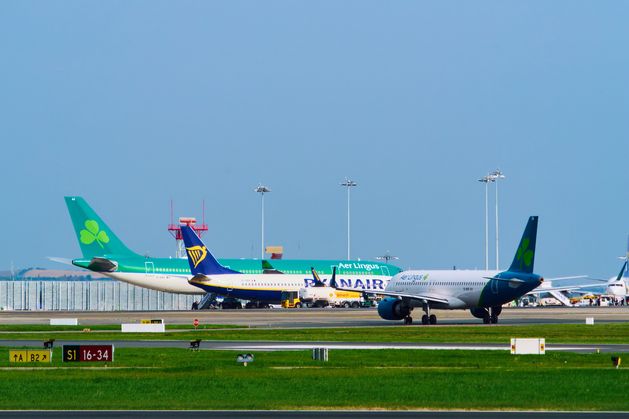
3 days agoJet fuel supply disruptions are comparable to 9/11 and could take months to replenish even if Hormuz Strait is reopening, airline trade group warns | Fortune
The Iran war has caused a significant spike in oil prices, impacting jet fuel costs and airline operating budgets significantly.
World news
fromFortune
3 days agoJet fuel supply disruptions are comparable to 9/11 and could take months to replenish even if Hormuz Strait is reopening, airline trade group warns | Fortune
The Iran war has caused a significant spike in oil prices, impacting jet fuel costs and airline operating budgets significantly.


fromwww.businessinsider.com
3 days agoDelta's CEO said affluent passengers, 'immune' to geopolitical conflict, are driving sales
Ed Bastian stated that affluent customers are becoming more immune to economic headlines, indicating they are not delaying investments in the experience economy despite ongoing volatility.
European startups

Europe news
fromCN Traveller
5 days agoUK travel insurance queries during the Middle East conflict and fuel shortages: what you need to know
UK travel insurance companies face increased customer queries due to concerns over flight cancellations amid rising aviation fuel prices and ongoing Middle East conflict.
World politics
fromFortune
3 weeks agoWar, oil, and an unpaid TSA: The perfect storm of travel chaos feels like the pandemic all over again | Fortune
Multiple simultaneous crises—regional war, government shutdown, and fuel costs—have created unprecedented travel disruptions comparable to the COVID-19 pandemic.
fromBusiness Matters
3 weeks ago1ST Airport Taxis Data Reveals Sharp Shift in Global Travel Patterns Amid Middle East Disruption
"What we are seeing is not just delays - it's systemic volatility. Flight schedules are becoming fluid, and that has a direct impact on the entire travel chain."
London startup
UK news
fromLondon Business News | Londonlovesbusiness.com
3 weeks agoFlat hospitality sales push some operators into insolvency - London Business News | Londonlovesbusiness.com
Accommodation and food services insolvencies rose 9% month-on-month in January 2026 but declined 18% year-on-year, indicating underlying sector resilience despite immediate economic pressures.
fromNew York City, NY Patch
2 weeks agoNYC Tourism Generated Nearly $85B Last Year As International Travel Declined
"In 2025, New York City's tourism economy proved resilient despite global challenges, underscoring the enduring appeal of the five boroughs. The international visitor market is crucial to our economy, accounting for 50% of tourism spending."
Berlin
Boston food
fromBusiness Insider
1 month agoAirbnb's war policy leaves some stranded travelers paying for rooms they can't use
Airbnb refused to refund Maria Wainer's Boston reservation despite Israeli airspace closure from geopolitical conflict, citing that the policy applies only to listings in impacted areas, not travelers' origin locations.
from24/7 Wall St.
1 month agoCCL, RCL, NCLH Stocks Slammed as Oil Prices Surge and Geopolitical Tensions Roil Cruise Sector
For cruise lines, fuel is one of the single largest operating expenses. But not all three major operators are equally exposed. Carnival does not hedge its fuel purchases. That means every dollar oil climbs hits Carnival's margins directly, with no buffer. Royal Caribbean and Norwegian Cruise Line both have fuel hedges in place, which is exactly why they are holding up comparatively better today.
Business
fromThedrum
2 weeks agoMake Or Break: How Influencer Marketing Can Support A Global Travel Comeback In 2021
In 2020, travel was put on hold globally, leading to a drastic adjustment in content for many travel creators. The number of worldwide scheduled flights was down by 46.4% compared to the previous year.
Travel
fromCN Traveller
2 months agoDubai and Middle East flight disruption: the latest updates as airlines resume limited flights
Airspace across several parts of the Middle East continues to be restricted after the United States and Israel launched strikes on Iran, prompting retaliatory attacks and widespread aviation disruption. Gulf states, including the UAE, Qatar, Kuwait and Bahrain, introduced temporary airspace restrictions, while Iran, Israel and Iraq imposed closures or operational limits.
World news
Europe news
fromLondon Business News | Londonlovesbusiness.com
3 weeks agoAirlines Warn of Cancellations Due to Fuel Crisis - London Business News | Londonlovesbusiness.com
Airlines face potential flight cancellations due to fuel shortages caused by Iran blocking the Strait of Hormuz, with jet fuel prices surging from $90 to $200 per barrel.
fromConde Nast Traveler
2 weeks agoWhy Cruise Fares Could Get More Expensive Amid the Iran War
"Fuel surcharges are not a stranger to the cruise industry," says Leslie Fambrini, a travel specialist. This indicates that such fees have been previously implemented and are part of the industry's pricing strategies.
Travel
#travel-disruption
London politics
fromBusiness Insider
1 month agoI'm stuck in Dubai after our flight was canceled. I'm paying more than $650 a night for a hotel.
A British luxury interior designer stranded in Dubai during missile attacks faced flight cancellations and mounting hotel costs of $670 nightly while sheltering in place.
London politics
fromBusiness Insider
1 month agoI'm stuck in Dubai after our flight was canceled. I'm paying more than $650 a night for a hotel.
A British luxury interior designer stranded in Dubai during missile attacks faced flight cancellations and mounting hotel costs of $670 nightly while sheltering in place.
Europe news
fromLondon Business News | Londonlovesbusiness.com
1 month agoOn the Beach warns Middle East war is hitting holiday bookings - London Business News | Londonlovesbusiness.com
The Beach Group warns of significant booking declines to Mediterranean destinations due to Middle East conflict concerns, causing over 10% share price drop and suspended profit guidance.

fromDataBreaches.Net
1 month agoThe hospitality sector continues to be lucrative targets - DataBreaches.Net
Choice Hotels International disclosed a breach affecting franchisees and applicants. Its notification letter states that a "skilled person used social engineering" to gain access on January 14, 2026 to an application that contained records regarding franchisees and franchise applicants. The access occurred even though access required multifactor authentication (MFA). The information involved included names and Social Security numbers. There is no indication that any guest data was involved. No gang has publicly claimed responsibility for the attack as yet.
Information security
Europe news
fromTravel + Leisure
1 month agoThis Major European Airport Is Scheduled to Halt All Departing Flights This Week Due to a Strike-What Travelers Should Know
Brussels Airport will close to departing flights on March 12 due to a labor strike by security and handling service staff, with airlines offering free rebooking options for affected passengers.
fromWIRED
4 weeks agoHigher Jet Fuel Prices Could Melt Your Summer Travel Plans
Jet fuel alone accounts for somewhere between 25 and 35 percent of airlines' costs. The next stop is higher ticket prices. It's already happening, to some degree. Several airlines, including Air Asia and Hong Kong Airlines, have explicitly said they're adding to their usual fuel surcharges.
Travel
fromFast Company
2 months agoU.S. tourism is in a 'Trump slump' that could push World Cup fans away
And yet, the U.S. tourism industry is worried. While the rest of the world saw a travel bump in 2025, with global international arrivals up 4%, the U.S. saw a downturn. The number of foreign tourists who came to the United States fell by 5.4% during the year-a sharper decline than the one experienced in 2017-18, the last time, outside the height of the COVID-19 pandemic, that the industry was gripped by fears of a travel slump.
US politics
fromConde Nast Traveler
1 month agoWhy International Flight Tickets Could Get More Expensive Soon
According to the International Air Transport Association (IATA), the global average price of jet fuel jumped 58.4% week-on-week to $157.41 a barrel, far above the $88 average the industry had expected for 2026.
Travel
Canada news
fromBusiness Insider
2 months agoCanadians are staying away from the US - and the drop in travel is getting hard to ignore
Reduced Canadian travel to the US stems from immigration enforcement and political rhetoric, causing fewer cross-border visits and economic impacts in US border communities.
Travel
fromBusiness Insider
1 month agoDubai's status as a global hub is at risk, as the Iran conflict is already disrupting travel beyond the Middle East
Iran conflict disrupts Dubai's travel hub status through flight cancellations, rerouted air routes, surging oil prices, and potential permanent shifts in airline operations.
Business
fromIndependent
1 month ago'Dealing directly with hotels can be more cost-effective than third-party booking sites' - money experts reveal how they pay less for their holidays
Avoid credit cards and spread holiday costs across the year to reduce post-holiday debt and enable annual travel through planned saving.
fromUSA TODAY
1 month agoWhy cheap off-season travel is harder to find in 2026
The off-season practically vanished in many parts of the world. Remote work, social media frenzy, and ruthless dynamic pricing have turned fall and spring into peak-season clones. Even winter is no refuge anymore. The idea of an off-season is 100% disappearing.
Travel
fromBusiness Insider
2 months agoFlight cancellation numbers are dropping as travel starts to recover after a huge winter storm battered the US
Air travel is showing more signs of recovery after Winter Storm Fern pummelled the country over the weekend. There were around 1,300 canceled flights within, into, or out of the US as of 6:20 a.m. ET on Tuesday, according to data from FlightAware. Dallas-Fort Worth International Airport led the charge with 276, followed by Charlotte Douglas with 138. While more flights are likely to be canceled throughout the day, there were about 4,000 such cancellations early on Monday. The day ended with 6,250 canceled flights, per FlightAware. That compares to Sunday's 11,618 canceled flights.
Travel
Travel
fromBusiness Matters
1 month agoTowering over the competition: which companies are driving 2026's tourism hotspots?
Transformative hospitality and construction projects are driving a 2026 global tourism resurgence, reshaping destinations through eco-luxury, infrastructure expansion, and cultural preservation.
[ Load more ]