#comet-observation
#comet-observation
[ follow ]
#astronomy #planet-formation #exoplanets #hubble-space-telescope #stellar-evolution #nasa #kuiper-belt #artemis-ii

:max_bytes(150000):strip_icc()/TAL-zodiacal-light-APRILSKYGUIDE0326-da3e7f01cfd249569fbb5c57cf7d5836.jpg)


OMG science
fromEngadget
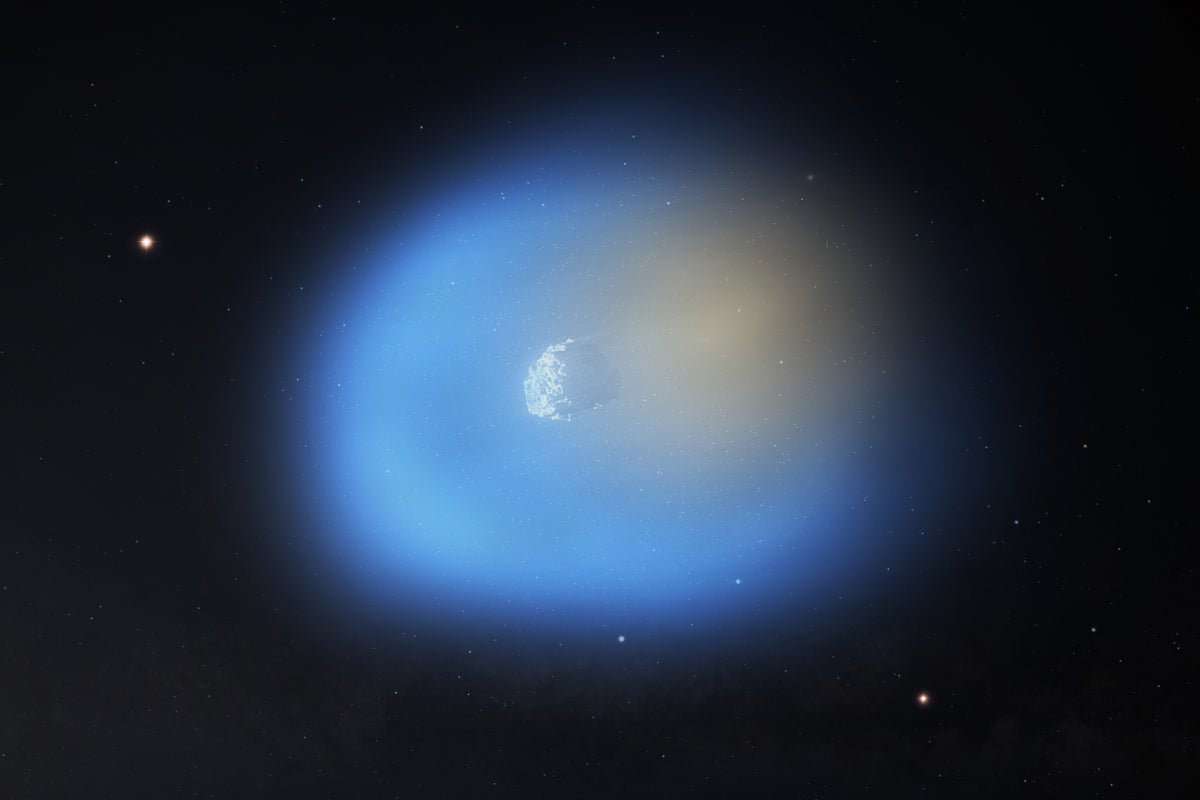
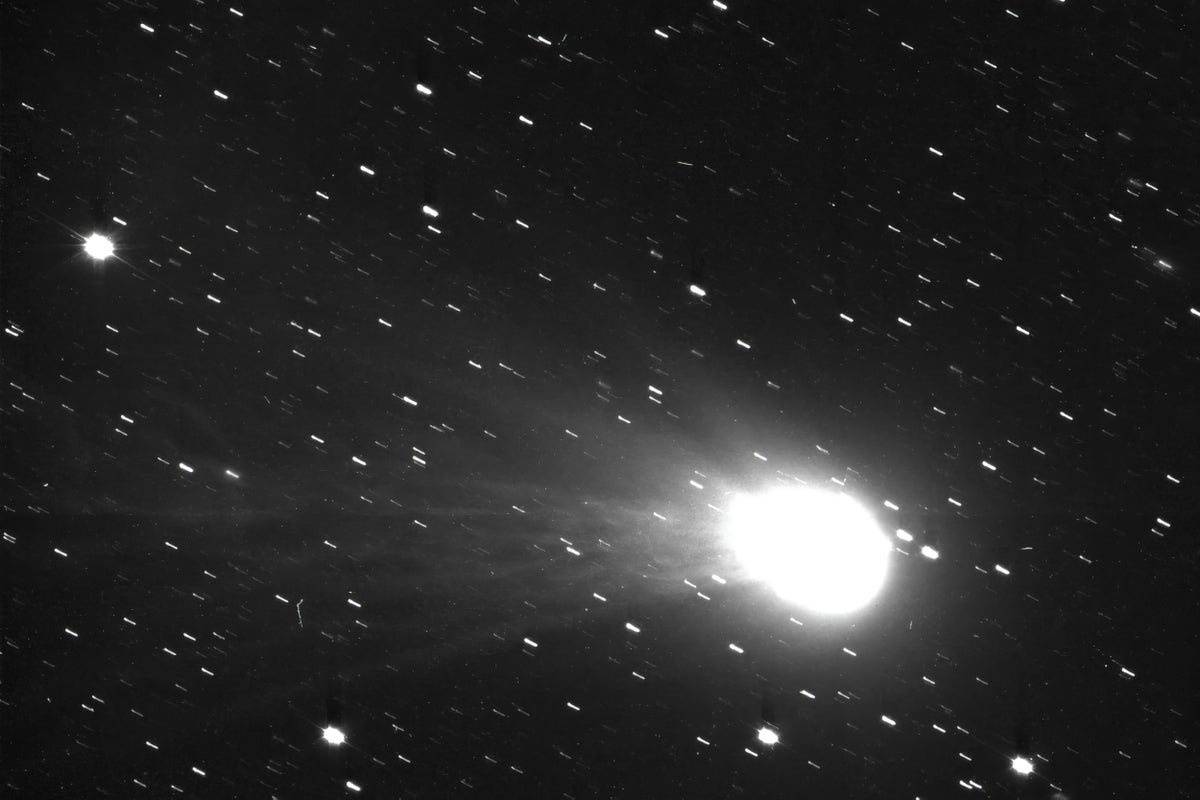
3 weeks agoHubble catches rare view of a comet crumbling
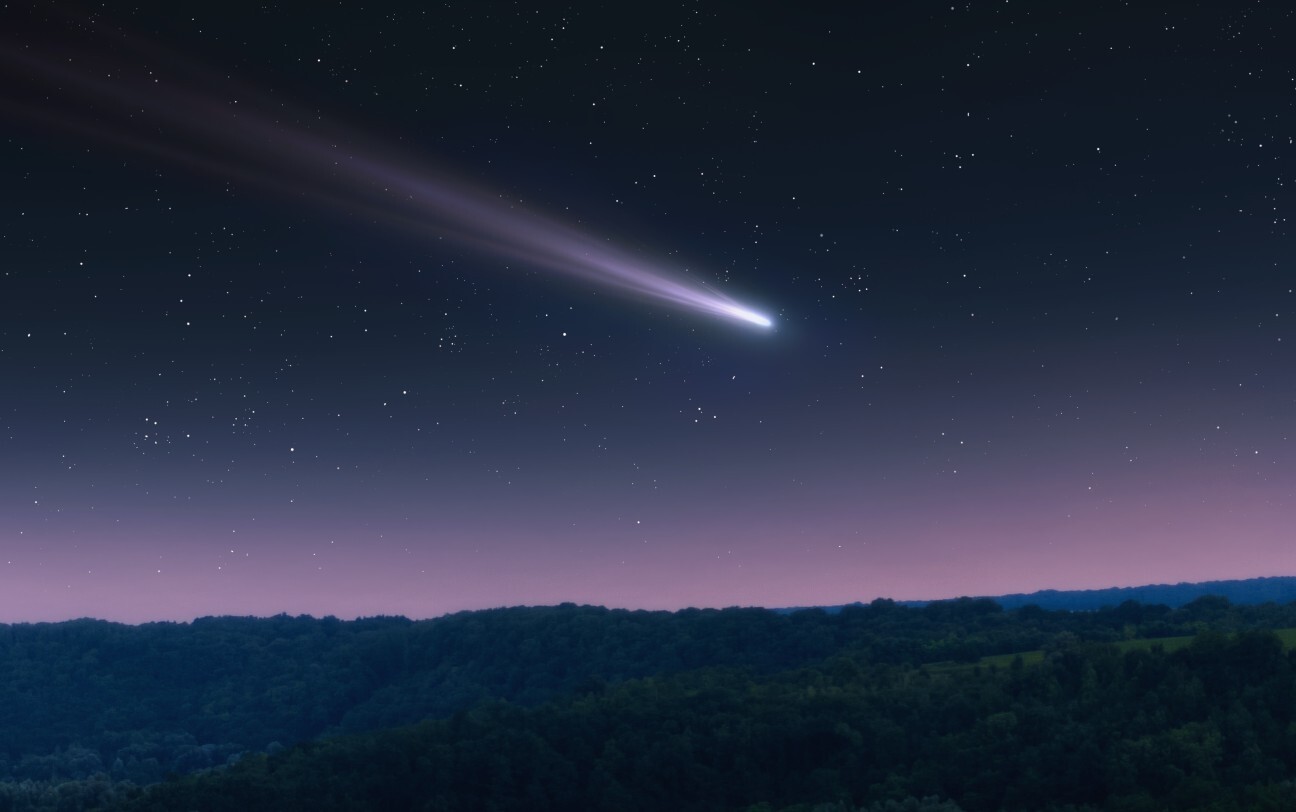
Hubble Space Telescope captured accidental images of Comet K1 breaking into at least four pieces as it exited the solar system, revealing unusual chemical composition and offering insights into early solar system formation.
Science
fromwww.scientificamerican.com
1 month agoHave astronomers found a runaway monster black hole or just a very weird galaxy?
Astronomers discovered RBH-1, a potentially runaway supermassive black hole traveling at over three million kilometers per hour, though ambiguous data makes its true nature uncertain.

OMG science
fromFuturism
4 weeks agoScientists Spot Two Planets That Collided, Resulting in Carnage That Will Send Prickles Through Your Scalp
Astronomers detected a planetary collision around star Gaia20ehk through unusual brightness fluctuations and infrared signatures consistent with massive debris and extreme heat from impact.
Science
fromwww.scientificamerican.com
1 month agoThe universe's brightest supernovae are turbocharged by newborn magnetars
Superluminous supernovae are powered by newly formed magnetars—highly magnetized, rapidly spinning neutron stars that emit intense radiation, marking the first direct observation of a magnetar's birth.
OMG science
fromMail Online
1 month agoAstronomers watch the birth of a magnetar for the first time
Astronomers observed the birth of a magnetar, an extremely dense neutron star with the universe's most powerful magnetic fields, through a superluminous supernova's unusual flickering light pattern over 200 days.
fromFuturism
1 month agoAstronomers Spot Huge Microwave Laser Blasting Into Space
This system is truly extraordinary. We're seeing the radio equivalent of a laser halfway across the universe. Fundamentally, masers and lasers are focused beams of light in the same frequency. In the realm of astrophysics, these can arise from clouds of dust being excited into a higher energy state from the light emitted by other sources, like stars and black holes.
OMG science
fromMail Online
1 month ago'Planetary parade' will see SIX planets align in rare spectacle
Chances to see 4 bright planets with your own eyes occur every few years on average, so it's not once in a lifetime. Even so, the planets are best observable just after sunset, so this is one of the most convenient opportunities for several years.
Science

fromMail Online
1 month agoAliens could be CATAPULTED onto Earth via an asteroid, study claims
We found that life is more likely to survive an asteroid impact, so it's definitely still a real possibility that life on Earth could have come from Mars. Maybe we're Martians! The idea that life could have spread through the solar system or even the universe on rocks is known as the lithopanspermia hypothesis.
Science

Science
fromwww.scientificamerican.com
1 month agoAstronomers spot a young sun blowing bubbles inside the Milky Way
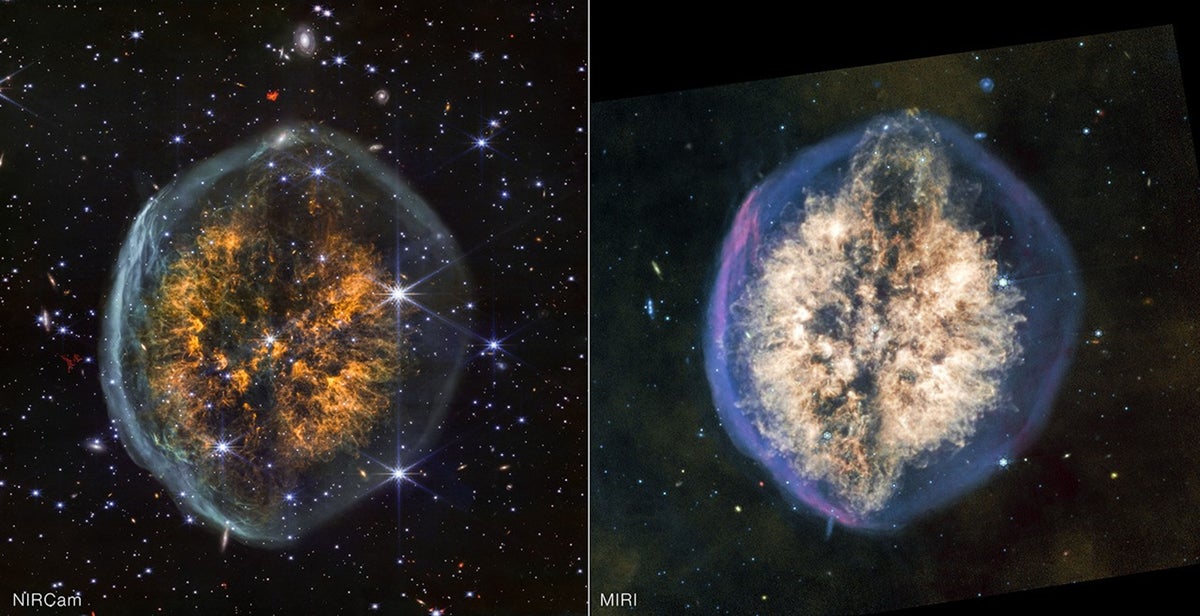
NASA's Chandra X-ray Observatory captured the first image of a young sunlike star's astrosphere, a protective bubble of hot gas 120 light-years away, revealing how stellar winds shape these cosmic structures.

Science
fromTravel + Leisure
2 months agoAstronomers Are Watching This New 'Great Comet' That Could Light Up the Night Sky This April-Here's How to See It
Comet C/2025 R3 (PanSTARRS) may be visible from mid-April through early May, possibly bright enough for binoculars or the naked eye under dark skies.
fromwww.scientificamerican.com
1 month agoAstronomers spot one of the largest spinning structures in the universe
The first time that University of Oxford astronomer Lyla Jung saw the cosmic configuration on her monitor, she almost didn't believe it was real. But it wasand Jung and her colleagues went on to identify one of the largest rotating structures ever found in space: a chain of galaxies embedded in a spinning cosmic filament 400 million light-years from Earth. The finding, published in Monthly Notices of the Royal Astronomical Society, may give astronomers new insights into galaxies' formation, evolution and diversity, Jung says.
Science
fromBig Think
2 months agoWhat the Universe looks like: from nearby to far away
Looking skyward fills us with wonder. Off-world, the Sun, planets, stars, and galaxies all await. Our Solar System encompasses our own cosmic backyard. Farther away, stars and star clusters abound within the Milky Way. Hundreds of billions of stars exist just within our home galaxy. Inside our Local Group, only Andromeda surpasses us in mass, size, and stars. More than 5 million light-years away, galaxies abound in groups and clusters.
Science
fromwww.scientificamerican.com
2 months agoThe sun just unleashed its most powerful solar flare in years
The sun is putting on a show. On Sunday the star unleashed several strong and bright solar flares, including one of the most powerful eruptions seen in decades. Far from the steadily glowing orb we sometimes picture, the sun's surface is made up of roiling plasma thrown about by twisting magnetic fields. When these fields snap, they can throw out huge bursts of energy and charged particles into spacea solar flare.
Science
[ Load more ]