#custom-annotations
#custom-annotations
[ follow ]
#ai #openai #large-language-models #anthropic #ai-agents #seo #structured-data #meta #codex #claude-code #google
#ai
Digital life
fromdiacritical
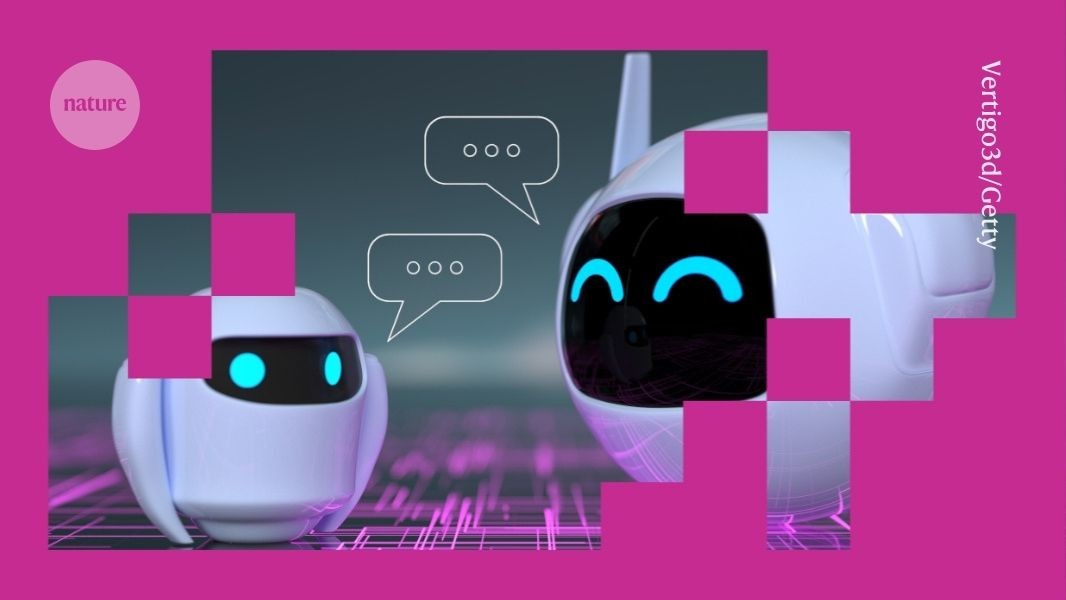
1 week agoFrom Messages to Conversations: AI Agents are Changing how we Find Culture
Automated web traffic has surged, with AI bots now significantly outnumbering human visitors, impacting arts organizations and cultural discovery.
#structured-data
Data science
fromAol
2 weeks agoDemystifying structured data: How to speak an LLM's native language
Structured data is essential for LLMs to accurately interpret and rank online content, enhancing search visibility and user engagement.



Remote teams
fromMedium
1 month agoManaging Human + AI Workflows: The Operating Model Most Teams Are Missing
Hybrid workflows now integrate AI as daily collaborators, but organizational friction—not technical limitations—prevents meaningful impact when companies fail to redesign end-to-end processes and manage verification requirements.
Artificial intelligence
fromFuturism
1 week agoAnalysis Finds That Google's AI Overviews Are Providing Misinformation at a Scale Possibly Unprecedented in the History of Human Civilization
Google's AI Overviews contribute to a misinformation crisis, providing tens of millions of wrong answers every hour despite a 91% accuracy rate.

Business intelligence
fromTechzine Global
1 month agoThoughtSpot launches Spotter Semantics for AI agents
ThoughtSpot introduces Spotter Semantics, a semantic layer using deterministic search tokens to deliver consistent, trustworthy insights to AI agents and business users without relying on LLM-powered text-to-SQL.
fromInfoWorld
1 month agoHow to create AI agents with Neo4j Aura Agent
Neo4j Aura Agent is an end-to-end platform for creating agents, connecting them to knowledge graphs, and deploying to production in minutes. In this post, we'll explore the features of Neo4j Aura Agent that make this all possible, along with links to coded examples to get hands-on with the platform.
Data science

fromInside Higher Ed | Higher Education News, Events and Jobs
2 months agoOn Being Edited by AI
That was a year or so ago, and my first brush with what generative AI could do. Like many, I started using it for fun: planning trips, finding nineteenth century authors I could recommend to fantasy-loving students (a genre I don't read), and making a holiday card starring my dog, Harry. But as work piled up, I didn't have time for new toys, so now I use AI for work.
Higher education
fromPsychology Today
1 month agoHow AI Is Rewiring Winemaking and Wine Collecting
The Brain Science Here's where neuropsychology enters the vineyard. The human brain's relationship with wine is deeply emotional and multisensory. When we taste wine, our orbitofrontal cortex integrates sensory information with memory and emotion; it's why a particular bottle might remind us of our grandmother's kitchen or that study-abroad summer in Tuscany. This neural complexity is what makes wine special, and it's also what makes AI's role in the industry controversial.
Wine
fromCornell Chronicle
1 month agoExperts to examine the use of generative AI in science | Cornell Chronicle
Generative AI is now incorporated into the workflow for many scholars across many disciplines, but the broader scientific community would benefit from taking stock of how this technology could truly benefit our work and how it might distract. We hope the symposium can provide clarity.
Higher education
Artificial intelligence
fromTNW | Artificial-Intelligence
1 month agoAI analytics agents need guardrails, not more model size
Larger AI models cannot solve enterprise governance and data consistency problems; organizations need governed analytics environments with semantic consistency to ensure reliable AI-driven insights.
Data science
fromInfoQ
1 month agoScaling Human Judgment: How Dropbox Uses LLMs to Improve Labeling for RAG Systems
Dropbox uses LLM-augmented human labeling to improve document retrieval quality in RAG systems, addressing the bottleneck of ranking millions of enterprise documents for relevance to user queries.
fromMedium
2 months agoFrom Graphs to Generative AI: Building Context That Pays-Part 1
Every year, poor communication and siloed data bleed companies of productivity and profit. Research shows U.S. businesses lose up to $1.2 trillion annually to ineffective communication, that's about $12,506 per employee per year. This stems from breakdowns that waste an average of 7.47 hours per employee each week on miscommunications. The damage isn't only interpersonal; it's structural. Disconnected and fragmented data systems mean that employees spend around 12 hours per week just searching for information trapped in those silos.
Data science
fromTechCrunch
2 months agoAnthropic releases Sonnet 4.6 | TechCrunch
Anthropic has released a new version of its mid-size Sonnet model, keeping pace with the company's four-month update cycle. In a post announcing the new model, Anthropic emphasized improvements in coding, instruction-following, and computer use. Sonnet 4.6 will be the default model for Free and Pro plan users. The beta release of Sonnet 4.6 will include a context window of 1 million tokens, twice the size of the largest window previously available for Sonnet.
Artificial intelligence
fromInfoQ
2 months agoOpen Responses Specification Enables Unified Agentic LLM Workflows
OpenAI has released Open Responses, an open specification to standardize agentic AI workflows and reduce API fragmentation. Supported by partners like Hugging Face and Vercel and local inference providers, the spec introduces unified standards for agentic loops, reasoning visibility, and internal versus external tool execution. It aims to enable developers to easily switch between proprietary models and open-source models without rewriting integration code.
Artificial intelligence
fromInfoQ
2 months agoBuilding Embedding Models for Large-Scale Real-World Applications
What happens under the hood? How is the search engine able to take that simple query, look for images in the billions, trillions of images that are available online? How is it able to find this one or similar photos from all that? Usually, there is an embedding model that is doing this work behind the hood.
Artificial intelligence
fromFast Company
2 months agoHow to give AI the ability to 'think' about its 'thinking'
This process, becoming aware of something not working and then changing what you're doing, is the essence of metacognition, or thinking about thinking. It's your brain monitoring its own thinking, recognizing a problem, and controlling or adjusting your approach. In fact, metacognition is fundamental to human intelligence and, until recently, has been understudied in artificial intelligence systems. My colleagues Charles Courchaine, Hefei Qiu, Joshua Iacoboni, and I are working to change that.
Artificial intelligence
fromTheregister
2 months agoSemantic ablation: Why AI writing is boring and dangerous
Semantic ablation is the algorithmic erosion of high-entropy information. Technically, it is not a "bug" but a structural byproduct of greedy decoding and RLHF (reinforcement learning from human feedback). During "refinement," the model gravitates toward the center of the Gaussian distribution, discarding "tail" data - the rare, precise, and complex tokens - to maximize statistical probability. Developers have exacerbated this through aggressive "safety" and "helpfulness" tuning, which deliberately penalizes unconventional linguistic friction.
Artificial intelligence
fromenglish.elpais.com
2 months agoHow does artificial intelligence think? The big surprise is that it intuits'
Each of these achievements would have been a remarkable breakthrough on its own. Solving them all with a single technique is like discovering a master key that unlocks every door at once. Why now? Three pieces converged: algorithms, computing power, and massive amounts of data. We can even put faces to them, because behind each element is a person who took a gamble.
Artificial intelligence
fromRehumanize
2 months agoFree AI Humanizer: Humanize AI Text & Bypass AI Detectors
AI Text Humanizer Protects Your Original Intent and Meaning Maintain your core perspective while restructuring sentence patterns. Humanizer ai accurately identifies and locks in technical terms, factual data, and key arguments, ensuring the rewritten draft is simply more readable without any semantic drift. You get a qualitative leap in flow and tone, allowing you to humanize ai text while keeping your original message perfectly intact.
Artificial intelligence
[ Load more ]