#nespresso-pods
#nespresso-pods
[ follow ]
#coffee #starbucks #coffee-brewing #home-brewing #coffee-industry #espresso #coffee-culture #specialty-coffee



London food
fromLondon Business News | Londonlovesbusiness.com
1 day agoFresh bakery near me in Burnt Oak: Why simple coffee and grab-and-go still win - London Business News | Londonlovesbusiness.com
Bakery usage has shifted towards convenience, with customers favoring quick stops and familiar products over variety.
fromDaily Coffee News by Roast Magazine
4 days agoCoffee Quality Institute Revives Coffee Corps Program
The CQI Coffee Corps program represents the very best of the coffee sector. Coffee Corps volunteers embody a spirit of generosity and collaboration that has expanded opportunities for producers and made our industry stronger.
Non-profit organizations
Music production
fromFood & Beverage Magazine
4 days agoCoffee for a Cause: From "Outer Space" to Your Morning Brew - Food & Beverage Magazine
Young NYC participants collaborated with Fred Schneider of The B-52's to create a coffee line supporting local nonprofits, inspired by their song 'Outer Space.'
Coffee
fromYanko Design - Modern Industrial Design News
2 days ago5 Coffee Gadgets & Tools Every Pour-Over Obsessive Is Quietly Adding to Their Morning Ritual Right Now - Yanko Design
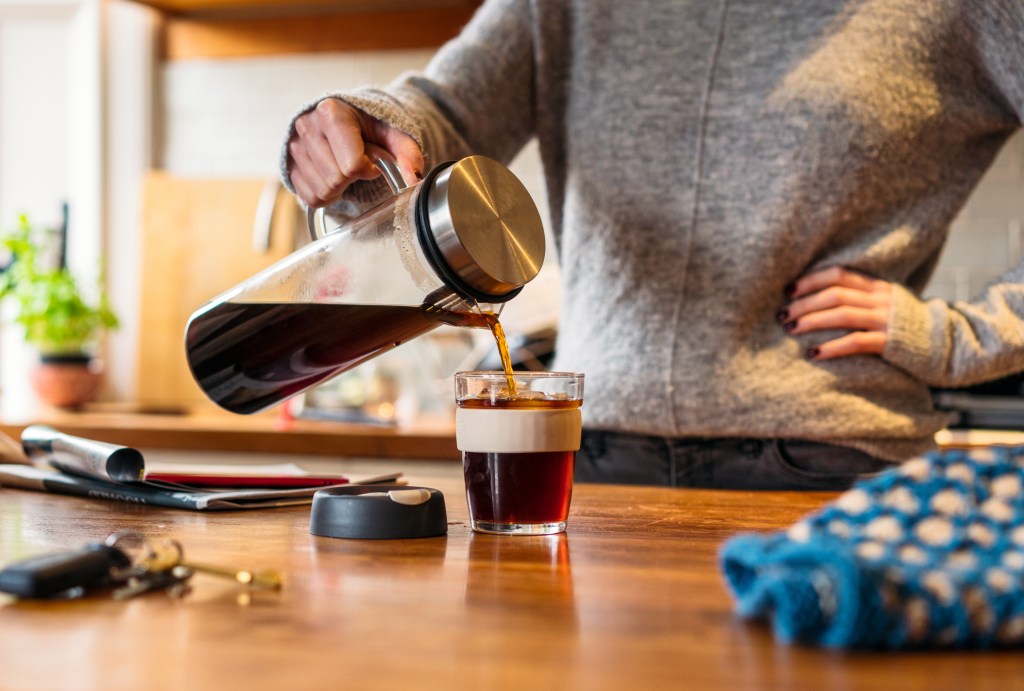
Pour-over coffee requires attention and quality tools, enhancing the ritual of brewing at home with advanced gadgets like the xBloom Coffee Machine.

fromYanko Design - Modern Industrial Design News
1 month agoThis Hermes x Bialetti Moka Pot Concept Has No Business Looking This Good - Yanko Design
If you follow concept design on social media, there's a good chance you've already stumbled across Jane Morelli's work. She's the designer behind that Lacoste x Bialetti moka pot that went viral not too long ago, and now she's back with something that somehow manages to feel even more covetable. For the Year of the Horse, she has created a concept coffee set that imagines what a Hermès x Bialetti collaboration could look like, and the result is genuinely breathtaking.
Design
Public health
fromDaily Coffee News by Roast Magazine
2 months agoTakeaway Coffee Cups Release Thousands of Microplastic Particles
Heating single-use plastic-lined hot beverage cups releases thousands of microplastic fragments into drinks; cup material and temperature strongly increase microplastic release.

Coffee
fromDaily Coffee News by Roast Magazine
1 month agoA Guide to Indonesian Coffee Cultivars and Varieties
Indonesia ranks among the world's top five coffee producers, with a unique history spanning from Dutch colonial introduction in 1699 to modern cultivation of diverse resistant varieties across its archipelago.
fromDaily Coffee News by Roast Magazine
1 month agoCoffee Byproducts Could Reduce Plastic in 'Plastic Wrap'
Coffee byproducts offer a promising, cost-effective and environmentally sustainable alternative for improving the functional and ecological performance of bio/edible films. These agro-industrial residues exhibit a richness in biofunctional compounds such as polyphenols, caffeine and dietary fibers, which contribute significant antioxidant, antimicrobial and UV-barrier properties, making them ideal candidates for applications in active food packaging.
Coffee
#coffee-brewing
Coffee
fromWIRED
1 month agoI Regret to Inform You That You're Using an Inferior Pour-Over Coffee Brewer
The Kalita Wave flatbed pour-over brewer produces consistently excellent coffee with minimal technique required, unlike traditional cone-shaped drippers that demand precise grind size, water temperature, and pouring technique.


Coffee
fromWIRED
1 month agoI Regret to Inform You That You're Using an Inferior Pour-Over Coffee Brewer
The Kalita Wave flatbed pour-over brewer produces consistently excellent coffee with minimal technique required, unlike traditional cone-shaped drippers that demand precise grind size, water temperature, and pouring technique.
Coffee
fromWIRED
1 month agoAeroPress Coffee Is Superb When I'm Traveling, but I Use Mine Even When I Stay Home
The AeroPress is a portable, versatile coffee brewer that produces café-quality coffee using grounds, hot water, and a paper filter, with hundreds of brewing recipes and customization options available.
fromWIRED
1 month agoMy Favorite Piece of Coffee Gear Makes Me Do All the Work, and That's Why I Love It
Where larger, electric espresso machines generate the pressure and heat needed for espresso inside their massive housings, the Flair takes a different approach. A large lever sits atop a small stack of brewing equipment, and you use that lever to create the bars of pressure necessary to get espresso. There's a chamber for your grounds and another atop it for hot water.
Coffee
fromDaily Coffee News by Roast Magazine
1 month agoU.N. Officially Designates Oct. 1 International Coffee Day
The UN General Assembly adopted the resolution March 10, while inviting the UN Food and Agriculture Organization (FAO) to help facilitate the annual observance in collaboration with relevant organizations, particularly the International Coffee Organization (ICO).
Coffee
fromTasting Table
1 month agoDecaf Coffee Gets A Bad Reputation. Here's Why It Shouldn't - Tasting Table
A good cup of coffee (decaf included) delivers on all fronts: Flavor, acidity, body, sweetness, and balance, aka The Pleasure Principle. The infamously-snobbish coffee élite might maintain that decaf drinkers aren't "real coffee fans." But, as a veteran barista, I would argue that the opposite is actually true: Only the most diehard bean-heads tread decaf domain.
Coffee
fromTasting Table
1 month agoThe 6 Best Moka Pots, According To Reviews - Tasting Table
The moka pot was born in Italy in the 1930s, as a simple way to give people the ability to make cafe-quality coffee from the comfort of their own homes. Since then, a few superior moka pot models have stood the test of time, becoming the gold standard according to those who use them.
Coffee
fromWIRED
1 month agoI Test Many Coffee Machines for a Living. This One Gets to Stay
My denomination is good, old-fashioned drip coffee. That's what I drink first thing, before I even think about crafting a shot of espresso. I'm WIRED's lead coffee writer and I've developed a deep fondness for coffee's many variations, from espresso to Aeropress to cold brew. But "coffee" to me, in my deepest soul, still means a steaming mug of unadulterated drip.
Coffee
fromFast Company
1 month agoWhy Luckin Coffee, Starbucks' biggest competitor, wants to buy Blue Bottle
With around 40,000 stores and $37 billion in revenue, Starbucks is the biggest coffee company in the world. While it's had a few stagnant years, its all-star CEO Brian Niccol has been staging a design-led turnaround, in which cozier cafes and a protein-laden menu have siren-called customers back with some early success.
Coffee
Coffee
fromDaily Coffee News by Roast Magazine
1 month agoOpinion: On Sugar-Laden Coffee in the MAHA Crosshairs
Large U.S. coffee chains increasingly sell sugar-laden beverages marketed as seasonal drinks, with some containing over 115 grams of sugar, prompting health officials to question their safety.
#specialty-coffee
Coffee
fromAol
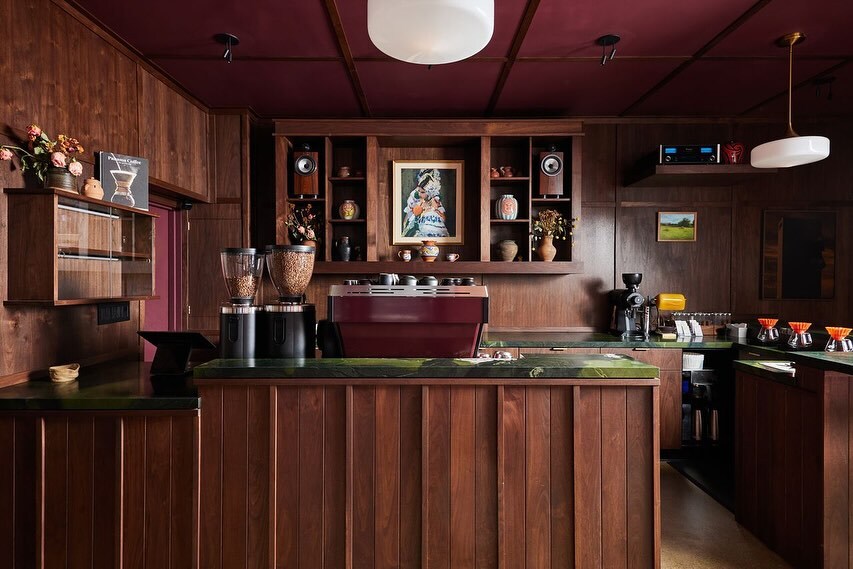
1 month agoThis Tiny NYC Cafe Was Just Named One of the World's Best Coffee Shops
Arcane Estate Coffee in New York City's West Village ranked 12th globally on the 2026 World's 100 Best Coffee Shops list, one of only nine U.S. cafés honored, through exclusive focus on Panama's Chiriquí highlands.
Coffee
fromAol
1 month agoThis Tiny NYC Cafe Was Just Named One of the World's Best Coffee Shops
Arcane Estate Coffee in New York City's West Village ranked 12th globally on the 2026 World's 100 Best Coffee Shops list, one of only nine U.S. cafés honored, through exclusive focus on Panama's Chiriquí highlands.
Coffee
fromDaily Coffee News by Roast Magazine
1 month agoWeekly Coffee News: La Marzocco's New Club + 'Responsible' Sourcing Milestone
Machine recognition programs, corporate sustainability milestones, education and scholarship initiatives, and allegations of corporate profit-shifting define current coffee industry developments.
fromwww.theguardian.com
2 months agoFrothing over: the coffee foams and indulgent' drinks keeping Australian cafes afloat
Coffee brimming with lemon myrtle cream. Matcha banked with strawberry-lychee foam. Cold brew with choc-orange froth thick enough to stuff a pillow. Every caffeinated drink I've ordered in Sydney recently has the appearance of a generously frosted cake. It's a trend you'll see or sip across Australia, from Toasted Carine's iced latte with maple cold foam in Perth to Le Bajo's chilled oolong tea with raspberry cream in Melbourne.
Coffee
fromTasting Table
2 months agoThe Interesting Reasons To-Go Coffee Cups Have That Extra Teeny Hole - Tasting Table
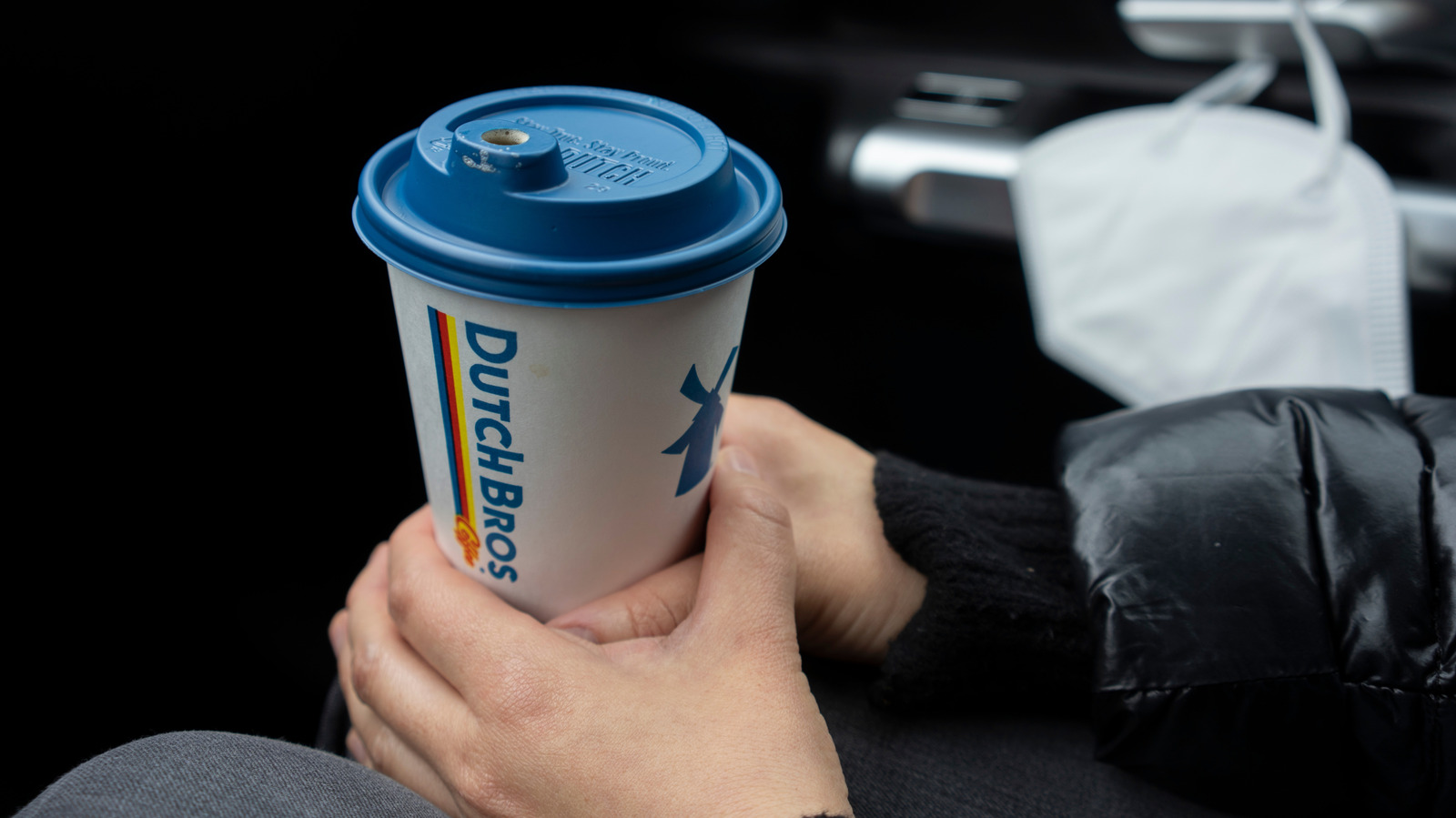
First and foremost, that small hole allows steam to escape. If a lid is fully sealed right after the cup is filled, steam can gather inside. Under the right conditions, that could build enough pressure to pop the lid off and result in a nasty burn. Letting a tiny bit of steam escape instead makes that pressure build up less likely to happen.
Coffee
Coffee
fromDaily Coffee News by Roast Magazine
2 months agoSpin the Wheel at Counter Culture Coffee's New Brewing Competition Brewlette
Counter Culture Coffee launches Brewlette, a free regional manual-brewing competition using randomized TDS targets and blind taste judging to broaden participation and teach TDS.
[ Load more ]