#rotation-changes
#rotation-changes
[ follow ]
#astronomy #exoplanets #planet-formation #space-exploration #nasa #planetary-defense #james-webb-space-telescope


fromwww.scientificamerican.com
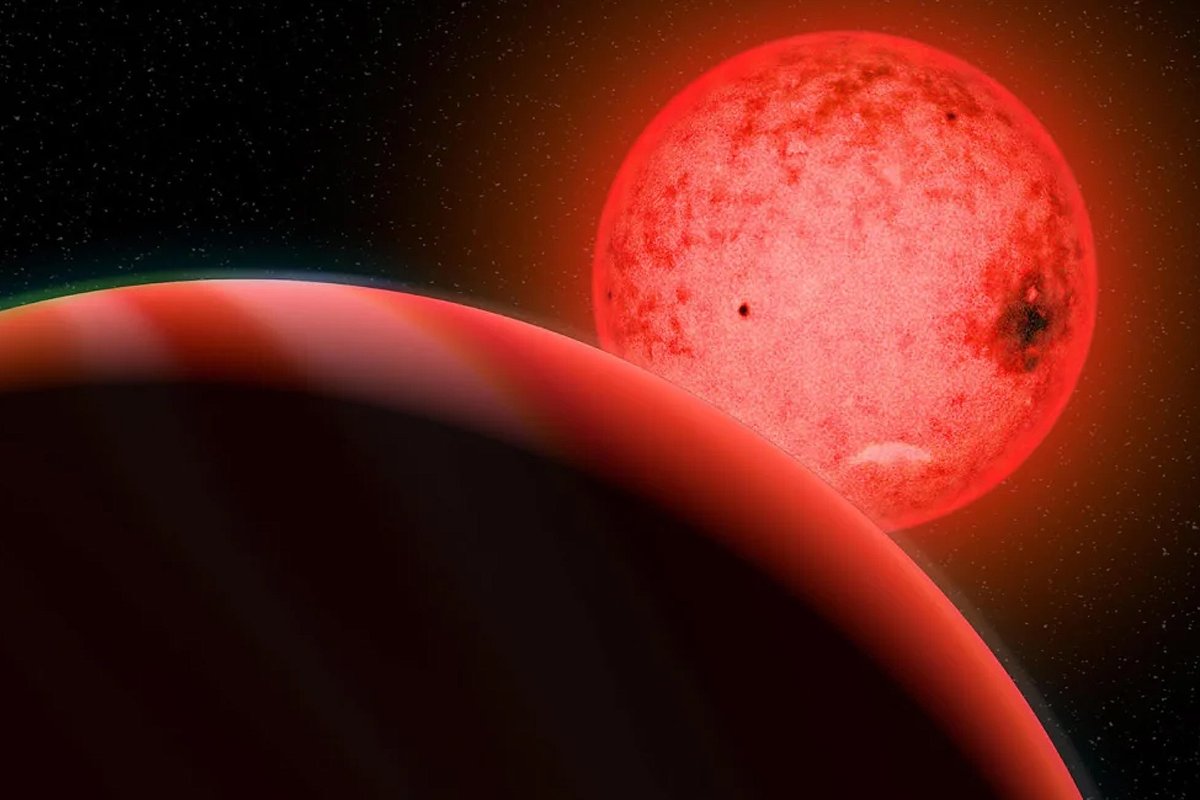
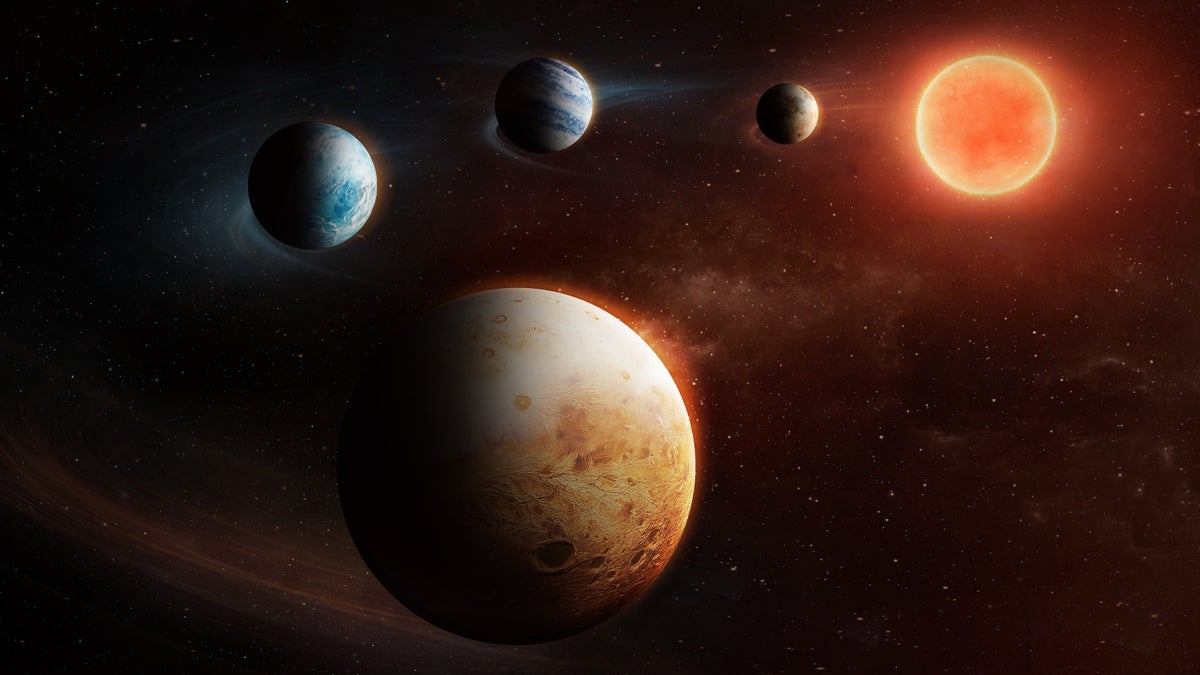
3 days agoWhat's the weirdest planet in the solar system?
Venus suffered a massive runaway greenhouse effect, filling its atmosphere with heat-trapping carbon dioxide, resulting in 90 times the surface pressure of Earth and temperatures above 460 degrees Celsius.
OMG science



#astronomy
fromFuturism
1 month agoLos Angeles
Astronomer Who Discovered Water on Distant Planet Murdered Outside Home
Carl Grillmair, a renowned Caltech astronomer who studied exoplanets and stellar streams, was shot and killed outside his home in Antelope Valley; a suspect was arrested and charged with his murder.

Science
fromwww.scientificamerican.com
1 month agoHave astronomers found a runaway monster black hole or just a very weird galaxy?
Astronomers discovered RBH-1, a potentially runaway supermassive black hole traveling at over three million kilometers per hour, though ambiguous data makes its true nature uncertain.

Science
fromwww.scientificamerican.com
1 month agoThe universe's brightest supernovae are turbocharged by newborn magnetars
Superluminous supernovae are powered by newly formed magnetars—highly magnetized, rapidly spinning neutron stars that emit intense radiation, marking the first direct observation of a magnetar's birth.
fromwww.theguardian.com
1 month agoThe moon is safe': asteroid is not on collision course, scientists confirm
Discovered in December 2024, asteroid 2024 YR4 was briefly considered the most dangerous asteroid in decades after scientists initially estimated it had a 3.1% chance of colliding with the Earth in 2032. Closer observations quickly ruled out a city killer scenario, but instead astronomers calculated there was a 4.3% chance that the moon lay in the path of impact.
Science
fromdesignboom | architecture & design magazine
1 month agomechanical clock with rotating discs can tell what time it is on other planets
Since every planet spins at a different speed, the gears are built with different ratios: Earth takes about 24 hours to spin once, Mars takes about 24.6 hours, Jupiter spins much faster, and Saturn spins fast too. Because of this, each dial shows the real day cycle of that planet, so the clock doesn't calculate time digitally.
Gadgets
OMG science
fromFuturism
1 month agoScientists Spot Two Planets That Collided, Resulting in Carnage That Will Send Prickles Through Your Scalp
Astronomers detected a planetary collision around star Gaia20ehk through unusual brightness fluctuations and infrared signatures consistent with massive debris and extreme heat from impact.
OMG science
fromwww.theguardian.com
1 month agoA molten, mushy state': scientists may have found a new type of liquid planet
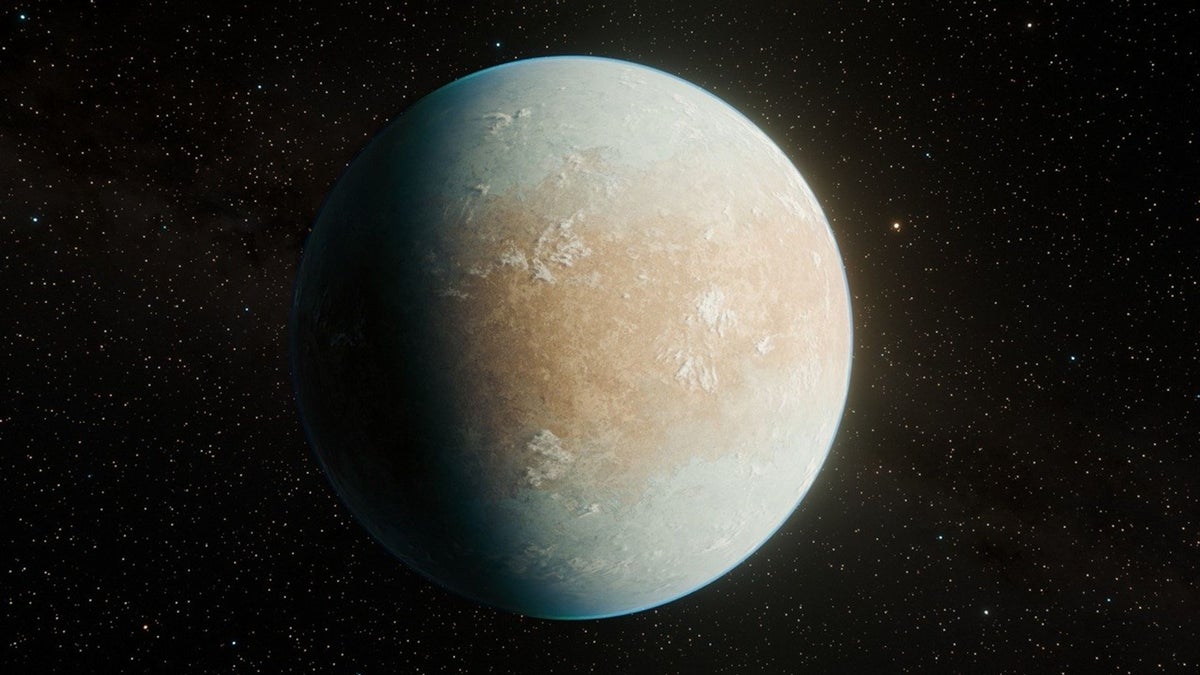
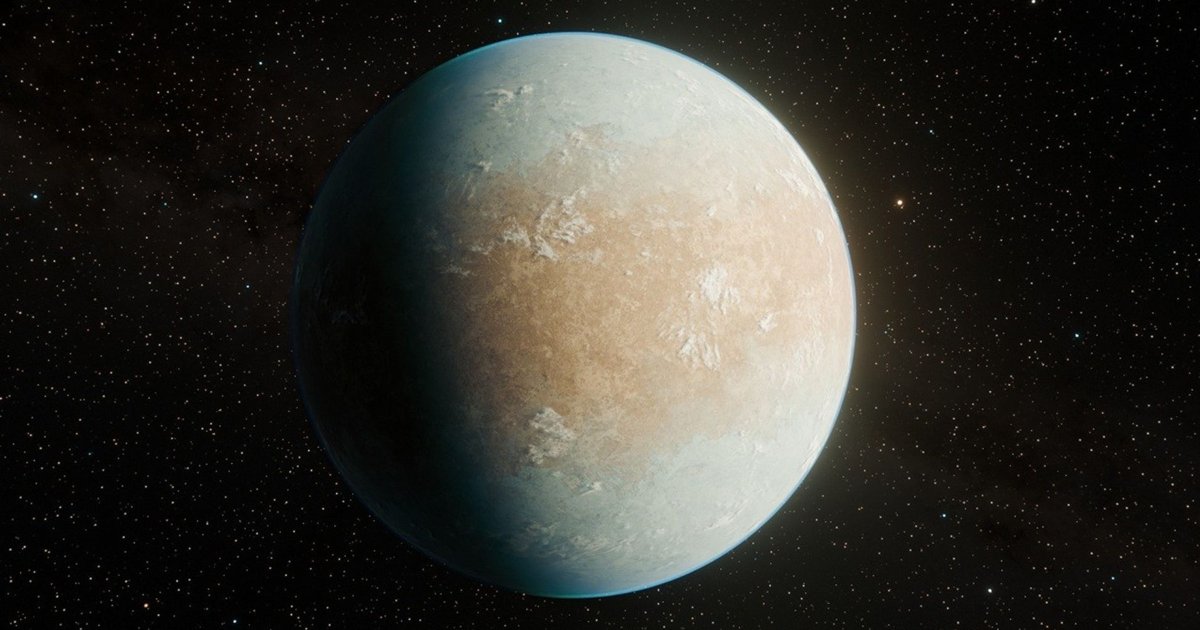
Astronomers discovered L98-59d, a molten lava planet 35 light years away that represents an entirely new category of liquid planet with surface temperatures of 1,900°C and a hydrogen sulfide atmosphere.
OMG science
fromwww.scientificamerican.com
1 month agoThe sun and thousands of its twins migrated across the Milky Way just in time
The sun migrated from the Milky Way's crowded center to its current outer position, accompanied by thousands of similar stars that unexpectedly crossed the galactic corotation barrier.

OMG science
fromMail Online
1 month agoAstronomers watch the birth of a magnetar for the first time
Astronomers observed the birth of a magnetar, an extremely dense neutron star with the universe's most powerful magnetic fields, through a superluminous supernova's unusual flickering light pattern over 200 days.




fromMail Online
1 month agoAliens could be CATAPULTED onto Earth via an asteroid, study claims
We found that life is more likely to survive an asteroid impact, so it's definitely still a real possibility that life on Earth could have come from Mars. Maybe we're Martians! The idea that life could have spread through the solar system or even the universe on rocks is known as the lithopanspermia hypothesis.
Science
fromNature
2 months agoCore-envelope miscibility in sub-Neptunes and super-Earths - Nature
The population of super-Earths and sub-Neptunes, and the origin of the radius valley that separates these two classes of planets, is best explained by cores that are made of an Earth-like composition without a substantial amount of accreted ice8,9,10,11. For sub-Neptunes, the hydrogen-rich envelope overlies the rocky core for billions of years, whereas for super-Earths, the envelope may be retained for about 100 Myr (refs. ).
Science
fromwww.scientificamerican.com
1 month agoNotorious asteroid 2024 YR4 won't crash into the moon after all
Soon after it was spotted in December 2024, worldwide telescopic observations quickly positioned it as the most dangerous space rock ever discovered—one that stood a 3.1-percent (or 1-in-32) chance of crashing into Earth on December 22, 2032. If it were to hit one of the cities potentially in its path, this 60-meter asteroid would have unleashed a force comparable to several atomic bombs, devastating the unfortunate metropolis.
OMG science
fromwww.scientificamerican.com
2 months agoAstronomers spot one of the largest spinning structures in the universe
The first time that University of Oxford astronomer Lyla Jung saw the cosmic configuration on her monitor, she almost didn't believe it was real. But it wasand Jung and her colleagues went on to identify one of the largest rotating structures ever found in space: a chain of galaxies embedded in a spinning cosmic filament 400 million light-years from Earth. The finding, published in Monthly Notices of the Royal Astronomical Society, may give astronomers new insights into galaxies' formation, evolution and diversity, Jung says.
Science
fromwww.scientificamerican.com
2 months agoHow can galaxies ever collide in an ever-expanding universe?
Okay, first thing first: the universe is in fact expanding. We've known this for more than a century now, and it's the basis for modern cosmology. This idea is called the big bang modelwhich is an unfortunate name because it brings to mind a cosmos expanding like an explosion, with galaxies moving away from each other through space like shrapnel. But in fact space itself is expanding, and that's different.
Science
Science
fromwww.scientificamerican.com
1 month agoAstronomers spot a young sun blowing bubbles inside the Milky Way
NASA's Chandra X-ray Observatory captured the first image of a young sunlike star's astrosphere, a protective bubble of hot gas 120 light-years away, revealing how stellar winds shape these cosmic structures.
[ Load more ]