#wind-power-industry
#wind-power-industry
[ follow ]
#renewable-energy #energy-crisis #offshore-wind #solar-power #fossil-fuels #clean-energy #solar-energy



#solar-panels
Real estate
fromRedfin | Real Estate Tips for Home Buying, Selling & More
12 hours agoMoving Into a Home With Solar Panels: What to Know Before and After Closing
Moving into a home with solar panels involves understanding ownership responsibilities, verifying system performance, and gathering essential documentation.
fromElite Traveler
23 hours agoMeet Zero: The Renewable Superyacht With a World-First Power System
Zero eliminates diesel engines entirely, replacing them with an all-electric power and propulsion system with a DC grid at its core, and photovoltaic-thermal panels that capture the light and heat of solar energy.
Alternative transportation
World news
fromFortune
9 hours agoHalliburton CEO: U.S. oil rebound enters 'early innings' as Iran war triggers 'long-lasting' global push for energy outside the Middle East | Fortune
The U.S. oil sector is rebounding, driven by energy security concerns and increased production amid geopolitical tensions.
Agriculture
fromIndependent
3 days ago'This could be groundbreaking for Ireland Inc and the midlands' - New research reveals transformative potential of 'energy parks'
Bord na Móna is set to transform state-owned bogland into energy-parks combining windfarms, data centres, and manufacturing facilities.
from24/7 Wall St.
4 days agoWhy First Solar Stands Out Among Its Peers: Does It Belong in Your Portfolio?
First Solar closed FY2025 with $9.54 billion in shareholder equity, $2.80 billion in cash, and total liabilities that fell 8.77% year over year, showcasing a stable and strengthening balance sheet.
Retirement

fromTechCrunch
19 hours agoBlue Energy raises $380M to build grid-scale nuclear reactors in shipyards | TechCrunch
"The nuclear power technology that is most common - light water reactors - was originally invented for nuclear submarines. There has actually always been a history of basically pre-fabbing it and looking at it in a shipyard context."
Science
fromFortune
7 hours agoHow the Iran energy crisis is supercharging Southeast Asia's EV transition | Fortune
"The energy crunch is doing much more to accelerate the EV transition than any message on climate change," said Lawrence Loh, who heads the Center for Governance and Sustainability at the National University of Singapore (NUS). "Ultimately, it's about what hits your pocket-and the Iran war hits your pocket right away."
Alternative transportation
fromTechCrunch
6 days agoExclusive: This energy startup's bet on 100-year-old grid tech is paying off | TechCrunch
"We were considering multiple forms of capital when we started. It just felt like the opportunity is so large that venture capital gives us the opportunity to take those risks upfront and have the possibility to generate an outsized return."
Venture
fromwww.theguardian.com
1 day agoClimate groups sue US government over approval of new BP project in Gulf of Mexico
The Trump administration has teed up the entire Gulf region for a Deepwater Horizon sequel with its approval of BP's extremely risky ultra-deepwater drilling project, said Brettny Hardy, senior attorney at Earthjustice, one of the groups.
Environment
fromFortune
1 day agoData centers now account for half of all new U.S. electricity use, just as Americans start to sour on AI | Fortune
Data centers accounted for around 50% of all electricity demand growth in the U.S. last year, according to the IEA, far surpassing the rise in electricity usage in the residential, industrial, and transport sectors.
Environment
US news
fromwww.npr.org
1 month agoEasy-to-use solar panels are coming, but utilities are trying to delay them
Plug-in solar panels that connect to standard outlets are gaining traction in the U.S. as a cost-effective alternative to traditional rooftop solar, though utility opposition based on safety concerns is slowing legislative adoption.
#energy-transition
Environment
fromFortune
2 weeks agoCountries are turning to 'structurally more resilient' energy sources as oil and gas crisis deepens, UN renewables chief says | Fortune
The energy transition is accelerating, with renewables now comprising 49.4% of global energy capacity, driven by geopolitical factors and decreasing costs.


fromwww.aljazeera.com
2 months agoRenewables muscle fossil fuels out of EU electricity market, says research
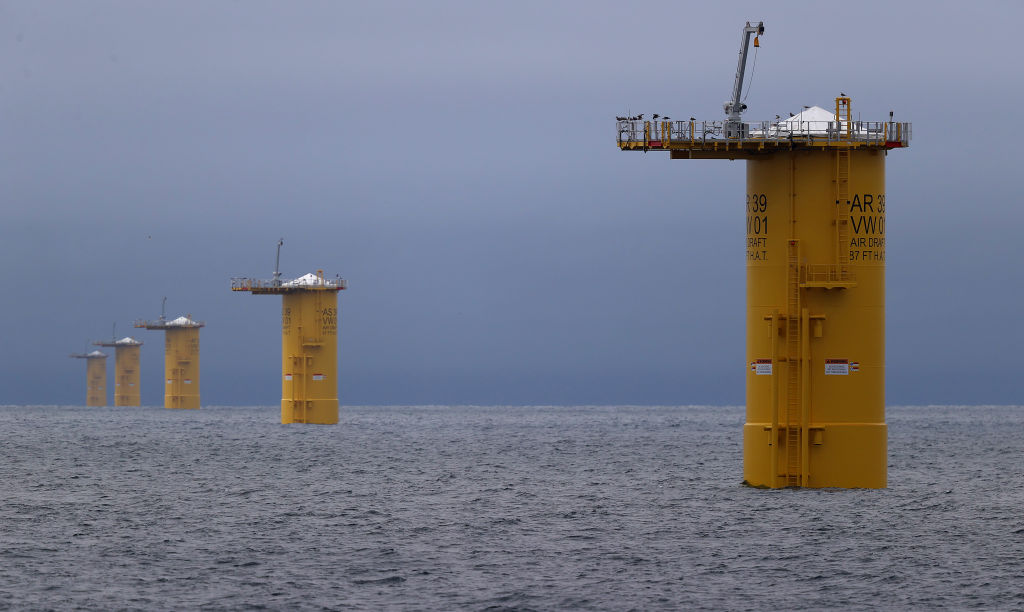
Solar and wind power provided more electricity than coal and gas last year, leading a global trend, said think tank Ember. Solar and wind power outperformed fossil fuels in the European Union for the first time last year, a new high watermark on Europe's transition to green and autonomous energy. The two sources of energy generated 30 percent of EU electricity, compared with 29 percent for coal and gas, Ember, a global energy think tank, said on Thursday in its European Electricity Review.
Environment
fromFast Company
2 months agoHow to meet the surging energy demand without needing as much new electricity
When Specian dug into the data, he discovered that implementing energy-efficiency measures and shifting electricity usage to lower-demand times are two of the fastest and cheapest ways of meeting growing thirst for electricity. These moves could help meet much, if not all, of the nation's projected load growth. Moreover, they would cost only half-or less-what building out new infrastructure would, while avoiding the emissions those operations would bring.
Environment
[ Load more ]