#dream-metaphor

[ follow ]
fromMail Online
3 days ago

Dreams that indicate you're about to DIE - including seeing the light

Many reported vivid dreams featuring lost loved ones, while others saw symbols of transition, including doors, stairways and light. According to the researchers, these themes may offer psychological relief and meaning to people facing end of life.
Medicine
Arts
fromwww.nytimes.com
3 days ago

Surrealism, Defined: What to Know About One of Art's Most Misused Terms

Surrealism is a rebellious philosophy of life expressed through literature and art, emerging from discontent with societal norms post-World War I.
Mental health
fromPsychology Today
4 days ago

When You Can't Picture Yourself in Your Own Future

Many young adults experience a psychological disconnection from their future, feeling detached from their own lives and milestones due to trauma and existential concerns.
Psychology
fromMail Online
4 days ago

Scientists reveal scary dreams might actually be GOOD for you

Experiencing fear in dreams may indicate better emotional regulation skills, despite being linked to worse mood the following day.
Parenting
fromPsychology Today
5 days ago

Working With the Inner Child

The inner child concept emphasizes how childhood experiences shape our adult selves and the importance of healing through compassionate responses.
Relationships
fromSilicon Canals
5 days ago

Psychology suggests you will always push away good things if your subconscious mind doesn't believe you deserve them - and most people who do this don't recognize it as pushing, they just wonder why nothing good ever seems to stay - Silicon Canals

Self-sabotage often occurs unconsciously, pushing good things away despite a desire for improvement.
Books
fromPsychology Today
1 week ago

Do You See Yourself in a Story?

Comic books have evolved into a serious medium for exploring trauma and psychological depth, exemplified by works like Maus.
Science
fromenglish.elpais.com
1 week ago

From Cajal to Dali and Lorca: The drawings that revealed the substance of the human mind and inspired Surrealism

Santiago Ramon y Cajal discovered the structure of the nervous system and won the Nobel Prize in Medicine in 1906, influencing both science and art.
#lucid-dreaming
Writing
fromPsychology Today
2 weeks ago

How Lucid Dreaming Can Make Us More Creative

Lucid dreaming enhances creativity and problem-solving abilities, as shown by studies on haiku poetry written in this state.
Writing
fromPsychology Today
2 weeks ago

How Lucid Dreaming Can Make Us More Creative

Lucid dreaming enhances creativity and problem-solving abilities, as shown by studies on haiku poetry written in this state.
Mental health
fromPsychology Today
1 week ago

The Unlived Life: Jung's Most Haunting Concept

Success can lead to an unsettling realization of the unlived life, where unfulfilled aspects of personality and desires remain hidden.
Arts
fromHyperallergic
2 weeks ago

Salvador Dali's Frustrating Vision of the Divine

Dalí's 'Nuclear Mysticism' prioritizes metaphysical themes over rich experiences, exemplified by his painting 'Christ of Saint John of the Cross'.
Relationships
fromSilicon Canals
2 weeks ago

Psychology says people who crave both complete freedom and deep companionship aren't confused - they're experiencing the central tension of the human condition, and the people who resolve it aren't the ones who choose a side but the ones who stop treating it like a choice - Silicon Canals

The autonomy-connection paradox highlights the human need for both independence and intimacy in relationships.
Psychology
fromPsychology Today
2 weeks ago

The Invisible Game: Jordan's Negative Space and Jung's Shadow

Michael Jordan and Carl Jung both emphasize the importance of recognizing overlooked spaces for extraordinary performance and deeper self-understanding.
Psychology
fromPsychology Today
3 weeks ago

Your Most Horrifying Thoughts May Not Mean What You Think

Intrusive sexual thoughts are a common form of OCD, often misidentified and not indicative of actual desire.
Mental health
fromPsychology Today
1 month ago

Why Our Brain Tells Us Horror Stories at Night

Nighttime cognition shifts toward rumination and catastrophic thinking due to reduced prefrontal cortex efficiency, causing minor problems to feel like existential crises that resolve with daylight.
Artificial intelligence
fromPsychology Today
1 month ago

Anti-Intelligence: When Language Operates Without a Mind

AI generates language through a fundamentally different structural architecture than human cognition, not through inferior intelligence but through inverted processes detached from lived experience and stakes.
#dreams
Miscellaneous
fromThe Walrus
1 month ago

I Tried New Tech That Claimed It Could Hack My Dreams | The Walrus

A sleep doctor's early fascination with unexplained nighttime deaths led him to establish one of Canada's first independent sleep laboratories, pioneering sleep disorder diagnosis and treatment.
Medicine
fromThe Atlantic
1 month ago

The Mind-Body Question

Witnessing the interior of one's body through medical imaging reveals the material nature of consciousness and confronts us with our own mortality and physical vulnerability.
Philosophy
fromPsychology Today
1 month ago

The Death Drive

Some individuals exhibit necrophilia—a destructive impulse and love of death—driven by fear of life's uncontrollability, manifesting in pathological enjoyment of war and destruction.
Writing
fromPsychology Today
1 month ago

How to Get What You Want

Historical examples of powerful women demonstrate that independent thinking and strategic action enable individuals to achieve their goals despite systemic constraints.
Psychology
fromPsychology Today
1 month ago

How Does the Brain Know Itself?

Introspection provides direct empirical contact with physical reality through interoception and neural integration, where bodily sensations become emotional and self-aware experiences via the insula and prefrontal cortex.
fromSilicon Canals
1 month ago

Carl Jung said the second half of life has a completely different purpose than the first - here's what that means for everyone over 55 - Silicon Canals

In the afternoon of life, one had to find that meaning from within. This realization struck the author profoundly upon retirement, when all external markers of identity—job sites, customers, crew management—vanished, leaving only the question of personal identity stripped of professional achievement and external validation.
Careers
Productivity
fromPsychology Today
2 months ago

The Benefits of Imagination

Imagination enables mental simulation of possibilities, improving decision-making, motivating action through vivid future emotions, expanding perspective, and fostering empathy beyond immediate reality.
fromPsychology Today
1 month ago

The Architecture of Identity: How the Brain Builds a Self

Attention is the brain's filtering mechanism; what passes through that filter is what gets encoded. What gets encoded becomes memory. And memory is the raw material of identity. So in the architecture of your identity, attention is the doorway.
Miscellaneous
Mental health
fromPsychology Today
2 months ago

What to Make of Nightmares

A maggot dream revealed Amelia's disgust and fear tied to starting a small business and pointed toward coping through partner support and examining specific fears.
#consciousness
fromMail Online
1 month ago

Consciousness can connect you to the entire UNIVERSE, theory suggests

Your consciousness can connect you with the entire universe, a groundbreaking study suggests. Experts from Wellesley College in Massachusetts claim that traditional connections in the brain cannot fully explain how we are aware of our existence. Instead, they argue that quantum physics taking place within our skull is what generates awareness. This includes the idea that particles can exist in multiple states and locations at the same time.
Science
fromPsychology Today
1 month ago

Accomplishment Hallucination: When the Tool Uses You

Accomplishment Hallucination is a cognitive state in which speed feels like competence, output feels like accomplishment, and work feels done when the actual work-the thinking-through, the failure-mode analysis, the sitting with uncertainty until the problem reveals its structure-hasn't happened at all. Physics need not apply. AI can create a similar state in waking life—literally, as your very words assume form before your eyes like a conjuring sorcerer. But, like real life, the code may be buggier than we realize.
Artificial intelligence
fromPsychology Today
1 month ago

The Cave You Didn't Build

Plato's choice of this word is deliberate. He is not describing neutral carriers. He is describing people whose job is manufacturing a convincing reality for an audience that cannot see behind the curtain. Here is what matters clinically: the conjurers are not necessarily villains. They may be devoted parents, conscientious teachers, or well-meaning community leaders.
Philosophy
Miscellaneous
fromPsychology Today
1 month ago

The Benefits and Burdens of Keeping Secrets

Secrets function as social bonding mechanisms and markers of trust, while those kept from ourselves represent repressed aspects of identity that affect mental and physical well-being.
Mindfulness
fromPsychology Today
1 month ago

When Thought Changes the Thinker

Human intelligence is fundamentally transformative—it changes the thinker themselves—while artificial intelligence generates insights without being transformed by them.
#maladaptive-daydreaming
fromPsychology Today
2 months ago

Higher States of Consciousness

A few years ago, I climbed over a gate and found myself gazing down at a valley. After I'd been walking for a few minutes, looking at the fields and the sky, there was a shift in my perception. Everything around me became intensely real. The fields and the bushes and trees and the clouds seemed more vivid, more intricate and beautiful.
Mindfulness
Psychology
fromSilicon Canals
2 months ago

Quote of the day by Carl Jung: "Until you make the unconscious conscious, it will direct your life and you will call it fate" - Silicon Canals

Unconscious patterns and autopilot behavior drive most decisions, causing repeated life outcomes until they are consciously examined and changed.
Mental health
fromNature
2 months ago

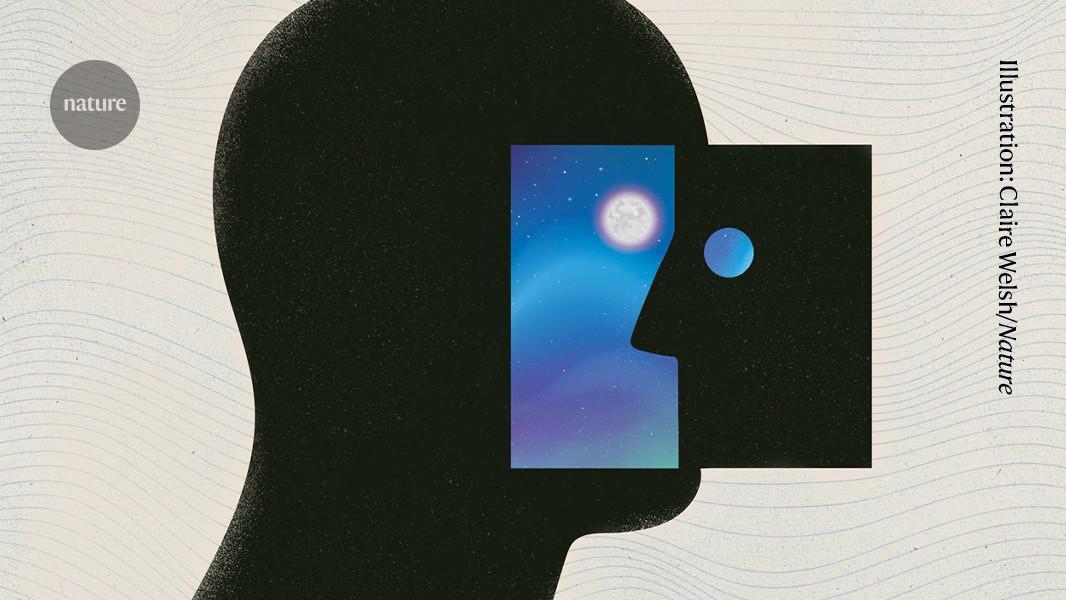
Daily briefing: What people with no 'mind's eye' can tell us about consciousness

Vividness of mental imagery, handwriting practices, psychiatric-diagnostic revisions, and emerging brain–computer interfaces shape memory, creativity, education, mental-health classification, and technology development.
fromPsychology Today
2 months ago

The Link Between Thinking and Being

Metaphors are linked to how we experience the world around us, according to seminal work by researchers George Lakoff and Mark Johnson. In English, we "move forward" with our lives and don't "retreat into" the past. We speak about people who are "cold as ice" and "heavy" matters we need to resolve. Some of these metaphorical expressions are more than just, well, expressions-they are actually based on our sensory experiences. This mind-body link is called "embodied cognition."
Science
Mindfulness
fromSilicon Canals
1 month ago

9 signs your intuition is stronger than you realize even if you've learned to doubt yourself - Silicon Canals

Intuition is a reliable, often-overlooked guide that detects patterns and warns before conscious awareness; pay attention to gut feelings.
fromFast Company
2 months ago

Why everything you think about yourself could be an illusion

For most of my life, I thought of myself as a fixed entity: This is me. These are my traits. This is who I am. I assumed I was essentially that same person who loved sugary cereal at age 8, fried chicken at 12, and tequila at 21, and who still loves those things now, even if my stomach disagrees. But this is an illusion. Neuroscience, physics, and Buddhism all agree: There is nothing fixed about us-not even close.
Philosophy
Psychology
fromPsychology Today
1 month ago

What Archetypal Psychology Is and Why It Matters

Modern psychology excels at identifying symptoms but often overlooks deeper narrative patterns that shape human experience and meaning.
Science
fromTheregister
2 months ago

Sound cues steered dreams and improved puzzle-solving

Timed sound cues during sleep (targeted memory reactivation) can prompt dream content and double next-morning puzzle-solving rates for some participants.
fromSilicon Canals
2 months ago

If you can't fall asleep without background noise, psychology says it reveals something deeper about your mind - Silicon Canals

Like clockwork, every night around 10 PM, I reach for my phone and open my white noise app. The familiar whoosh of ocean waves or steady hum of a fan fills my bedroom, and only then can I finally drift off to sleep. For years, I thought this was just a quirky habit I'd developed during college. But recently, I discovered there's actually fascinating psychology behind why some of us literally cannot fall asleep in complete silence.
Mental health
#aphantasia
fromPsychology Today
2 months ago

Finessing Fate: Living With Two Forms of Power

An old definition of the word fate is "the will of the gods." We might say that it is a fitting metaphor, as it suggests that fate comes from a source much larger than ourselves. Its immensity will stretch way beyond what is in our control. We can ask: How can we create a life that reflects our dreams and what we hold to be important, when so much lies outside our sphere of influence?
Philosophy
Psychology
fromSilicon Canals
1 month ago

Why some of us build entire worlds inside our heads and then feel homesick for places that never existed - Silicon Canals

Elaborate inner worlds built through imagination are common cognitive features that fulfill emotional needs, characterized by specific details and consistent logic that can persist for decades.
Mental health
fromPsychology Today
2 months ago

How Childhood and Its Wounds Help Us Know Ourselves

Integrated psychological, spiritual, and saintly development transforms childhood wounds into compassion, guiding individuals toward universal stewardship and non-retaliatory grief.
fromPsychology Today
2 months ago

Why We Call It Psychology, Not Animology

For Plato, psyche meant something like what we'd now call mind -understood as a complex system requiring governance. The psyche had distinct parts: a reasoning part that deliberates, a spirited part that feels emotion and courage, and an appetitive part that desires. Each part has its own function and its own form of excellence. And crucially, these parts need to be governed-integrated under what Plato called constitutional self-rule.
Philosophy
fromPsychology Today
1 month ago

Hyperphantasia: When Imagination Is as Vivid as Real Life

Close your eyes and picture an apple. Most people see something-a faint, slightly blurry image, less vivid than a real apple. A few, however, will see it as clearly as if it were sitting right in front of them. This ability is called hyperphantasia. Hyperphantasia, literally meaning "beyond imagination," refers to exceptionally vivid mental imagery. It is often described as the opposite of aphantasia, a condition in which people report little or no ability to form mental images.
Psychology
fromPsychology Today
2 months ago

The Curious Geometry of the Lived Experience

This story is about complexity, advanced math, cognition, and machine computation. But hold on. For this exercise, my task is to take this complex idea and reduce it-to simplify it into something less daunting and (I hope) a bit easier to understand. So, let's take a step back. My bet is that most of us learned our first piece of geometry with two letters: x and y.
Philosophy
Philosophy
fromAeon
2 months ago

From Michigan to Singapore, a meditation on dreams built on sand | Aeon Videos

Sandcastles links a Michigan ghost town swallowed by sand with Singapore's sand-driven land reclamation, using sand as a metaphor for human-nature precariousness.
Psychology
fromSilicon Canals
1 month ago

Research suggests that people who talk to themselves aren't losing their minds, they're using the most effective cognitive tool the brain has for problem-solving - Silicon Canals

Speaking to yourself aloud enhances cognitive performance by structuring thought and directing attention more efficiently than silent thinking.
Philosophy
fromBig Think
2 months ago

Which of the 5 philosophical archetypes best describes you?

Everyone engages in philosophy through wonder, logic, interrogation, introspection, dialectic, and advocacy, expressed via diverse archetypal approaches such as the questioning Sphinx.
Psychology
fromSilicon Canals
2 months ago

Psychology says people who overthink everything at night usually have these 8 rare qualities during the day - Silicon Canals

Nighttime overthinkers often develop strengths like heightened attention to detail and creative problem solving that become valuable when properly channeled.
[ Load more ]