#flip-values
#flip-values
[ follow ]
#investment-strategy #stock-market #prediction-markets #bitcoin #investment #market-volatility #risk-management
#prediction-markets
World politics
fromenglish.elpais.com
3 days agoExperts call for tighter controls on prediction markets: They pose underappreciated threats to democratic integrity'
Prediction markets raise ethical concerns and potential manipulation risks, prompting calls for stricter regulation to protect democratic integrity.
#bitcoin
Cryptocurrency
fromnews.bitcoin.com
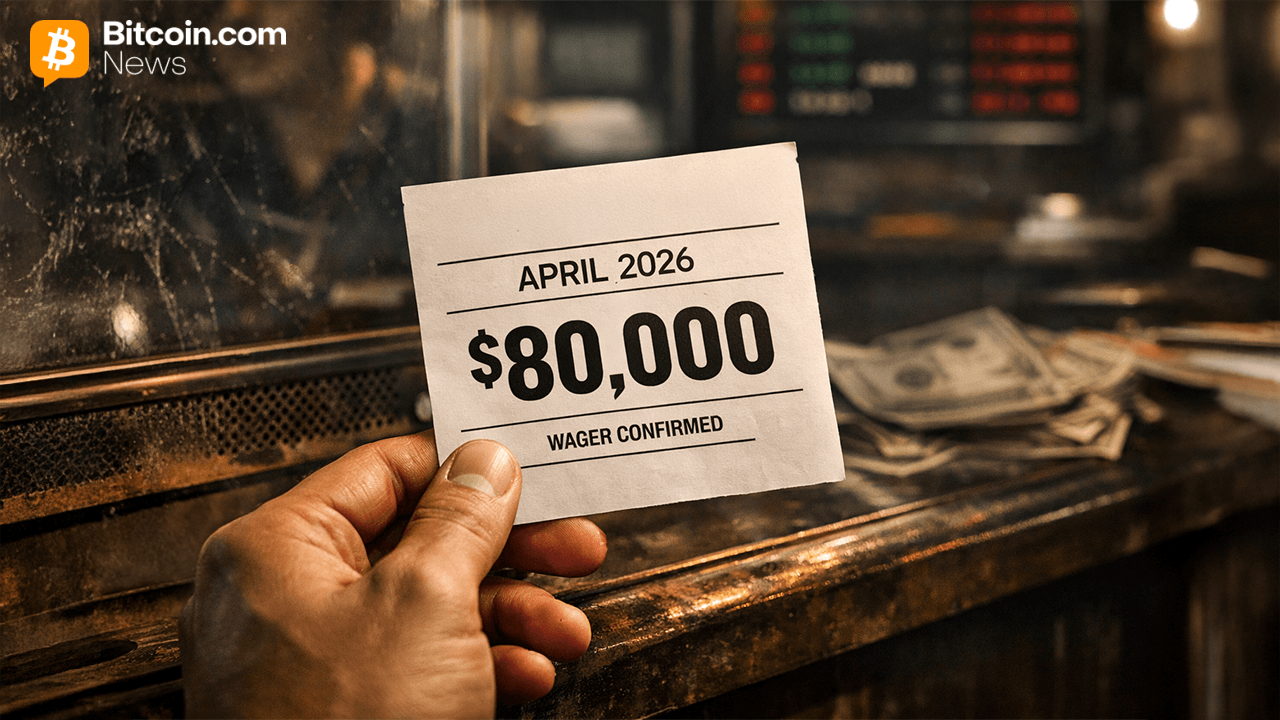
2 hours agoBitcoin Technical Outlook: Indicators Show Buy Bias as BTC Nears Decision Zone
Bitcoin traded at $75,213 on April 20, 2026, indicating a consolidation phase with potential for a breakout above $76K.
Cryptocurrency
fromnews.bitcoin.com
1 day agoArthur Hayes Warns Bitcoin May Stall Until Liquidity Returns
Bitcoin's price outlook is closely linked to global liquidity rather than interest rates, with potential upside dependent on policy-driven liquidity injections.
#gold
World news
fromLondon Business News | Londonlovesbusiness.com
6 hours agoGold pressured as Middle East tensions lift yields - London Business News | Londonlovesbusiness.com
Gold faces pressure due to rising geopolitical tensions, increased oil prices, and inflation concerns, impacting investment flows and market dynamics.
from24/7 Wall St.
1 day ago1 Ultra-Safe Real Estate ETF That Actually Gained in 2008, and It Pays a 4% Monthly Yield
The ETF itself is a bond fund that tracks a market of investment-grade U.S. agency mortgage-backed securities, meaning pools of home loans packaged into bonds and issued or guaranteed by Fannie Mae, Freddie Mac, and Ginnie Mae.
Real estate
from24/7 Wall St.
3 days agoWhy This High-Yield ETF Recovered 28% While Most Income Investors Slept
Annaly's dividend coverage is tight but intact. The company paid $0.70 per share quarterly throughout 2025, and its non-GAAP earnings available for distribution covered that payout in every quarter, ranging from $0.72 to $0.73 per share.
Retirement
Psychology
fromSilicon Canals
3 days agoPeople who research every decision exhaustively before acting aren't thorough - they're trying to build a guarantee in a world that doesn't sell them because the last time they trusted their gut without evidence something expensive happened and the body never forgot the bill - Silicon Canals
Chronic overanalysis of decisions stems from past failures, leading to wasted time and missed opportunities.


from24/7 Wall St.
31 minutes agoBuffett's Favorite Oil Stock Just Dropped 8%. Here's the Bull and Bear Case for Buying the Occidental Dip
Occidental's operational story is strong, with Q4 2025 production hitting 1,481 thousand barrels of oil equivalent per day, exceeding guidance, and the Permian Basin setting a record at 800 Mboed in Q3 2025.
Business
fromnews.bitcoin.com
1 day agoRaveDAO Denies Manipulation Claims as RAVE Token Plummets 95% From Peak
RaveDAO, the Web3 music and entertainment protocol, has denied allegations of market manipulation following a catastrophic week that saw its native token, RAVE, lose nearly 95% of its value. The project's response comes as the token, which peaked at an all-time high of $28.90 just days ago, is now trading at approximately $1.24, effectively wiping out billions in paper wealth and triggering investigations by major exchanges.
Cryptocurrency
from24/7 Wall St.
1 day agoWhy PDBC Paid $5.39 in 2021 But Just $0.51 Last December
PDBC does not own stocks that pay dividends. Instead, it holds commodity futures contracts across energy, metals, and agricultural markets. The fund's primary portfolio holding is a money market instrument, Invesco Premier US Government Money Market, which represents roughly 78% of the fund's assets.
Business
from24/7 Wall St.
2 days agoThis 1 Commodity ETF Is up 42% as It's the Perfect Inflation Hedge
The Invesco DB Commodity Index Tracking Fund (NYSEARCA:DBC) is up 42% over the past year, and nearly 29% year-to-date. These gains reflect a war that has scrambled global commodity supply chains from crude oil to wheat to fertilizer.
Business


from24/7 Wall St.
1 month ago3 Reasons Not to Fear a Market Correction, But Cheer for One
Over time, markets get ahead of themselves. Excitement over AI, green energy, or whatever the next big thing is tends to push stock valuations far beyond what fundamentals justify. Accordingly, more often than not, a correction can be the catalyst that brings valuation discipline back into the discussion. Think of it as the market taking a deep breath.
Business intelligence
Business
from24/7 Wall St.
4 days agoHere Are Thursday's Top Wall Street Analyst Research Calls: Autoliv, CoreWeave, Corning, Dicks Sporting Goods, Federated Hermes, Gitlab, PayPal, Pfizer, Okta, and More
U.S. markets saw mixed results with Nasdaq and S&P 500 hitting all-time highs, while Treasury yields rose and commodities faced selling pressure.
[ Load more ]