#illusion-of-free-will
#illusion-of-free-will
[ follow ]
#psychology #decision-making #consciousness #neuroscience #personal-growth #self-awareness #philosophy-of-mind
Mindfulness
fromSilicon Canals
17 hours agoPsychology says people who set an alarm but always wake up five minutes before it goes off aren't light sleepers - they're people whose body never fully trusts that anything external will show up when it's supposed to, so their nervous system runs its own backup system just in case, and that five-minute head start on the day isn't a habit, it's a person who learned very early that depending on something outside yourself to wake you up is a risk their body isn't willing to take - Silicon Canals
The body wakes up before alarms due to a lack of trust in external cues, reflecting deeper psychological patterns of self-reliance.
Psychology
fromSilicon Canals
23 hours agoPsychology says people who always choose the aisle seat aren't just planning for bathroom access - they're preserving what researchers call 'autonomous exit': the psychological certainty that you can move whenever you need to - Silicon Canals
Choosing seats that allow for easy exits reflects a deeper psychological need for autonomy and control over one's environment.
#ai

Artificial intelligence
fromMedium
1 day agoAutopilot, agentic AI, and the dangers of imperfect metaphors
Agentic AI comparisons to autopilot are misleading and fail to capture the technology's complexity and implications for society.
Mindfulness
fromSilicon Canals
1 day agoI turned 34 before I finally understood: no one is on their way to rescue you, no one is tallying your effort, and life doesn't wait for you to feel ready - it just keeps moving without you - Silicon Canals
Success is not guaranteed by effort alone; waiting for recognition can lead to disappointment.
Relationships
fromSilicon Canals
2 days agoPsychology suggests you will always push away good things if your subconscious mind doesn't believe you deserve them - and most people who do this don't recognize it as pushing, they just wonder why nothing good ever seems to stay - Silicon Canals
Self-sabotage often occurs unconsciously, pushing good things away despite a desire for improvement.
#decision-making
Psychology
fromSilicon Canals
1 day agoPeople who research every decision exhaustively before acting aren't thorough - they're trying to build a guarantee in a world that doesn't sell them because the last time they trusted their gut without evidence something expensive happened and the body never forgot the bill - Silicon Canals
Chronic overanalysis of decisions stems from past failures, leading to wasted time and missed opportunities.
Psychology
fromSilicon Canals
1 day agoPsychology says the art of not caring what others think isn't something you decide to do one day - it's a quiet skill built over years of noticing how much of your life was being shaped by opinions of people who weren't actually paying attention to you in the first place - Silicon Canals
People overestimate how much others notice their actions and appearance, leading to unnecessary self-consciousness.
Mindfulness
fromSilicon Canals
3 days agoThe people who forgive quickly and the people who forgive slowly are not experiencing the same emotion. Quick forgiveness is often a nervous system releasing a threat. Slow forgiveness is a mind rebuilding a model of someone it can no longer predict. - Silicon Canals
Forgiveness is a complex process influenced by biological and psychological factors, not simply a choice between letting go or holding grudges.
Psychology
fromSilicon Canals
1 day agoResearch suggests that people who say they prefer being alone aren't always telling the truth. Many of them preferred connection until it repeatedly disappointed them, and solitude became the story they told to make the disappointment portable. - Silicon Canals
Solitude is often misinterpreted as a preference, when it may actually be an adaptation to past relational failures.
Psychology
fromSilicon Canals
2 days agoThere's a specific kind of person who can give the most precise, compassionate advice to everyone around them and then make the worst possible decisions for their own life. The clarity isn't selective. It's that they can only see patterns when they're not standing inside them. - Silicon Canals
People excel at identifying cognitive biases in others but struggle to recognize them in themselves, leading to a phenomenon called the bias blind spot.
Relationships
fromSilicon Canals
2 weeks agoPsychology says people who crave both complete freedom and deep companionship aren't confused - they're experiencing the central tension of the human condition, and the people who resolve it aren't the ones who choose a side but the ones who stop treating it like a choice - Silicon Canals
The autonomy-connection paradox highlights the human need for both independence and intimacy in relationships.
Psychology
fromSilicon Canals
2 days agoPsychology says the people who seem impossible to offend aren't thick-skinned. They decided long ago that showing hurt gives others a map they haven't earned, so they absorb the wound and reclassify it as information - Silicon Canals
Emotional toughness often masks deep sensitivity, leading individuals to absorb pain without showing it, as vulnerability can be weaponized by others.
Psychology
fromSilicon Canals
2 days agoThe people who became adults without ever learning how to ask for help didn't develop independence. They developed a system where every need gets reclassified as a project they can handle alone, and the reclassification happens so fast now that they genuinely believe they never needed anything in the first place. - Silicon Canals
Resourcefulness can mask deeper emotional needs, leading to automatic self-sufficiency without recognizing the need for help.
Psychology
fromSilicon Canals
4 days agoNeuroscience reveals that the calmest person in any crisis isn't naturally fearless - their brain learned to delay panic because their childhood required them to be functional before they were allowed to be afraid - Silicon Canals
Calmness under pressure is a learned response, not merely a personality trait or temperament.
Psychology
fromSilicon Canals
5 days agoThe cruelest myth about self-discipline is that you have to feel ready - you don't, you never will, and the people who figured that out earlier simply have more years of evidence that the feeling eventually follows the action - Silicon Canals
Self-discipline begins with action, not feelings of readiness or motivation.
#consciousness

Philosophy
fromBig Think
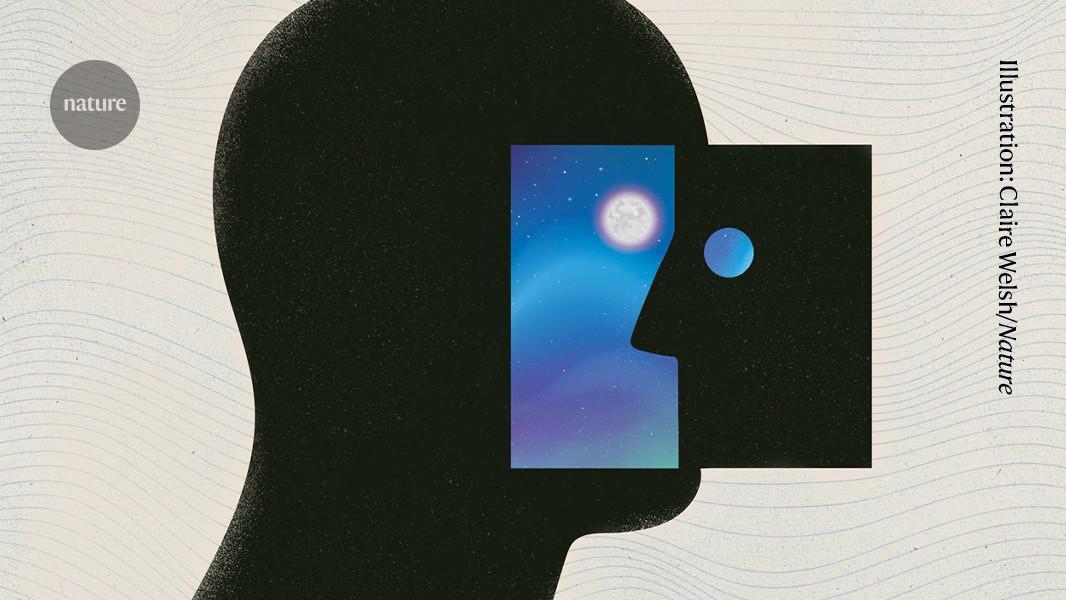
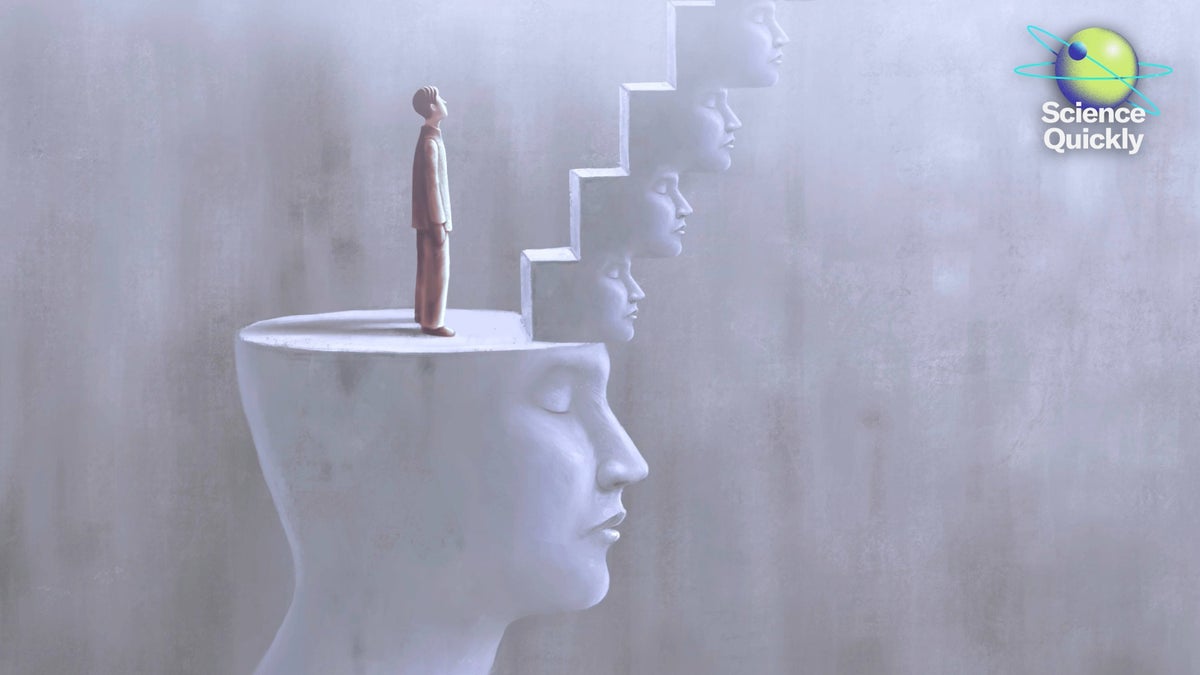
1 month agoConsciousness may be more than the brain's output - it may be an input, too
Consciousness remains scientifically inaccessible through third-person observation, yet a radical theory proposes consciousness can physically influence brain dynamics and leave measurable traces.
Philosophy
fromBig Think
1 month agoConsciousness may be more than the brain's output - it may be an input, too
Consciousness remains scientifically inaccessible through third-person observation, yet a radical theory proposes consciousness can physically influence brain dynamics and leave measurable traces.
fromTerry Godier
2 months agoPhantom Obligation
There's a particular kind of guilt that visits me when I open my feed reader after a few days away. It's not the guilt of having done something wrong, exactly. It's more like the feeling of walking into a room where people have been waiting for you, except when you look around, the room is empty. There's no one there. There never was.
UX design
fromPsychology Today
1 month agoThe Architecture of Identity: How the Brain Builds a Self
Attention is the brain's filtering mechanism; what passes through that filter is what gets encoded. What gets encoded becomes memory. And memory is the raw material of identity. So in the architecture of your identity, attention is the doorway.
Miscellaneous
fromPsychology Today
2 months agoThe Link Between Thinking and Being
Metaphors are linked to how we experience the world around us, according to seminal work by researchers George Lakoff and Mark Johnson. In English, we "move forward" with our lives and don't "retreat into" the past. We speak about people who are "cold as ice" and "heavy" matters we need to resolve. Some of these metaphorical expressions are more than just, well, expressions-they are actually based on our sensory experiences. This mind-body link is called "embodied cognition."
Science
Science
fromwww.scientificamerican.com
2 months agoInside the incredible, infuriating quest to explain consciousness
Brains evolved during the Cambrian to integrate sensory input, enabling organisms to experience pain, pleasure, emotions, curiosity, and eventually self-awareness, fueling art, science, and philosophy.
fromPsychology Today
1 month agoWho Is to Blame for Our Choices?
Do you blame others for the choices you are making? Have you blamed others for the previous choices you have made? To shed more light on these questions, you might also ask yourself: "What am I responsible for, and what power do I have?" From there, you might agree with this self-reflective response: "I am responsible for, and I've got the power over what I think, do, say, learn, and choose" (Purje, 2014).
Philosophy


fromPsychology Today
2 months agoIf Justice Doesn't Exist, Then Numbers Don't Either
A drawn circle is at least something physical. You can see it, touch it, erase it. The skeptic can still say, "Circles are grounded in physical reality. Justice is different; it's just an idea in your head." So let's talk about the number two. Point to it. Not two apples, not two fingers, not a numeral on a page-that's just a symbol.
Philosophy
fromPsychology Today
1 month agoThe Observer Effect in Everyday Life
In behavioral science, identity follows action. If you're generous, you'll begin to see yourself as generous. If you're a patient person, you'll come to see that as part of who you are. Over time, the brain will wire itself to repeat these patterns.
Psychology
fromPsychology Today
2 months agoWhy You Can't Rely on Your Own Morality Alone
What does it mean to say that you are restrained solely by your own morality, by your own mind? The conscience is often described as an inner voice telling us what to do when others may be opposed. A moral compass is that which distinguishes between right and wrong, good and bad. Our conscience, our moral compass, sets the groundwork for doing the right thing.
Philosophy
fromPsychology Today
2 months agoWhy We Call It Psychology, Not Animology
For Plato, psyche meant something like what we'd now call mind -understood as a complex system requiring governance. The psyche had distinct parts: a reasoning part that deliberates, a spirited part that feels emotion and courage, and an appetitive part that desires. Each part has its own function and its own form of excellence. And crucially, these parts need to be governed-integrated under what Plato called constitutional self-rule.
Philosophy
fromPsychology Today
2 months agoThe Power of Beliefs: How to Stop Surrendering Your Agency
When Serena Williams strode onto the Wimbledon grass, her legendary power was never in question. Her serve was crushing. Her backhand was unstoppable. But she wouldn't go to the net. She'd see a short ball, the kind that screams "approach," and she would hesitate to volley and miss the point. Serena was not playing at her full potential because of a story in her head.
Psychology
[ Load more ]