Business intelligence
fromInfoWorld
1 day agoOracle delivers semantic search without LLMs
Oracle's Trusted Answer Search prioritizes control and predictability in enterprise search, using vector search over generative models for reliable outcomes.
Buyers no longer open ten tabs, skim through blog posts, and slowly form an opinion over weeks. Instead, they ask a single question to an AI system and receive a shortlist in return, usually two or three companies that feel familiar, credible, and safe enough to justify internally. That shortlist often becomes the entire market in the buyer's mind.
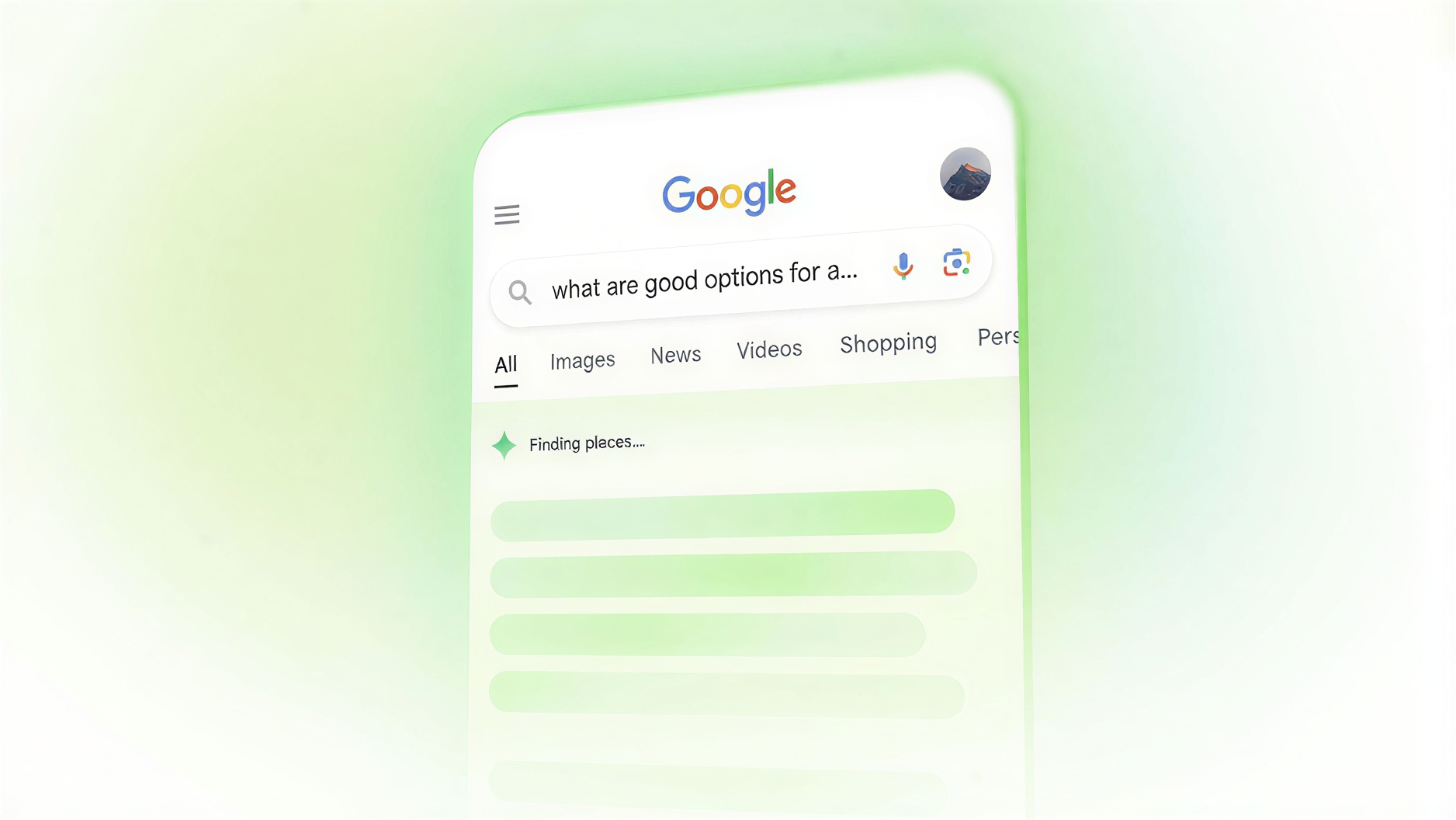
If you want to narrow your options down to bags suitable for a trip to Portland, Oregon in May, Al Mode will start a query fan-out, which means it runs several simultaneous searches to figure out what makes a bag good for rainy weather and long journeys, and then use those criteria to suggest waterproof options with easy access to pockets.
"People talk most about": In several examples, this is just a straight-up list of exactly three menu items. For one spot, it was literally just: omakase, sake, nigiri. "People love to order": This section gets a star icon and goes deeper than just listing names. It includes brief descriptions of specific dishes, like noting a Michigan Roll has a "generous portion of tuna."
The previously unreported changes to its search results will show both VSS and Google results, with top-ranked vertical search engines displayed by default, the source said. Hotels, airlines, restaurants and transport services with real-time data from feeds will sit either below or above the list of vertical search engines.
Several weeks after Google rolled out support for Preferred Sources globally, Google added official help documentation for site owners to use to help them understand what it is all about and how to encourage their readers to subscribe to your site as a preferred source. In December, Google rolled out Preferred sources globally after rolling it out in the US and India in August and beta testing it in June. Now the new help documentation is available here if you need it.
Yahoo's big AI play is, in many ways, actually a return to the company's roots. Three decades ago, Yahoo was known as "Jerry's guide to the world wide web," and was designed as a sort of all-encompassing portal to help people find good stuff on an increasingly large, hard-to-parse internet. In the early aughts, the rise of web search more or less obviated that whole idea. But now, Yahoo thinks, we've come back around.
For most of the last two decades, SEO mostly meant one thing, where you ranked on Google (and occasionally Bing). The customer journey was familiar. Someone searched, scanned a list of links, clicked and explored. Now the journey is increasingly 'ask, get an answer, take action.' And the platforms shaping that journey include ChatGPT, Claude, Gemini, Perplexity and Google itself, which is inserting AI summaries, what Google calls AI Overviews, into search results.
What happens when the AI companies (inevitably) encounter spam and attempts at SEO/GEO manipulation in the markdown files targeted to bots? What happens when the .md files no longer provide an equivalent experience to what users are seeing? What happens if they continue crawling those pages but actually toss them out before using the content to form a response? ...And we keep conflating "bot crawling activity" with "the bots are using/liking my markdown content?" How will we know if they're actually using the .md files or not?