#economic-indicators
#economic-indicators
[ follow ]
#labor-market #stock-market #inflation #federal-reserve #housing-market #consumer-sentiment #oil-prices
from24/7 Wall St.
1 week agoWorried About a Recession? Here's Why Selling When Economists Call It is Already Too Late
“When people say there's a recession, they're saying it 6 months after it happens. Like, that's the literal definition of it. You have to wait 6 months,” he said on the episode Back to the Basics: How to Manage Your Portfolio Without Overthinking It.
Business
fromNature
2 weeks agoScience can take the lead in making better measures of economic growth
“Growth at any cost leaves us all poorer.” Those were the words of United Nations secretary-general António Guterres last week at the launch of a landmark report, Counting What Counts, which he commissioned from a team of researchers and policymakers ( www.un.org/beyondgdp). It proposes how countries can move beyond gross domestic product (GDP), the world's main indicator for the health of economies.
World news
#consumer-sentiment


Business
from24/7 Wall St.
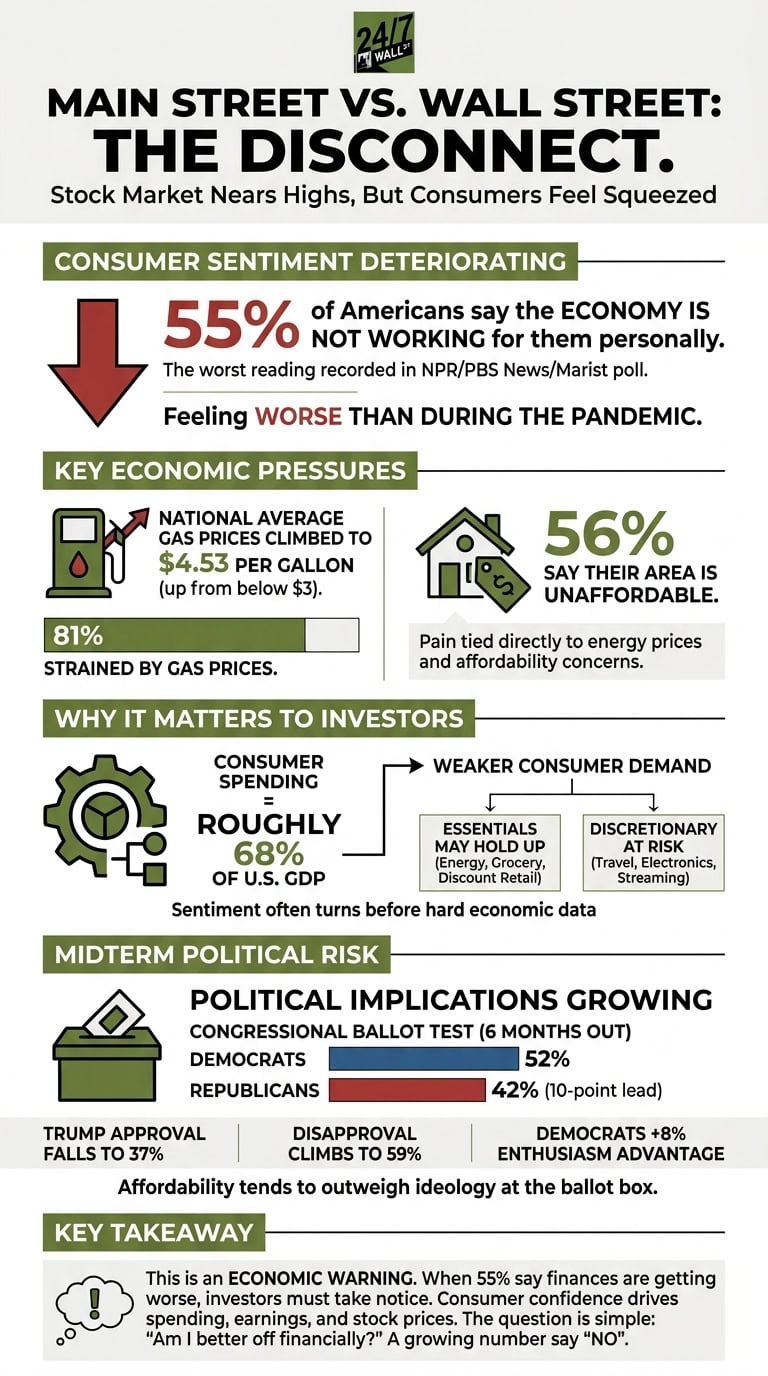
2 weeks agoThis Indicator Just Did Something It Hasn't Done in 75 Years. Is It the Biggest Risk to the Bull Market Before Midterms?
Consumer sentiment hit a record low despite record stock prices and stronger-than-expected job growth, signaling a dangerous disconnect between Wall Street and Main Street.
from24/7 Wall St.
3 weeks agoVIX Stands Firm as Fear Drains, Stocks Chase Records and Earnings Keep Dip-Buyers Engaged
Three forces are pinning implied volatility to the floor. Geopolitical risk that drove the March spike, including the war in Iran and Strait of Hormuz disruptions, has been partially priced in as oil prices fell back below $100. Rates are the second anchor: the 10-year Treasury yield sits at 4.4%, in the 88th percentile of the past year, with traders watching whether the long bond mounts a sustained push above 5%. The third is earnings season delivering enough beats to keep dip-buyers engaged.
Business
#stock-market

Business
from24/7 Wall St.
3 weeks agoHere Are Monday's Top Wall Street Analyst Research Calls: Advanced Micro Devices, Airbnb, Alphabet, Check Point Software, GlobalFoundries, Internatioinal Paper, Trade Desk, and More
Futures are lower as oil prices rise amid geopolitical tensions, while major stock indices showed strong performance at the end of the previous month.
Business
from24/7 Wall St.
4 weeks agoHere Are Friday's Top Wall Street Analyst Research Calls: Avis Budget, Caterpillar, Celestica, Commvault Systems, Ciena, Dutch Bros. e.l.f. Beauty, Hershey, Roblox, and More
Major indices surged on Thursday despite mixed economic indicators, with significant earnings and a drop in unemployment claims influencing market performance.


Business
from24/7 Wall St.
3 weeks agoAmazon and Tesla Drive One-Third of FDIS as U.S. Spending Surges Despite Recession-Level Sentiment
Consumer discretionary performance hinges on household spending sentiment, which currently shows conflicting signals between low consumer confidence and high retail sales.


fromThe Local Germany
1 month agoGerman exports were up in February but industrial output fell
"The start of the year has been extremely sluggish for German industry," said Elmar Voelker, an analyst at the bank LBBW, noting that "the fleeting hopes of a recovery that had emerged last autumn have evaporated for now."
Germany news
US politics
fromFortune
1 month agoThe economy can shed jobs and still keep the labor market balanced, as Trump's immigration crackdown turns breakeven hiring negative | Fortune
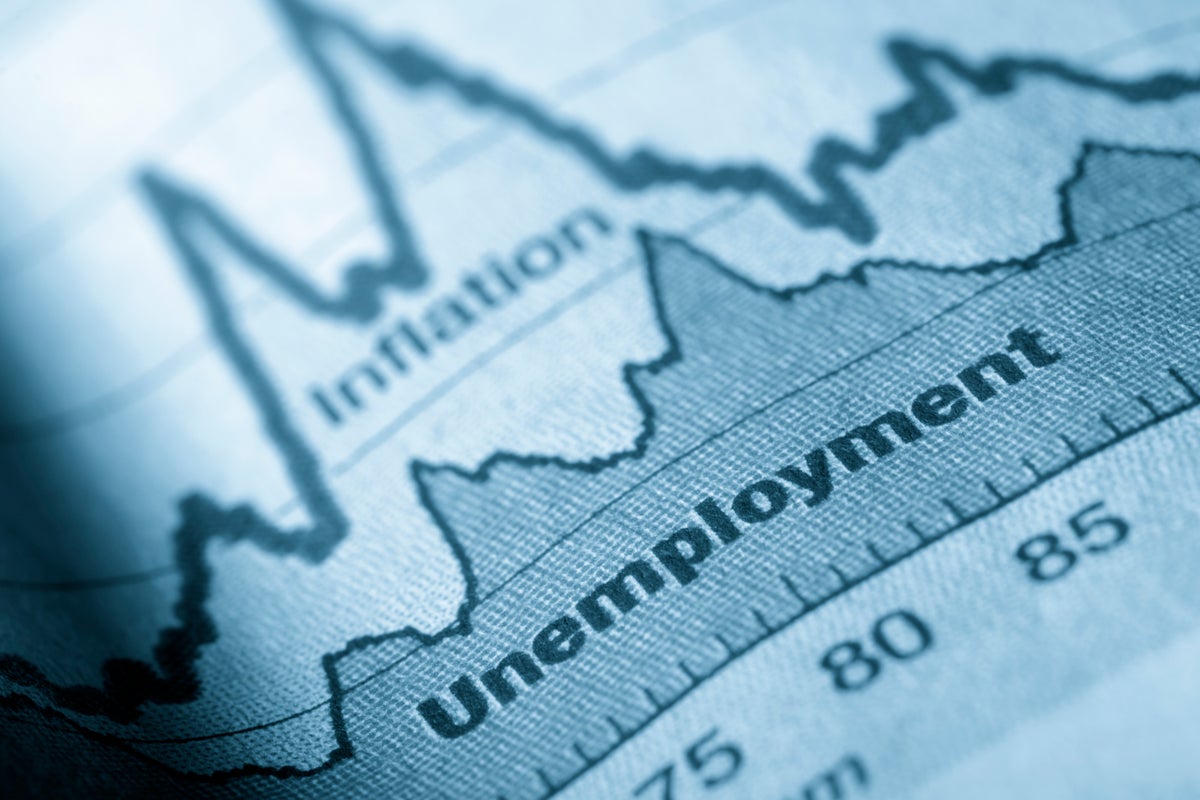
The U.S. labor market shows a negative breakeven rate of employment growth due to immigration restrictions, indicating potential job losses without rising unemployment.




#financial-markets
Business
fromLondon Business News | Londonlovesbusiness.com
1 month agoGlobal markets react to geopolitical tensions and rising energy costs - London Business News | Londonlovesbusiness.com
U.S. financial markets faced volatility due to geopolitical tensions and energy price fluctuations, with mixed performance across major stock indices.

Business
fromLondon Business News | Londonlovesbusiness.com
1 month agoGlobal markets react to geopolitical tensions and rising energy costs - London Business News | Londonlovesbusiness.com
U.S. financial markets faced volatility due to geopolitical tensions and energy price fluctuations, with mixed performance across major stock indices.
World politics
fromSilicon Canals
2 months agoDow futures surge 1,000 points after Trump signals productive Iran talks - and what the whiplash reveals - Silicon Canals
Markets react to narratives rather than reality, with recent surges driven by traders' need for optimism amid ongoing geopolitical tensions.
fromwww.housingwire.com
2 months agoJanuary new home sales fall 17.6%, weather and rates in focus
Sales of newly built single-family homes fell 17.6% in January to a seasonally adjusted annual rate of 587,000 from a downwardly revised December reading, said Jing Fu, senior director of forecasting and analysis at the National Association of Home Builders, in a brief. The pace of new home sales is down 11.3% from a year earlier.
Real estate
World news
fromFortune
2 months agoEconomists are loathe to mention recessions, but odds just hit 49% for the next 12 months according to Moody's top economist | Fortune
Moody's recession indicator reached 49% probability for the next 12 months in February, driven by weak labor market data and softening economic indicators, with potential further escalation from Middle East tensions and oil price spikes.
Retirement
from24/7 Wall St.
2 months agoMarch 18th Is The Date Social Security Retirees Need to Watch If They Care About COLA
The Federal Reserve's March 18 interest rate decision provides insight into inflation trends that will determine the 2027 Social Security COLA, which is officially calculated using September Consumer Price Index data.
US Elections
fromwww.mediaite.com
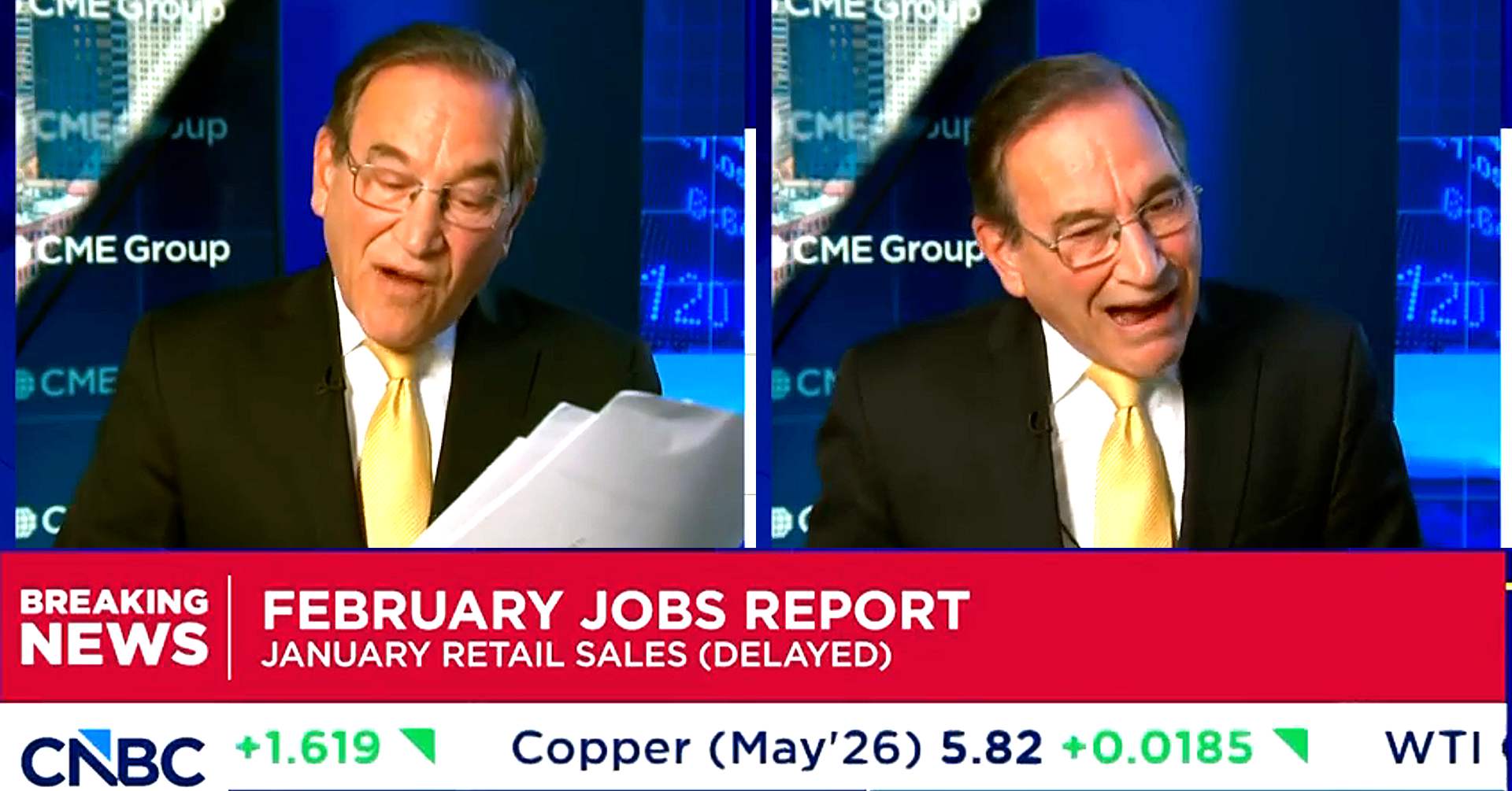
2 months agoTrump Econ Chief Confronted by CNBC Anchor Over Tanking Jobs Report Insists The Economy Is Really Strong!'
February jobs report showed 92,000 job losses and significant workforce participation decline, but White House officials attribute weakness to weather, strikes, and statistical methodology changes while maintaining the economy remains strong.


fromwww.ocregister.com
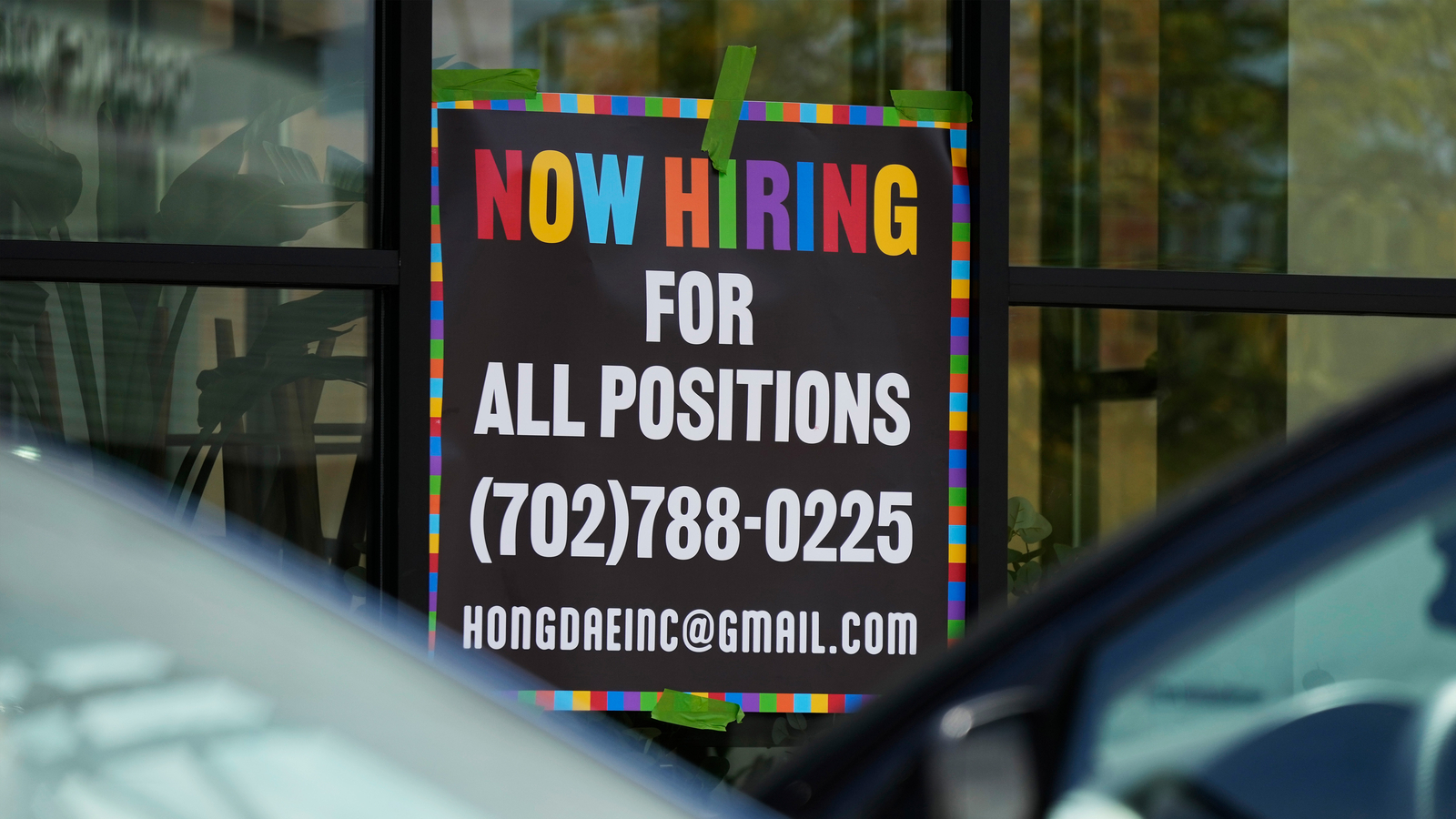
2 months agoCalifornia jobs mystery: Jobless claims dip as layoffs surge
During the 12 months ended in February, they ran 1% below the previous 12-month period. That's the 22nd-best performance among the states and tops the nation's 0.3% dip. Claims fell in 24 states, topped by Wisconsin's 16% dip, Indiana's 14%, and Massachusetts and Arizona, off 13%.
California
Business
from24/7 Wall St.
2 months agoHere Are Monday's Top Wall Street Analyst Research Calls: AppLovin, Blue Owl Capital, CrowdStrike, Dutch Bros., Jet Blue, Novo Nordisk, PayPal, Twilio, and More
Markets declined significantly Friday amid Nvidia selloff, elevated producer prices, tariff uncertainty, and Iran military action, potentially signaling a larger downturn ahead.


fromLondon Business News | Londonlovesbusiness.com
5 months agoThe S&P 500 pulls back from record highs - London Business News | Londonlovesbusiness.com
The S&P 500 has retreated after approaching the historical high established in October this year. As the index once again tested this price level, market sentiment turned more cautious, as investors require additional confirmation that earnings growth can be sustained, inflation will not re-accelerate, and the Federal Reserve truly has room to ease policy without reigniting inflationary pressures. With these conditions still unclear, profit-taking has begun to emerge, resulting in the current technical pullback that warrants attention.
US news
fromBusiness Matters
5 months agoForex Trading Indicators Every Business-Minded Investor Should Understand
Trading in forex markets is something that many business-minded investors turn to, not least of all because it aligns with their existing macroeconomic knowledge. The key point here is that no market exists in isolation because economic events in seemingly disconnected markets can influence any other market; it's just that the level of interconnectivity and resulting influence may not always be readily apparent.
Business
US news
fromLondon Business News | Londonlovesbusiness.com
5 months agoThe significant events in the global economy over the past week - London Business News | Londonlovesbusiness.com
U.S. equity markets rose as investors priced potential Fed rate cuts amid mixed economic data, cautious trading, and strong tech and small-cap performance.

fromTravel + Leisure
6 months agoThis Is the Happiest State in the U.S.-and It Some of the Best Beaches in the Nation, Too
The personal finance website evaluated all 50 states using 30 metrics, including depression rate, income growth, and unemployment rate, along with other factors that can contribute to overall happiness and satisfaction in the population. After crunching the numbers, Hawaii tops WalletHub's annual ranking of the happiest states in the country. According to WalletHub's data, Hawaii residents "have the longest life expectancy in the U.S., and nearly 72 percent of adults in the state report being active and productive on a daily basis."
US news
fromview.nl.npr.org
7 months agoIn 1975, New York City ran out of money. For a decade it had managed to pay for its hundreds of thousands of city employees and robust social services by taking on billions of dollars in debt. But eventually investors were no longer willing to lend the city any more money. New York teetered on the edge of bankruptcy the city shuttered more than a dozen firehouses, teachers went on strike and garbage piled up in the streets.
fromBusiness Insider
8 months agoUnited's CEO says travel demand has roared back like a 'light switch coming on'
Travel demand has soared back in the second half of the year, and that's good news for the economy at large, too, according to United Airlines' CEO. Scott Kirby told CNBC's "Squawk Box" on Tuesday that demand significantly improved at the beginning of July. "It was like a light switch coming on," he added. The summer travel period is key for airlines, while Labor Day and Thanksgiving are also significant revenue drivers.
Business




fromFortune
9 months agoWarren Buffett's $1.6 billion bet on UnitedHealth sends the struggling insurer's stock soaring
"Overall, consumers are no longer bracing for the worst-case scenario for the economy feared in April, when President Trump announced his stunning set of worldwide tariffs. However, consumers continue to expect both inflation and unemployment to deter their spending decisions."
US news


fromLondon Business News | Londonlovesbusiness.com
10 months agoS&P 500 maintains its uptrend despite growing caution amid geopolitical risk - London Business News | Londonlovesbusiness.com
June's Consumer Price Index (CPI) rose by 0.3% month-over-month and 2.7% year-over-year-higher than expected-while the Producer Price Index (PPI) unexpectedly stalled at 0.0%. These figures suggest that while price pressures remain on the consumer end, they may be easing on the production side.
US politics
Cryptocurrency
fromLondon Business News | Londonlovesbusiness.com
10 months agoBitcoin shows short-term weakness amid macro headwinds - London Business News | Londonlovesbusiness.com
Bitcoin is experiencing a mild pullback after setting a new all-time high, with market sentiment cautious due to mixed economic indicators.
fromLondon Business News | Londonlovesbusiness.com
10 months agoTrade tensions weigh on Euro, German bond yield rises - London Business News | Londonlovesbusiness.com
The euro was at a three-week low against the US dollar as renewed trade tensions, fueled by President Trump's tariff announcement, weighed on the common currency.
Europe news
[ Load more ]