#sign-painting
#sign-painting
[ follow ]
#graphic-design #illustration #typography #street-art #contemporary-art #visual-identity #murals #identity



fromItsnicethat
4 days agoTemplo's brand identity for climate non-profit Casi draws on the pragmatic mark making of hieroglyphics
"The subversive simplicity of hobo hieroglyphics - the chalk markings left by people travelling through America during the Great Depression - are rooted in pure pragmatism: quick, direct signals that connect people to one another and to the landscape."
Typography
#graphic-design


Graphic design
fromdesignboom | architecture & design magazine
2 weeks ago100 hand-traced coastal stones form a graphic identity system before returning to the sea
Wenbin Li's project transforms collected stones into a unique graphic identity system through hand-traced silhouettes and various visual treatments.
fromThe Art Newspaper - International art news and events
2 weeks agoPressing issues: the vital role of printmaking in the history of art
Yale came to me and said there isn't an overarching book about the history of printmaking; they wanted it to be about the printed image. There are a lot of books about printing-about the history of journalism or the history of books, the printing press and the printed word-but not so much about the printed image and its processes. So that was my challenge.
Arts
Arts
fromThe Art Newspaper - International art news and events
2 weeks agoArtist Michelangelo Pistoletto sends message of 'preventive peace' on digital billboards around the world
Michelangelo Pistoletto's public art project 'Three Mirrors' promotes 'preventive peace' through reflective works displayed globally.
Writing
fromwww.theguardian.com
1 month agoThe moment I knew: I was enchanted by her painting but we never spoke. I wouldn't see her again for 55 years
A man reconnects with a childhood classmate whose exceptional artistic talent impressed him decades earlier, leading to an unexpected reunion after 55 years of separation.
fromBoard Game Quest
2 months agoSand Art Review
Sand Art is a game by Kory Jordan and published by 25th Century Games for two to four players ages 10 and up. It takes about an hour to play, and has you collecting resources and then coloring in a bottle, making art in a bottle out of sand, in case the name didn't give away the plot. Gameplay Overview: Sand Art has you gathering and mixing sand, which is used to fill your bottle.
Board games
frommissionlocal.org
2 months agoPick a color
Help grow our newsroom, joining the 3,250 readers who support us by giving below. See all snaps here. To contribute, send in a headline and a snap to info@missionlocal.com. Because of you, Mission Local reached and surpassed our $300,000 year-end fundraising goal. All we can say is thank you. Thank you for choosing to invest in a local newsroom rooted in San Francisco's communities one that listens first and reports deeply.
San Francisco
fromMedium
2 months agoDesigning useful ads
We've both fought against needless promotional content before and lamented that frontier AI platforms are falling into the same pattern. As designers and users, we've learned that "free" usually means putting up with interruptive, slightly creepy ads that feel more like a tax than a benefit - a frustration tax that now colors how we approach free‑tier services and now AI tools.
Artificial intelligence
fromArtforum
2 months agoCommercial Break
AT FIRST GLANCE, the phrase "avant-garde advertising" might seem like a contradiction in terms: The avant-garde is assumed to be inherently anti-capitalist and the realm of advertising crassly commercial. But the involvement of avant-garde artists with advertising is in fact rich, complex, and long-standing, encompassing a full century of collaborations, critiques, and reworkings of all sorts. That entanglement-in all its diversity-is the topic
Film
fromDesign Milk
1 month agoThe Fountain Celebrates Craft, Connection, and Lime Green
To drink, to bathe, to swim, water has been integral to every society, at every point in our relatively short history here on earth. We connect, drink, and extend ourselves over water, a lifegiving force whose polarity explains much of human behavior. Fostering this sense of community is vital to our health and happiness as well.
Design
Photography
fromdesignyoutrust.com
2 months agoIncredible Behindthescenes Reels Where A Loose Doodle Evolves Into A Polished Illustration Packed With Personality And Story
A diverse collection of contemporary visual art, advertising, and inventive photography highlights creative reinterpretations, surreal manipulations, and socially aware installations across global artists and campaigns.
fromItsnicethat
2 months agoHow sign painting underpins Sean Thomas' approach to bespoke branding projects
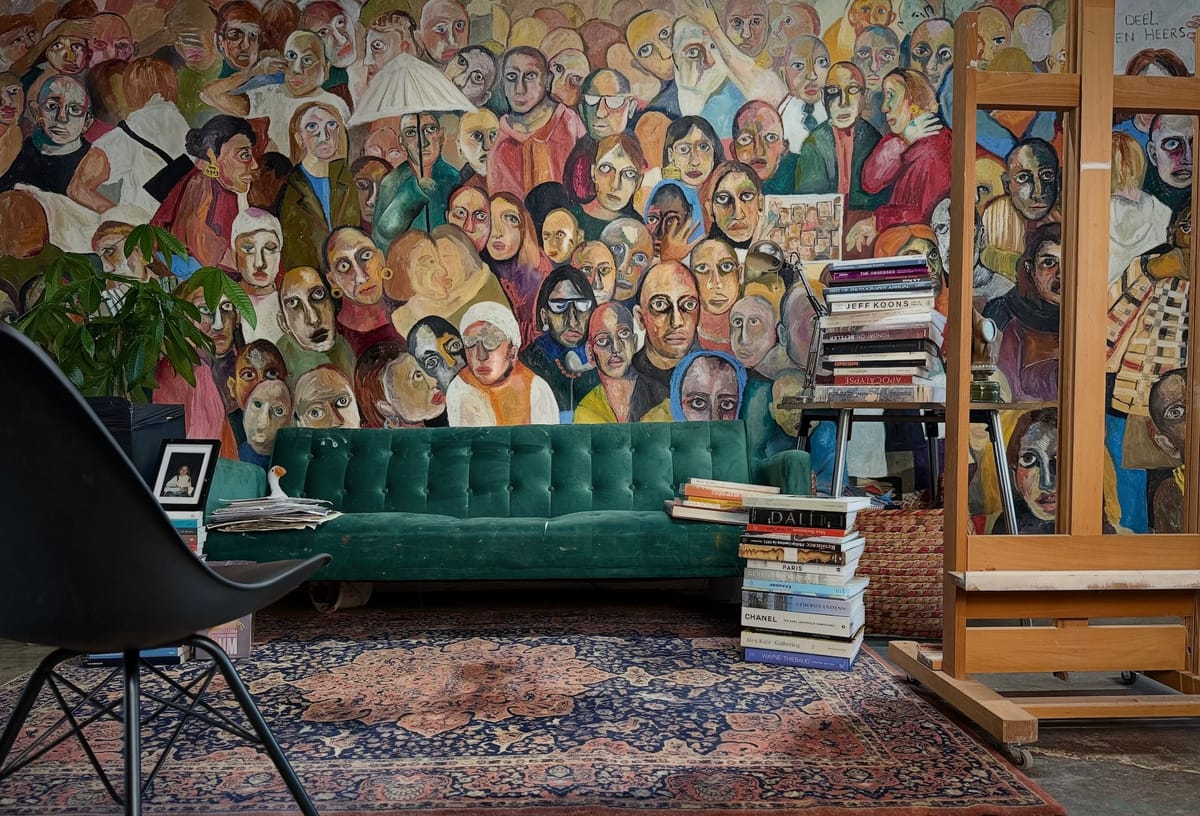
If you're based in London, you've probably walked past one of Sean Thomas' meticulously hand-painted designs. Whether that was grabbing a sandwich at Dom's Subs, dining in at Forza Win (an Italian restaurant in Peckham that the designer has shaped the visual identity of over the last three years), or picking up a copy of Hoxton Mini Press' new book on Britain's best bakeries at your local bookshop.
Typography
Design
fromItsnicethat
1 month agoVisual communication that challenges convention: Phantasia on how graphic design can forge true collaboration
Phantasia, a Barcelona-based design studio founded in 2021, prioritizes meaningful projects that serve communities through intentional collaboration, diversity, and accessible communication.
Typography
fromColossal
1 month ago'Lettres Decoratives' Is a Celebration of Fin de Siecle Sign Painters' Vibrant Letterforms
French sign painters from the 19th and early 20th centuries created decorative alphabets that evolved from simple forms into bold, eye-catching lettering styles documented in lithograph portfolios.
Design
fromItsnicethat
2 months agoCat Duncan uses the tactility of tickets and calendars to invigorate the identity of Athene run club
Cat's tactile, nature-inspired design combines colour blocking, layering, print techniques and repurposed materials to create wearable, community-focused pieces that encourage outdoor activity.
fromItsnicethat
1 month agoAbstracted organica: The design trend taking root in Naarm, and the designers doing it best
The ridges of eucalyptus bark, the geometries of shell formations, moss-covered trees, Indigenous grasslands and the hidden networks of fungi beneath the soil. These landscapes produce organic yet abstract patterns - natural systems that quietly shape the way we see and design the world around us.
Graphic design
Typography
fromItsnicethat
2 months agoType designer Arthur Calame treats letters like "soft material to be sculpted"
Arthur Calame designs custom typefaces using unique project-specific tools and draws inspiration from everyday culture, blending craft and varied disciplines into human, imperfect letterforms.
Graphic design
fromItsnicethat
1 month agoThe illustrations of Sebastian Curi are all about learning analogue tools (flaws and freckles included)
Sebastian integrates multiple artistic mediums—acrylic painting, colored pencils, and relief printing—while using digital tools primarily for documentation and learning the foundational principles behind each technique.
Graphic design
fromItsnicethat
1 month agoStrategy comes before style: Take a look at the branding work of creative group NA1
NA1 operates as a multidisciplinary collective prioritizing strategic brand building and authentic visual storytelling over fixed house styles, tailoring each project's approach to the client's core DNA.
Arts
fromThe Art Newspaper - International art news and events
1 month agoArtists agonise over when a work is finished-but should we viewers care?
Artists determine completion when they have successfully transformed visual memory and emotion into a physical object, at which point further work becomes unnecessary.
fromHyperallergic
2 months agoA View From the Easel
The studio is at my house within a ranch, surrounded by nature. It's on the second floor of the house, where there's better light. My routine all day shifts between studio work and housework, including outdoor garden work. I get up a bit before 7am, drink coffee in the yard, and get morning sunshine. Then my husband and I eat breakfast and do a bit of cleaning or some chores in the garden.
Arts
fromCraftBeer.com
2 months agoInk & Drink: Uncovering the Historical Bonds of Tattoos and Fermentation Across Cultures
Tattoos and fermentation rarely appear in the same conversation, yet across the world, they share a quiet kinship. Both are practices of transformation, crafts that reshape raw material over time through care and relationships to the land, the spiritual, and the community. Tattooing inscribes identity and ancestry onto skin, while fermentation preserves, nourishes, and binds communities through shared taste and ritual. Both create change, brewing something more than themselves through embodied knowledge passed between generations.
Arts
fromThe Mercury News
2 months agoPublic art powerhouse: Inside Monterey County's scrappy arts movement
Sand City sits just two miles from the Monterey Bay Aquarium, yet until this month, visitors couldn't spend the night in town. For decades, this half-square-mile town wedged between Costco and Highway 1 has been hiding in plain sight - a warehouse district turned open-air art gallery, where murals climb concrete walls and sculptors work in spaces that once stored industrial equipment.
Arts
[ Load more ]