#ttab-decision
#ttab-decision
[ follow ]
#patent-law #federal-circuit #uspto #inter-partes-review #intellectual-property #prior-art #ptab #supreme-court



Intellectual property law
fromIPWatchdog.com | Patents & Intellectual Property Law
11 hours agoThe Supreme Court Picks the Wrong Patent Fight in Hikma v. Amarin
The Supreme Court's decision in Hikma v. Amarin reflects a focus on drug pricing over patent law uncertainties affecting pharmaceutical innovation.
#software-patents


Intellectual property law
fromGlobal IP & Technology Law Blog
3 weeks agoFederal Circuit Strikes Down Millions in Damages Tied to Foreign Sales, with a Lesson for Future Litigants
The Federal Circuit's decision limits patent damages for software sales outside the U.S., emphasizing geographic restrictions on patent eligibility.
#trade-secrets
Intellectual property law
fromIPWatchdog.com | Patents & Intellectual Property Law
1 day agoFederal Circuit Reverses Trade Secret and Patent Invalidity Rulings in Penile Implant Dispute
The Federal Circuit reversed a lower court's ruling on trade secret misappropriation and patent invalidity claims in a case involving cosmetic penile implants.
Intellectual property law
fromIPWatchdog.com | Patents & Intellectual Property Law
1 day agoFederal Circuit Reverses Trade Secret and Patent Invalidity Rulings in Penile Implant Dispute
The Federal Circuit reversed a lower court's ruling on trade secret misappropriation and patent invalidity claims in a case involving cosmetic penile implants.
#patent-law


Intellectual property law
fromIPWatchdog.com | Patents & Intellectual Property Law
4 days agoFederal Circuit Distinguishes Amgen in Reversal of Invalidation of Teva Headache Treatment Patents
The Federal Circuit reversed the district court's invalidation of Teva's headache treatment patents, affirming their validity under written description and enablement requirements.
Intellectual property law
fromIPWatchdog.com | Patents & Intellectual Property Law
8 years agoBroad List of References by PTAB Not Adequate Notice of Specific Combinations of Prior Art
EmeraChem's '758 patent claims were invalidated based on the '558 patent being considered prior art under 35 U.S.C. § 102(e).
Intellectual property law
fromIPWatchdog.com | Patents & Intellectual Property Law
4 days agoSchedule A Litigation: Strategies and Best Practices for Online Enforcement
Schedule A litigation effectively addresses online trademark infringement by consolidating multiple foreign-based infringers into a single lawsuit.
#uspto
Intellectual property law
fromIPWatchdog.com | Patents & Intellectual Property Law
4 days agoUSPTO Pushes for More ASAP! Search Pilot Participants with Extended Deadline
The USPTO is extending the AI Search Automated Pilot Program until June 1, 2026, to evaluate its effectiveness and increase participation.
Intellectual property law
fromIPWatchdog.com | Patents & Intellectual Property Law
5 days agoNavigating the Global SEP Toll Road: From Judicial Arbitrage to the Willingness Test
Standard essential patents create tension over licensing terms, with no consensus on compensation despite agreement on the need for it.
#patent-litigation
Intellectual property law
fromIPWatchdog.com | Patents & Intellectual Property Law
6 days agoOptis' Post-Trial Motions in Apple Case Demand Serious Attention
The trial's evidentiary and instructional issues indicate a significant deviation from legal standards, questioning the jury's verdict's validity.

#ptab

fromIPWatchdog.com | Patents & Intellectual Property Law
2 months agoIntellectual property law
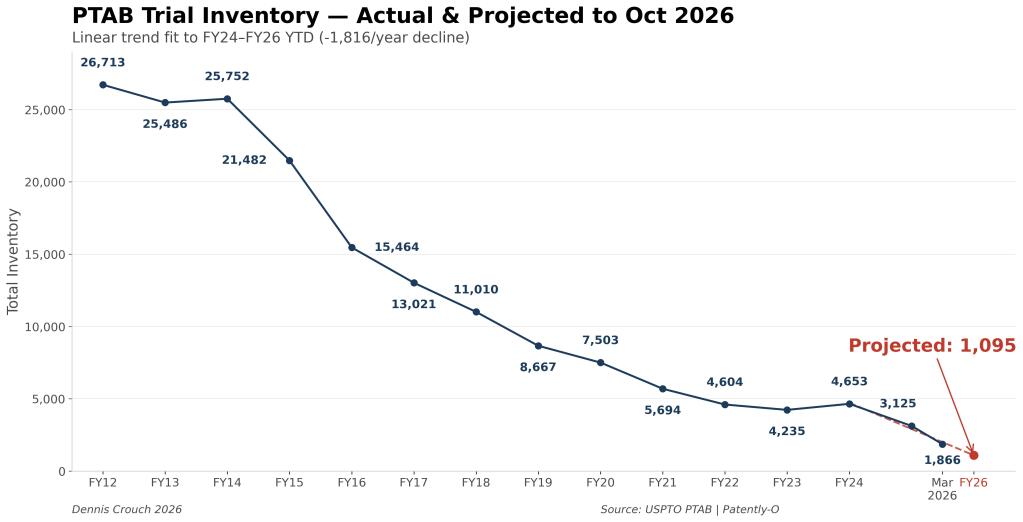
Why PTAB Reform Alone Won't Save the U.S. Patent System | IPWatchdog Unleashed
The PTAB's institution rates have fallen, reducing bias against patent owners, but lasting patent strength requires broader legal and structural reforms beyond the USPTO.
fromIPWatchdog.com | Patents & Intellectual Property Law
2 months agoIntellectual property law
USPTO's Stewart to PTAB Masters Attendees: Tell Us Your Story, Focus on the Errors
USPTO revised PTAB discretionary-denial policy to level the playing field for patent owners, urging owners to tell stories and petitioners to seek clear error correction.
Intellectual property law
fromIPWatchdog.com | Patents & Intellectual Property Law
2 weeks agoThe USPTO is Trying-But the Most Abusive Practices to Kill Patents Are Still in Play
Aggressive procedural strategies in PTAB practice exploit reexamination to bypass IPR estoppel, creating significant loopholes in patent litigation.


Intellectual property law
fromIPWatchdog.com | Patents & Intellectual Property Law
3 weeks agoOther Barks & Bites for Friday, March 27: Trademarks Evoking Fictitious Heritage May Be Deceptive Under EU Law; March Madness TRO Nixed by District Judge; EU Patent Applications Surpass 200K for First Time in 2025
Merck acquires Terns Pharma for $6.7 billion to enhance cancer therapy pipeline.
Intellectual property law
fromIPWatchdog.com | Patents & Intellectual Property Law
3 weeks agoCAFC Affirms District Court's Denial of Mandatory Stay for ITC Respondent Who Voluntarily Dismissed Complaint
Ascendis Pharma's motion for a mandatory stay was denied due to its voluntary dismissal of the original complaint.
Intellectual property law
fromIPWatchdog.com | Patents & Intellectual Property Law
4 weeks agoThe Problem of Abusive Serial Challenges Using Reexaminations Needs to Be Addressed by the USPTO
Serial patent challenges undermine the patent system and create unfair advantages for larger companies over smaller competitors.
Intellectual property law
fromIPWatchdog.com | Patents & Intellectual Property Law
1 month agoOther Barks & Bites for Friday, March 13: Former USPTO Patent Examiner Settles Conflict Allegations; EU Parliament Endorses EUIPO Register of Works Used to Train AI; U.S.-Based Operations Become Discretionary Denial Factor at PTAB
The U.S. Department of Justice settled a conflict of interest case with a former USPTO patent examiner for $122,480, marking the second such settlement in two weeks.
Intellectual property law
fromIPWatchdog.com | Patents & Intellectual Property Law
1 month agoUSPTO to Consider Extent of U.S.-Based Operations in Deciding AIA Institutions
The USPTO will now consider U.S. manufacturing presence and small business status as discretionary factors when deciding whether to institute inter partes reviews and post-grant reviews.
Intellectual property law
fromIPWatchdog.com | Patents & Intellectual Property Law
1 month agoWhen Policy Narratives Override the Facts: A Response to Recent Commentary on My PTAB Case
A PTAB case was mischaracterized in policy debate; the case involved obviousness rejections based on hindsight bias, not discovery of missed prior art, fundamentally changing the policy implications.
fromPatently-O
2 months agoThe 'Narrow' Question That Appears in Half of PTAB Obviousness Decisions
The case centers on the "Martin" reference, a patent application covering LED technology that was filed on April 16, 2003 and published on October 21, 2004. Martin was later abandoned and never became a patent. Lynk Labs' '400 patent claims a priority date of February 25, 2004, placing it squarely in the gap between Martin's filing and publication dates. Samsung successfully used Martin to challenge claims of the '400 patent as obvious in IPR.
Intellectual property law
fromIntellectual Property Law Blog
2 months agoPTAB Overly Relied on Statements of Doubt in Determining Conception and Reduction to Practice in Interference Proceedings
Regents of the University of California ("Regents") and Broad Institute were engaged in a patent interference proceeding involving the adaptation of CRISPR systems to edit eukaryotic DNA. Both parties were engaged in extensive testing related to editing eukaryotic DNA during the time of the invention, and both filed multiple patent applications that became the subjects of the patent interference proceedings.
Intellectual property law
fromIPWatchdog.com | Patents & Intellectual Property Law
2 months agoUSPTO De-Designates Two PTAB Decisions on RPIs in Light of Corning Optical
The Office de-designated Proppant Express Invests., LLC v. Oren Techs., LLC, IPR2017-01917, Paper 86 (PTAB Feb. 13, 2019); and Adello Biologics LLC v. Amgen Inc., PGR2019-00001, Paper 11 (PTAB Feb. 14, 2019). According to a USPTO email sent Tuesday, both decisions conflict with the decision in Corning Optical Communications RF, LLC v. PPC Broadband Inc., IPR2014-00440, Paper 68 (PTAB Aug. 18, 2015) (precedential).
Intellectual property law
Intellectual property law
fromIPWatchdog.com | Patents & Intellectual Property Law
2 months agoCAFC Again Declines to Overturn USPTO's 'Settled Expectations' Doctrine
The CAFC repeatedly denied mandamus petitions challenging the USPTO's settled expectations doctrine, upholding discretionary denials of IPRs including Google's.
fromIPWatchdog.com | Patents & Intellectual Property Law
2 months agoPTAB Whiplash: Predictability, Policy and the PTAB Pendulum
This week on IPWatchdog Unleashed, I speak with Todd Walters, who is Chair of the Patent Office Litigation practice group at Buchanan. We explore the current state of Patent Trial and Appeal Board (PTAB) practice and the growing tension among stakeholders as policy changes continue to reshape post-grant proceedings. We reflect on the intensity of opinion from patent owners and petitioners and discuss the high financial stakes and strategic importance of America Invents Act (AIA) proceedings.
Intellectual property law
fromIPWatchdog.com | Patents & Intellectual Property Law
1 month agoCAFC Partially Affirms PTAB Unpatentability Decision for Samsung but Vacates on Unchallenged Claims
U.S. Patent No. 9,491,542 is titled "Automatic Sound Pass-Through Method and System for Earphones" and was challenged by Samsung via inter partes review (IPR) after ST1 sued Samsung for infringement. Samsung argued that claims 1-10 and 13- 20 of the patent were invalid due to obviousness based on three prior art references: Rosenberg, Ichimura and Visser. The PTAB ultimately found all of the challenged claims obvious over combinations of the prior art, but also found unchallenged claims 11 and 12 unpatentable without explanation.
Intellectual property law
Intellectual property law
fromIPWatchdog.com | Patents & Intellectual Property Law
1 month agoOther Barks & Bites for Friday, February 27: UK Trademarks No Longer Within Scope of EU Law Post-Brexit; Second Circuit Reverses Ruling on Concert Rates Under BMI Consent Decree; USPTO Employee Pays $500K to Resolve Conflict of Interest Allegations
UK trademark rights cannot support opposition proceedings within the EU following Brexit's transitional period conclusion.
Intellectual property law
fromPatently-O
1 month agoExtolling the Virtues: 'Space-Efficient' Preamble Fails to Limit
The Federal Circuit reversed an indefiniteness ruling while affirming dismissal of breach-of-contract claims in NimbeLink Corp. v. Digi International Inc., with the patent issue centering on whether claim preambles impose substantive limitations.
Intellectual property law
fromIPWatchdog.com | Patents & Intellectual Property Law
2 months agoOther Barks & Bites for Friday, February 6: Counterfeit Study Shows 41% Fail Product Safety Standards; USPTO De-Designates PTAB Precedentials on RPI Amendments
41% of counterfeit apparel and footwear tested failed U.S. safety standards for hazardous chemicals, indicating significant consumer health risks and regulatory gaps.
Intellectual property law
fromIPWatchdog.com | Patents & Intellectual Property Law
2 months agoPTAB Masters Panelists Predict Rough Road for Pending Patent Bills, Tough Questions from Congress on USPTO Rules, Warn of Widening Gap Between CAFC and USPTO
Significant political division and congressional turnover make meaningful patent reform unlikely this year, likely causing a difficult period for the USPTO and PTAB oversight.
fromIPWatchdog.com | Patents & Intellectual Property Law
1 month agoCAFC Partially Reverses PTAB Decision Upholding Patient Imaging Patent Claims
The CAFC affirmed as to anticipation but reversed as to obviousness, holding that the Board relied on the wrong legal standard in finding no motivation to combine. The court emphasized that KSR v. Teleflex explicitly eschews such a rigid approach to obviousness, indicating the PTAB failed to properly apply flexible, common-sense reasoning when evaluating whether combining prior art references would have been obvious to one skilled in the art.
Intellectual property law
Intellectual property law
fromIPWatchdog.com | Patents & Intellectual Property Law
8 years agoInherency Rejections: Combating Inherent Obviousness
Inherency in prior art can justify anticipation or obviousness rejections, often subjective and difficult to overcome, but remains a legally supported doctrine.
fromIPWatchdog.com | Patents & Intellectual Property Law
6 months agoIf You Care About the Patent System, Consider Filing an Amicus Brief in Hyatt
The enormity of the problem cannot be understated. A Federal Circuit panel recently reached a final decision that, if not overturned, will destroy the U.S. patent system, and will ironically impact the most valuable patents disproportionately. The ruling was simple and continues a disturbing and inexplicable trend-a patent issued after more than six years in prosecution is presumed unenforceable as the result of prosecution laches.
Intellectual property law
Intellectual property law
fromIPWatchdog.com | Patents & Intellectual Property Law
2 months agoFederal Circuit Reverses PTAB on Issue Preclusion, Finds Smart Mobile Patent Claims Unpatentable
The Federal Circuit held that issue preclusion barred the PTAB from finding claims patentable when substantially similar claims were invalidated in a prior IPR.
[ Load more ]