#dopamine-and-reward-sensitivity

[ follow ]
Psychology
fromwww.theguardian.com
1 hour ago

What really controls our appetite hunger, stress or habit?

Hunger, appetite, and fullness are regulated by different brain areas, influencing our eating behaviors and responses to food.
#procrastination
#adhd
Relationships
fromSilicon Canals
11 hours ago

The people who are constantly checking in on everyone else aren't necessarily nurturing. Many of them are quietly running an experiment to see if anyone will ever check in on them unprompted, and the experiment has been returning the same result for decades - Silicon Canals

Constantly reaching out to others can stem from childhood experiences of needing to earn attention.
#dopamine
#ai
Artificial intelligence
fromFuturism
6 days ago

AI Use Appears to Have a "Boiling Frog" Effect on Human Cognition, New Study Warns

AI assistance in cognitive tasks can impair intellectual ability and persistence despite initial performance improvements.
Artificial intelligence
fromFuturism
6 days ago

AI Use Appears to Have a "Boiling Frog" Effect on Human Cognition, New Study Warns

AI assistance in cognitive tasks can impair intellectual ability and persistence despite initial performance improvements.
Bootstrapping
fromBusiness Matters
3 days ago

Why ADHD and entrepreneurship can drive success and create challenges in equal measure

Entrepreneurial leaders with ADHD often excel in early stages but struggle as businesses mature, requiring different leadership skills and structures.
Medicine
fromNature
5 days ago

Revealed: how male and female brain cells differ in gene activity

Researchers found significant gene activity differences between male and female brains, which may explain varying risks for certain neurological conditions.
Science
fromNature
6 days ago

Brain-machine interface reveals the origin of a widely used neural signal

High gamma activity in the brain's cortex is primarily generated by synchronized neuronal inputs, impacting the interpretation of neuroscientific studies.
Careers
fromFast Company
5 days ago

How new perspectives come from moonwalking

Gravity serves as a metaphor for cultural forces that shape organizational dynamics and individual experiences.
Psychology
fromSilicon Canals
1 day ago

Behavioral scientists have found that how old you feel inside predicts cognitive health in later life - independent of your actual age - Silicon Canals

Subjective age significantly influences brain health, with younger feelings correlating to healthier brain structures.
Mindfulness
fromInsideHook
1 day ago

Why You're Sharp One Day and Foggy the Next

Maintaining a slight alcohol level can enhance confidence, but the film suggests that constant happiness isn't necessary for a fulfilling life.
Relationships
fromSilicon Canals
1 day ago

I'm 37 and I finally understand why I keep saying yes to things I want to say no to - psychology calls it "fawning" and once you see it you can't unsee it - Silicon Canals

Fawning behavior leads to difficulty in saying no, causing resentment despite self-awareness and understanding of its irrationality.
Productivity
fromSilicon Canals
3 days ago

Psychology says people who need to finish the chapter before they can put the book down aren't obsessive - their brain treats an unfinished narrative the same way it treats an unresolved argument, as an open loop that will consume background processing power until it closes, and that inability to stop mid-chapter isn't about the book, it's about a mind that cannot rest inside something incomplete - Silicon Canals

The brain's need for closure drives the compulsion to finish reading or resolving incomplete tasks.
Psychology
fromPsychology Today
1 day ago

Is Emotional Regulation Effective Everywhere?

Emotional regulation involves actively managing emotions through suppression or reappraisal, influencing their emergence and impact on our lives.
Medicine
fromArs Technica
6 days ago

What's the deal with Alzheimer's disease and amyloid?

Recent retractions of studies on amyloid-β challenge its role in Alzheimer's disease and highlight failures in drug efficacy targeting this protein.
Mindfulness
fromSilicon Canals
4 days ago

Psychology says people who set an alarm but always wake up five minutes before it goes off aren't light sleepers - they're people whose body never fully trusts that anything external will show up when it's supposed to, so their nervous system runs its own backup system just in case, and that five-minute head start on the day isn't a habit, it's a person who learned very early that depending on something outside yourself to wake you up is a risk their body isn't willing to take - Silicon Canals

The body wakes up before alarms due to a lack of trust in external cues, reflecting deeper psychological patterns of self-reliance.
Psychology
fromSilicon Canals
1 day ago

Psychology suggests people who follow through on small promises to themselves aren't just building habits - they're constructing the internal evidence that they can be trusted, which is the actual foundation of lasting self-discipline - Silicon Canals

Self-discipline is shaped by accumulated evidence of personal commitments rather than mere willpower.
Medicine
fromHarvard Gazette
5 days ago

How super-agers keep their brains young - Harvard Gazette

Aging is variable and malleable, with some individuals, known as super-agers, maintaining cognitive abilities comparable to those decades younger.
#stress
fromPsychology Today
2 weeks ago
Mental health

From Coping to Compulsion: Stress, Alcohol, and the Brain

Alcohol disrupts brain systems that help manage stress and decision-making, potentially leading to relapse in alcohol use disorder.
Mental health
fromPsychology Today
2 weeks ago

From Coping to Compulsion: Stress, Alcohol, and the Brain

Alcohol disrupts brain systems that help manage stress and decision-making, potentially leading to relapse in alcohol use disorder.
Mindfulness
fromPsychology Today
4 days ago

"My Racing Mind Keeps Me Up at Night; It'll Be the Death of Me"

Distressing thoughts about sleep can be managed through acceptance and commitment therapy, improving the relationship with anxiety and sleep.
fromPsychology Today
4 days ago

How to Start Changing What's Not Working

Lasting change begins with honest self-awareness and self-compassion. Every habit and coping pattern has served a purpose, meeting a need at some point in time.
Productivity
Psychology
fromwww.theguardian.com
2 days ago

How to train your brain to see possibility instead of doom

Humility and the ability to tolerate uncertainty are essential cognitive skills in a world filled with unpredictability.
Artificial intelligence
fromEngadget
5 days ago

There's yet another study about how bad AI is for our brains

AI assistance improves immediate performance but creates dependency, leading to decreased persistence and independent performance when the technology is removed.
Mindfulness
fromSilicon Canals
4 days ago

Psychology says people who get irrationally angry at small inconveniences - the slow driver, the loud chewer, the coworker who replies all - aren't actually angry about the inconvenience at all, they're carrying a much larger weight that they have no safe outlet for, and the small thing that breaks them is never the real thing, it's just the only thing in their day they're allowed to be visibly upset about without anyone asking a follow-up question - Silicon Canals

Small frustrations often mask deeper emotional struggles and unresolved issues.
Psychology
fromSilicon Canals
23 hours ago

Psychology says people who keep adjusting their personality to suit the room aren't socially skilled - they're exhausted, and they've been exhausted since childhood - Silicon Canals

Constantly adapting one's personality can lead to exhaustion and loss of personal identity, rather than being a sign of social skill.
fromScienceDaily
2 weeks ago

Scientists discover hidden brain switch that tells you to stop eating

"People tend to immediately think of neurons when they think about how the brain works. But we're finding that astrocytes, what we used to think of as just secondary support cells, are also participating in how our brains regulate how much we eat."
Medicine
#emotional-intelligence
Mindfulness
fromSilicon Canals
6 days ago

Psychology says people who stay calm under pressure aren't suppressing their emotions - they've built a relationship with discomfort that most people spend their whole lives avoiding - Silicon Canals

Calm individuals process emotions differently, using reappraisal instead of suppression to manage stress and discomfort.
Psychology
fromSilicon Canals
6 days ago

Psychology says the people who seem impossible to offend aren't thick-skinned. They decided long ago that showing hurt gives others a map they haven't earned, so they absorb the wound and reclassify it as information - Silicon Canals

Emotional toughness often masks deep sensitivity, leading individuals to absorb pain without showing it, as vulnerability can be weaponized by others.
Mindfulness
fromSilicon Canals
6 days ago

Psychology says people who stay calm under pressure aren't suppressing their emotions - they've built a relationship with discomfort that most people spend their whole lives avoiding - Silicon Canals

Calm individuals process emotions differently, using reappraisal instead of suppression to manage stress and discomfort.
Psychology
fromSilicon Canals
6 days ago

Psychology says the people who seem impossible to offend aren't thick-skinned. They decided long ago that showing hurt gives others a map they haven't earned, so they absorb the wound and reclassify it as information - Silicon Canals

Emotional toughness often masks deep sensitivity, leading individuals to absorb pain without showing it, as vulnerability can be weaponized by others.
Psychology
fromWIRED
1 day ago

There's New Evidence for How Loneliness Affects Memory in Old Age

Loneliness affects initial memory performance in older adults but does not accelerate cognitive decline over time.
Mindfulness
fromSilicon Canals
6 days ago

The people who forgive quickly and the people who forgive slowly are not experiencing the same emotion. Quick forgiveness is often a nervous system releasing a threat. Slow forgiveness is a mind rebuilding a model of someone it can no longer predict. - Silicon Canals

Forgiveness is a complex process influenced by biological and psychological factors, not simply a choice between letting go or holding grudges.
Psychology
fromSilicon Canals
1 day ago

There's a specific kind of adult who apologizes for crying even when they're alone, and it isn't sensitivity, it's the residue of a childhood where emotion was something you were expected to clean up before anyone saw the mess - Silicon Canals

Adults who were invalidated in childhood often apologize for their emotions, reflecting deep-seated patterns of emotional suppression.
Psychology
fromPsychology Today
1 day ago

Overcoming Problems of the Emotional System

Emotional rigidity leads to self-limiting behavior and misinterpretation of feelings, hindering personal growth and development.
Psychology
fromSilicon Canals
3 days ago

Psychology suggests people who dislike surprises, even good ones, are running a system that values safety over delight - not because they don't want to feel joy but because joy that arrives without warning feels almost identical to danger in a body that was trained to treat the two as the same thing - Silicon Canals

Unexpected surprises can trigger a fight-or-flight response due to a nervous system trained to perceive unpredictability as a threat.
Productivity
fromFast Company
4 weeks ago

5 neuroscience-backed tips for beating procrastination

Cognitive overload, not procrastination, hinders progress on important projects, causing the brain to shift to survival mode and avoid challenging tasks.
fromNature
1 month ago

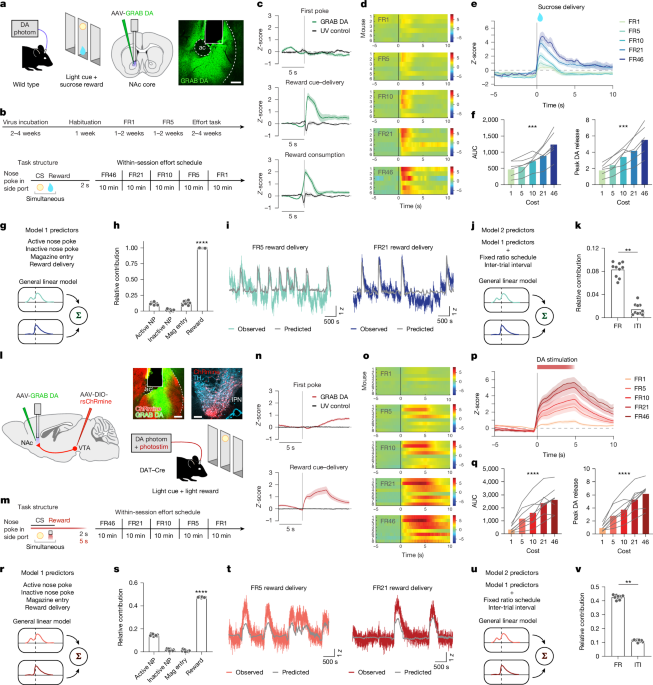
Dopamine takes a hit: how neuroscience is rethinking the 'feel-good' chemical

Dopamine is one of the most extensively studied neurotransmitters, chemicals that convey signals from cell to cell. It's the one with the highest profile outside neuroscience: often known as the 'pleasure chemical', it's depicted as the hit of reward that people get from recreational drugs or scrolling through social media. That's a gross simplification of what dopamine does; on that, researchers agree.
Medicine
Psychology
fromMail Online
4 days ago

Scientists reveal scary dreams might actually be GOOD for you

Experiencing fear in dreams may indicate better emotional regulation skills, despite being linked to worse mood the following day.
fromMail Online
1 month ago

Incredible map reveals how the brain processes different emotions

They created an artificial 'mental map', with pleasantness along one axis and bodily reactions along the other, and charted how the brain responded while watching clips from films. The results revealed clear groupings in the way that our brains represent emotion - with guilt, anger and disgust in one corner and happiness, satisfaction and pride in the other.
Science
Psychology
fromSilicon Canals
4 days ago

Psychology says the quietest person in a group conversation often isn't the least engaged - they're often the one processing at a depth the loudest voices in the room have stopped bothering to reach - Silicon Canals

Silence in group settings often indicates deep cognitive processing rather than disengagement.
Medicine
fromenglish.elpais.com
1 month ago

Why some people get hooked and others don't: genetics, childhood and brain circuits explain addiction

Addiction is a mental disorder requiring professional treatment, not a matter of willpower or personal choice, yet society continues to stigmatize it as a moral failing.
Psychology
fromPsychology Today
5 days ago

The Brain Does Not Develop in Isolation

Relational and intersubjective models of mind challenge traditional individualistic views in psychiatry and psychology, emphasizing social context in understanding psychological distress.
Psychology
fromSilicon Canals
6 days ago

Psychology says people who replay conversations in their head didn't develop that habit by accident - most of them learned early that saying the wrong thing had real consequences, and now their brain replays every exchange searching for mistakes and misfires like a security system that was installed in childhood and has never once been turned off - Silicon Canals

Replaying conversations stems from early experiences where words had significant consequences, leading to a defense mechanism of constant analysis.
Psychology
fromSilicon Canals
6 days ago

Psychology says people who make others light up when they first meet them have usually known what it feels like to be overlooked - and instead of becoming bitter about it, they made a quiet decision at some point in their life that no one in their presence would ever feel that invisible again, and that choice is one of the most powerful things a human being can do with their own pain - Silicon Canals

Warm individuals often transform their experiences of invisibility into empathy, making others feel valued and seen.
Food & drink
fromPsychology Today
1 month ago

The Dopamine Aisle of the Supermarket

67% of Americans use snacks and treats for mood improvement, spending $526 annually, while 49% purchase takeout for comfort at $598 yearly, driven by dopamine's role in the brain's reward system.
Psychology
fromPsychology Today
6 days ago

The Willpower Myth Has a Very Long History

Obesity is primarily driven by biological factors, not willpower, revealing a cultural misunderstanding of its causes.
Philosophy
fromBig Think
2 months ago

The brain-deep emotion that matters more than happiness

Joy differs from happiness: it coexists with pain, is not dependent on circumstances, and sustains people when happiness cannot.
Psychology
fromSilicon Canals
6 days ago

There's a specific kind of person who can give the most precise, compassionate advice to everyone around them and then make the worst possible decisions for their own life. The clarity isn't selective. It's that they can only see patterns when they're not standing inside them. - Silicon Canals

People excel at identifying cognitive biases in others but struggle to recognize them in themselves, leading to a phenomenon called the bias blind spot.
fromFuturism
2 months ago

Scientists Say Go Ahead, Keep Gooning

Adult content has never been as accessible as it is now, thanks to the internet. Hell, online smut played a major role in the rise of the web itself in the 1990s. With that glut of porn, some have voiced concerns that some people are consuming too much of the stuff or even becoming addicted, which they claim could have consequences like regulating emotions or impaired sexual functioning.
Public health
Psychology
fromSilicon Canals
1 week ago

Neuroscience reveals that the calmest person in any crisis isn't naturally fearless - their brain learned to delay panic because their childhood required them to be functional before they were allowed to be afraid - Silicon Canals

Calmness under pressure is a learned response, not merely a personality trait or temperament.
Psychology
fromPsychology Today
1 week ago

Craving Drives Bad Decisions, Relapse, and Drug Use

Craving is a core process that drives behavior and relapse in addiction, reshaping decision-making and brain systems.
Mental health
fromPsychology Today
1 month ago

When Even a Neuroscientist Feels Overwhelmed

Modern crises create a 'Traumademic' where overlapping global and personal stressors trigger emotional hijacking, causing the ancient feeling brain to override rational thinking through constantly activated alarm systems.
Relationships
fromPsychology Today
2 months ago

Can You Be Addicted to Love?

Relational patterns labeled "love addiction" reflect attachment-related needs, not a recognized psychiatric addiction, and require understanding and soothing of deep-seated needs.
fromNature
2 weeks ago

Dopaminergic mechanisms of dynamical social specialization - Nature

Social foraging strategies illustrate the balance between competition and cooperation, where individuals either produce resources or exploit the efforts of others, navigating ecological and social constraints.
Psychology
Science
fromwww.nature.com
1 month ago

Author Correction: Natural behaviour is learned through dopamine-mediated reinforcement

A .dat-to-.wav conversion error clamped audio values to 1 for 15.9% of data; analyses and figures were updated; results and conclusions remain unchanged.
Mental health
fromPsychology Today
2 months ago

Addiction: A Disease Both Like and Unlike Many Others

Addiction is a disease with genetic and environmental causes, but its unique social harms demand humanizing, candid disclosure rather than minimizing comparisons.
Medicine
fromPsychology Today
1 month ago

Just Five Days of Junk Food Can Rewire the Brain

Brief exposure to high-calorie junk food alters brain insulin response in ways that persist after returning to normal eating, suggesting the brain adapts to unhealthy diets faster than previously understood.
Psychology
fromPsychology Today
3 weeks ago

How to Think About the Brain

The brain operates through localization, with specific areas dedicated to distinct tasks, despite outdated and simplistic representations of its function.
Mindfulness
fromPsychology Today
2 months ago

From Neurons to Networks

AI evolved into a psychological mirror that externalizes attention and imagination, challenging emotion, meaning, relational depth, and requiring mindfulness to preserve human agency.
Psychology
fromPsychology Today
1 month ago

Why We Still Want the Snack

Brain reward responses to food cues persist even after eating to fullness, potentially driving overeating independent of actual hunger signals.
Psychology
fromSilicon Canals
1 month ago

Neuroscience reveals that people who feel trapped in repetitive daily routines aren't lazy or unmotivated. Their dopamine system has downregulated to match the predictability, which means the routine didn't kill their motivation - it quietly rewired their brain to stop expecting anything worth anticipating. - Silicon Canals

Overly predictable routines suppress dopamine and motivation by eliminating the uncertainty that drives anticipation, causing emotional numbness despite external life satisfaction.
Psychology
fromPsychology Today
1 month ago

Can Brain Stimulation Make Us More Altruistic?

Synchronizing brain activity between frontal and parietal regions through electrical stimulation increases altruistic choices, particularly when personal costs are high.
Psychology
fromPsychology Today
1 month ago

How the Brain Chooses What Matters

Selective sensory prioritization can improve clarity by letting one modality dominate when multisensory integration would create competition or reduce precision.
fromSilicon Canals
1 month ago

What neuroscience reveals about people who replay conversations in their head for hours after they happen - Silicon Canals

Neuroscientists have a name for the brain network that fires up when you're not focused on an external task: the default mode network, or DMN. It's the constellation of regions - the medial prefrontal cortex, posterior cingulate cortex, and angular gyrus among them - that hums to life when you daydream, reflect on yourself, or think about other people's mental states.
Psychology
Psychology
fromSilicon Canals
1 month ago

What neuroscience reveals about people who need to be alone after socializing - Silicon Canals

Introversion involves lower dopamine reactivity to social stimuli and higher acetylcholine activation during solitude, not a draining social battery that recharges.
Psychology
fromSilicon Canals
1 month ago

What neuroscience reveals about people who cry easily and why it signals a nervous system that processes the world more deeply, not more weakly - Silicon Canals

Frequent crying reflects heightened sensory processing sensitivity and deeper cognitive processing, not emotional fragility or malfunction.
[ Load more ]