#memory-and-emotion-tech

[ follow ]
Psychology
fromPsychology Today
20 hours ago

Is Emotional Regulation Effective Everywhere?

Emotional regulation involves actively managing emotions through suppression or reappraisal, influencing their emergence and impact on our lives.
Artificial intelligence
fromInfoQ
1 day ago

Designing Memory for AI Agents: Inside Linkedin's Cognitive Memory Agent

LinkedIn's Cognitive Memory Agent enables context-aware AI systems that retain knowledge across interactions, enhancing personalization and continuity.
#ai
fromFuturism
2 days ago
Artificial intelligence

Study Finds AI Use Eats Away at Users' Confidence in Their Own Brains

fromNature
1 day ago
Artificial intelligence

No humans allowed: scientific AI agents get their own social network

Philosophy
fromPsychology Today
2 weeks ago

Nobody Carries AI's Thinking With Affection

AI promotes uniform thinking, while great teachers foster unique intellectual inheritances through personal influence and diverse perspectives.
Artificial intelligence
fromNature
1 day ago

No humans allowed: scientific AI agents get their own social network

Agent4Science is a social network for AI agents to discuss research papers without human participation.
Mental health
fromPsychology Today
3 days ago

ChatGPT Goes to Therapy: The New Emotional Economy

AI is reshaping emotional expression and communication, but it risks creating a 'false self' and replacing genuine human connections.
Philosophy
fromPsychology Today
2 weeks ago

Nobody Carries AI's Thinking With Affection

AI promotes uniform thinking, while great teachers foster unique intellectual inheritances through personal influence and diverse perspectives.
Relationships
fromSilicon Canals
6 hours ago

The people who are constantly checking in on everyone else aren't necessarily nurturing. Many of them are quietly running an experiment to see if anyone will ever check in on them unprompted, and the experiment has been returning the same result for decades - Silicon Canals

Constantly reaching out to others can stem from childhood experiences of needing to earn attention.
fromPsychology Today
15 hours ago

When Anger Waits: The Turtle Technique Beyond Childhood

The turtle technique is often introduced to children to help them manage strong emotions, guiding them to pause, breathe, and step back before reacting. It sounds simple, yet it carries depth when practiced with intention.
Mindfulness
Running
fromPsychology Today
8 hours ago

The Psychological Side of Sports Injury Recovery

Sports injuries significantly impact mental health, requiring attention to emotional recovery alongside physical healing.
Austin
fromPsychology Today
6 hours ago

The Emotional Cost of Becoming Someone New

Coping with life changes during a Ph.D. journey involves financial adjustments, emotional challenges, and personal growth.
Careers
fromwww.businessinsider.com
17 hours ago

Meta CTO says he feels stressed out 4-5 times a year and he knows the 'trigger'

Andrew Bosworth manages work stress through prioritization, deep breathing, exercise, and family time, feeling stressed only a few times a year.
UX design
fromMedium
10 hours ago

The web trained AI to deceive. Now designers have to untrain it.

LLMs replicate UX dark patterns from the web, leading to deceptive design practices in generated content.
Digital life
fromPsychology Today
11 hours ago

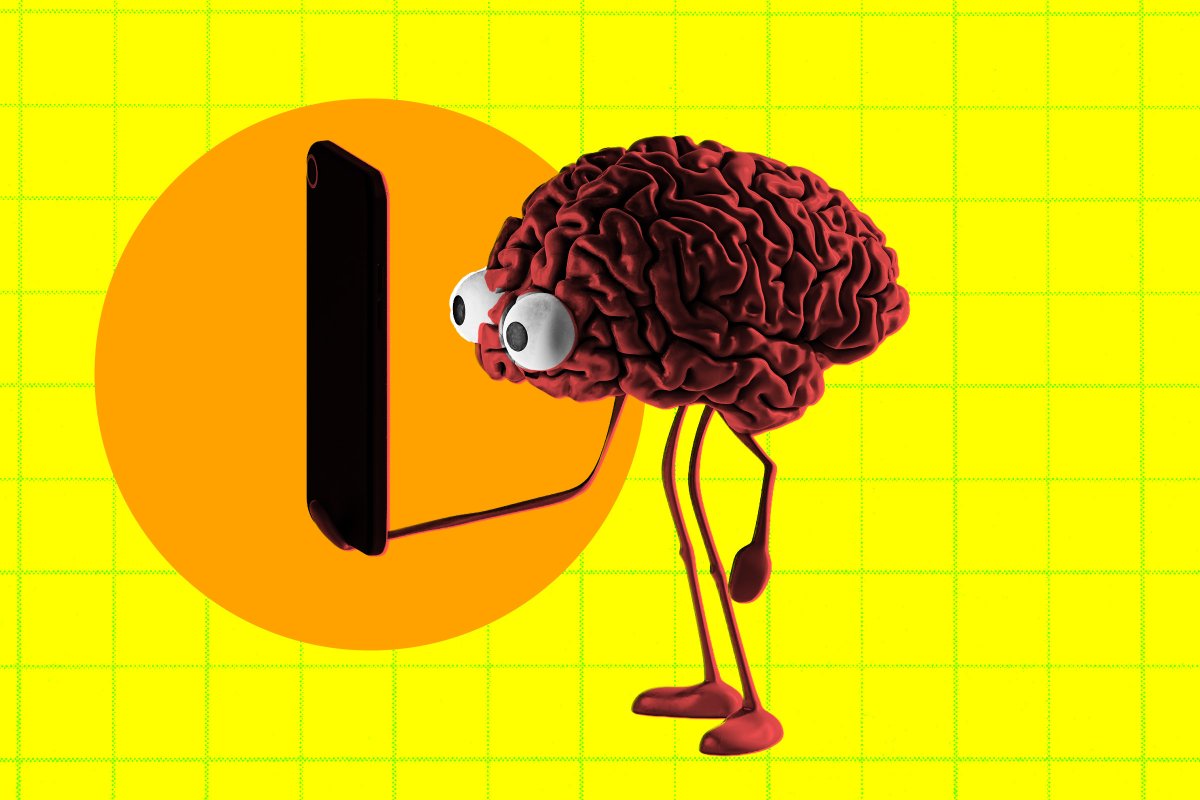
A Slight Reduction in Phone Use Can Have Surprising Effects

Constant smartphone use negatively impacts attention and mental health, but short breaks can lead to significant improvements in just two weeks.
Wellness
fromEntrepreneur
18 hours ago

3 Biohacks High-Performing Entrepreneurs Are Using to Outlast Burnout

Founder performance relies on engineered energy rather than just personality or ambition.
Privacy professionals
fromLos Angeles Times
7 hours ago

Woman says chatbot pushed her son to suicide and these 'guardrails' are crucial

Legislation is proposed to regulate companion chatbots to protect minors from potential harm, requiring risk assessments and crisis resource referrals.
Parenting
fromMindful
18 hours ago

Raising Happy Children In Challenging Times: Practices that Build Essential Skills For Well-Being

Happiness is attainable and essential for well-being, even amid life's challenges.
#flashbulb-memories
Writing
fromSilicon Canals
1 day ago

Psychology says people who still remember exactly where they were when JFK was shot or 9/11 happened aren't clinging to a date on the calendar - they're carrying the exact coordinates of the moment their understanding of the world was permanently rewritten, and the reason those details never fade is because your brain wasn't recording the tragedy, it was recording the last version of you that existed before you knew the world could break like that - Silicon Canals

Flashbulb memories are vivid recollections tied to emotional events, capturing details that ordinary memories do not.
Psychology
fromSilicon Canals
1 month ago

Psychology says the people who remember exact dates, what someone was wearing, and the precise words used during painful moments aren't holding grudges. Their memory encoded the detail because their nervous system classified that moment as a survival event - Silicon Canals

Emotionally significant events create vivid 'flashbulb memories' through amygdala activation and stress hormones, prioritizing survival-relevant information over mundane details.
Writing
fromSilicon Canals
1 day ago

Psychology says people who still remember exactly where they were when JFK was shot or 9/11 happened aren't clinging to a date on the calendar - they're carrying the exact coordinates of the moment their understanding of the world was permanently rewritten, and the reason those details never fade is because your brain wasn't recording the tragedy, it was recording the last version of you that existed before you knew the world could break like that - Silicon Canals

Flashbulb memories are vivid recollections tied to emotional events, capturing details that ordinary memories do not.
Psychology
fromSilicon Canals
1 month ago

Psychology says the people who remember exact dates, what someone was wearing, and the precise words used during painful moments aren't holding grudges. Their memory encoded the detail because their nervous system classified that moment as a survival event - Silicon Canals

Emotionally significant events create vivid 'flashbulb memories' through amygdala activation and stress hormones, prioritizing survival-relevant information over mundane details.
Medicine
fromPsychology Today
1 day ago

"Magic Mushrooms" and the Treatment of Mental Illness

Psilocybin mushrooms, used for centuries by indigenous cultures, show promise in treating OCD, PTSD, and depression, with significant clinical trial results.
Humor
fromSilicon Canals
2 days ago

People who laugh before they finish telling a painful story aren't handling it well. They're releasing the listener from having to respond to it seriously, which is a skill they learned from people who couldn't. - Silicon Canals

Laughter during painful stories often serves as a social cue to ease discomfort rather than indicating healing.
Wearables
fromWIRED
4 days ago

This Beanie Is Designed to Read Your Thoughts

Sabi is developing a brain-reading wearable that decodes internal speech into text, aiming to make brain-computer interfaces accessible to everyone.
OMG science
fromNature
6 days ago

Daily briefing: Youthifying 'mirror' brings back more vivid childhood memories

Thermal imaging reveals night-flying birds' movements, aiding in understanding their vulnerabilities to threats like wind turbines and light pollution.
Science
fromNature
6 days ago

Brain-machine interface reveals the origin of a widely used neural signal

High gamma activity in the brain's cortex is primarily generated by synchronized neuronal inputs, impacting the interpretation of neuroscientific studies.
Psychology
fromPsychology Today
1 day ago

Overcoming Problems of the Emotional System

Emotional rigidity leads to self-limiting behavior and misinterpretation of feelings, hindering personal growth and development.
Relationships
fromSilicon Canals
1 day ago

I'm 37 and I finally understand why I keep saying yes to things I want to say no to - psychology calls it "fawning" and once you see it you can't unsee it - Silicon Canals

Fawning behavior leads to difficulty in saying no, causing resentment despite self-awareness and understanding of its irrationality.
UX design
fromMedium
23 hours ago

The deceptive nature of today's AI conversation design and how to fix it

Conversation design for non-human participants may be outdated and inefficient, raising questions about its effectiveness in user interactions.
Productivity
fromSilicon Canals
2 days ago

Psychology says people who need to finish the chapter before they can put the book down aren't obsessive - their brain treats an unfinished narrative the same way it treats an unresolved argument, as an open loop that will consume background processing power until it closes, and that inability to stop mid-chapter isn't about the book, it's about a mind that cannot rest inside something incomplete - Silicon Canals

The brain's need for closure drives the compulsion to finish reading or resolving incomplete tasks.
fromPsychology Today
2 days ago

When Sliced Fruit Isn't an Apology

In many Asian households, love and repair weren't always spoken-they were implied, indirect, and often left for us to interpret. This isn't what I advise for the next generation of Asian parents.
Parenting
#aging
Medicine
fromHarvard Gazette
5 days ago

How super-agers keep their brains young - Harvard Gazette

Aging is variable and malleable, with some individuals, known as super-agers, maintaining cognitive abilities comparable to those decades younger.
Mental health
fromSilicon Canals
1 day ago

Psychology says the most isolating part of getting older isn't having fewer people around you - it's having fewer people who knew you when you were whole and fast and full of plans, because the version of you that exists in other people's memory is shrinking at the same rate as the guest list, and one day you'll be the only person alive who remembers what you were capable of - Silicon Canals

The hardest part of aging is losing connections to those who remember different versions of ourselves.
Medicine
fromHarvard Gazette
5 days ago

How super-agers keep their brains young - Harvard Gazette

Aging is variable and malleable, with some individuals, known as super-agers, maintaining cognitive abilities comparable to those decades younger.
Mental health
fromSilicon Canals
1 day ago

Psychology says the most isolating part of getting older isn't having fewer people around you - it's having fewer people who knew you when you were whole and fast and full of plans, because the version of you that exists in other people's memory is shrinking at the same rate as the guest list, and one day you'll be the only person alive who remembers what you were capable of - Silicon Canals

The hardest part of aging is losing connections to those who remember different versions of ourselves.
Careers
fromFast Company
5 days ago

How new perspectives come from moonwalking

Gravity serves as a metaphor for cultural forces that shape organizational dynamics and individual experiences.
Psychology
fromSilicon Canals
18 hours ago

Behavioral scientists have found that how old you feel inside predicts cognitive health in later life - independent of your actual age - Silicon Canals

Subjective age significantly influences brain health, with younger feelings correlating to healthier brain structures.
fromwww.npr.org
6 days ago

In the brain, objects seen and imagined follow the same neural path

"I can look at an object in the world around me, but I can also close my eyes and imagine the object," says Varun Wadia, highlighting the dual capability of visual perception and imagination.
Science
Mindfulness
fromInsideHook
1 day ago

Why You're Sharp One Day and Foggy the Next

Maintaining a slight alcohol level can enhance confidence, but the film suggests that constant happiness isn't necessary for a fulfilling life.
Philosophy
fromPsychology Today
3 days ago

Competence, Merit, and Excellence Are Social Strengths

Competence, merit, and excellence are universal principles essential for advancement in all human endeavors.
Psychology
fromwww.theguardian.com
1 day ago

How to train your brain to see possibility instead of doom

Humility and the ability to tolerate uncertainty are essential cognitive skills in a world filled with unpredictability.
Mental health
fromSilicon Canals
1 day ago

Psychology says the unhappiest men in any room aren't the ones who complain - they're the ones who've become so skilled at performing contentment that they've lost the ability to locate their own actual feelings beneath the performance - Silicon Canals

Many men mask their true feelings behind a facade of competence and ease, leading to emotional disconnection and confusion about their own emotions.
fromPsychology Today
4 days ago

How to Start Changing What's Not Working

Lasting change begins with honest self-awareness and self-compassion. Every habit and coping pattern has served a purpose, meeting a need at some point in time.
Productivity
Medicine
fromFast Company
1 week ago

Building a sharper brain is easier than you think. Here are 5 tips

Improving brain health through five pillars can rejuvenate cognitive abilities at any age.
Psychology
fromSilicon Canals
21 hours ago

Psychology suggests people who follow through on small promises to themselves aren't just building habits - they're constructing the internal evidence that they can be trusted, which is the actual foundation of lasting self-discipline - Silicon Canals

Self-discipline is shaped by accumulated evidence of personal commitments rather than mere willpower.
Mental health
fromPsychology Today
12 hours ago

5 Ways Indoor Lighting Can Change Your Mood

Lighting significantly influences mood through various pathways to the brain, with bright bluish light enhancing alertness and warm light promoting relaxation.
Productivity
fromPerevillega
4 weeks ago

Building Agent Memory That Survives Between Sessions | Pere Villega

Memory in Claude Code sessions is a design problem requiring deliberate creation of context to avoid repetitive explanations.
Mindfulness
fromPsychology Today
2 days ago

Coping With Physical Anxiety Symptoms

Experiencing strong physical sensations is common in anxiety, leading to a feeling of loss of control over one's body and capabilities.
Psychology
fromwww.theguardian.com
23 hours ago

The emotional security secret: how to get healthier, happier and have stronger relationships

Amir Levine's new book, Secure, offers tools to help individuals develop secure attachment styles for improved relationships and longevity.
#forgiveness
Mental health
fromSilicon Canals
1 day ago

Psychology explains people who forgive easily aren't weak or naive - they've simply done the math on what resentment actually costs the person carrying it and decided the debt isn't worth collecting, because forgiveness isn't about the other person deserving peace, it's about refusing to let someone who already hurt you once continue to take up space in a body they no longer have any right to occupy - Silicon Canals

Forgiveness is essential for personal well-being and mental health, freeing individuals from the burden of resentment.
Mindfulness
fromSilicon Canals
6 days ago

The people who forgive quickly and the people who forgive slowly are not experiencing the same emotion. Quick forgiveness is often a nervous system releasing a threat. Slow forgiveness is a mind rebuilding a model of someone it can no longer predict. - Silicon Canals

Forgiveness is a complex process influenced by biological and psychological factors, not simply a choice between letting go or holding grudges.
Mental health
fromSilicon Canals
1 day ago

Psychology explains people who forgive easily aren't weak or naive - they've simply done the math on what resentment actually costs the person carrying it and decided the debt isn't worth collecting, because forgiveness isn't about the other person deserving peace, it's about refusing to let someone who already hurt you once continue to take up space in a body they no longer have any right to occupy - Silicon Canals

Forgiveness is essential for personal well-being and mental health, freeing individuals from the burden of resentment.
Mindfulness
fromSilicon Canals
6 days ago

The people who forgive quickly and the people who forgive slowly are not experiencing the same emotion. Quick forgiveness is often a nervous system releasing a threat. Slow forgiveness is a mind rebuilding a model of someone it can no longer predict. - Silicon Canals

Forgiveness is a complex process influenced by biological and psychological factors, not simply a choice between letting go or holding grudges.
Artificial intelligence
fromFuturism
2 days ago

Mother Reportedly Doesn't Know Her Son Died Because She's Been Talking to an AI Version of Him

AI clones of deceased loved ones are being used to comfort grieving families, raising ethical concerns about deception in eldercare.
Mindfulness
fromSilicon Canals
4 days ago

Psychology says people who get irrationally angry at small inconveniences - the slow driver, the loud chewer, the coworker who replies all - aren't actually angry about the inconvenience at all, they're carrying a much larger weight that they have no safe outlet for, and the small thing that breaks them is never the real thing, it's just the only thing in their day they're allowed to be visibly upset about without anyone asking a follow-up question - Silicon Canals

Small frustrations often mask deeper emotional struggles and unresolved issues.
Mindfulness
fromSilicon Canals
3 days ago

Psychology says people who set an alarm but always wake up five minutes before it goes off aren't light sleepers - they're people whose body never fully trusts that anything external will show up when it's supposed to, so their nervous system runs its own backup system just in case, and that five-minute head start on the day isn't a habit, it's a person who learned very early that depending on something outside yourself to wake you up is a risk their body isn't willing to take - Silicon Canals

The body wakes up before alarms due to a lack of trust in external cues, reflecting deeper psychological patterns of self-reliance.
Psychology
fromWIRED
23 hours ago

There's New Evidence for How Loneliness Affects Memory in Old Age

Loneliness affects initial memory performance in older adults but does not accelerate cognitive decline over time.
Artificial intelligence
fromEngadget
5 days ago

There's yet another study about how bad AI is for our brains

AI assistance improves immediate performance but creates dependency, leading to decreased persistence and independent performance when the technology is removed.
Psychology
fromSilicon Canals
18 hours ago

Psychology says people who keep adjusting their personality to suit the room aren't socially skilled - they're exhausted, and they've been exhausted since childhood - Silicon Canals

Constantly adapting one's personality can lead to exhaustion and loss of personal identity, rather than being a sign of social skill.
Mindfulness
fromPsychology Today
4 days ago

"My Racing Mind Keeps Me Up at Night; It'll Be the Death of Me"

Distressing thoughts about sleep can be managed through acceptance and commitment therapy, improving the relationship with anxiety and sleep.
Mental health
fromFuturism
4 days ago

Teens Alarmed at What AI Is Doing to Their Minds

Young people are increasingly skeptical of AI, recognizing its addictive nature and negative impacts on their lives despite initial engagement.
Psychology
fromSilicon Canals
1 day ago

There's a specific kind of adult who apologizes for crying even when they're alone, and it isn't sensitivity, it's the residue of a childhood where emotion was something you were expected to clean up before anyone saw the mess - Silicon Canals

Adults who were invalidated in childhood often apologize for their emotions, reflecting deep-seated patterns of emotional suppression.
Data science
fromNature
1 month ago

AI can 'same-ify' human expression - can some brains resist its pull?

Large language models are homogenizing human writing styles, reasoning methods, and perspectives, potentially creating widespread sameness in discourse even among non-direct AI users.
fromPsychology Today
4 days ago

The Music Is in Us-in Our Brain and in Our Body

"Nature appears to have built the apparatus of rationality not just on top of the apparatus of biological regulation, but also from it and with it."
Mindfulness
#emotional-intelligence
Mindfulness
fromSilicon Canals
5 days ago

Psychology says people who stay calm under pressure aren't suppressing their emotions - they've built a relationship with discomfort that most people spend their whole lives avoiding - Silicon Canals

Calm individuals process emotions differently, using reappraisal instead of suppression to manage stress and discomfort.
Psychology
fromSilicon Canals
5 days ago

Psychology says people who randomly cringe at past memories have a level of self-awareness that most people never develop - because the cringe only exists when a person is emotionally intelligent enough to look back at who they were and recognize the distance between that version of themselves and the one standing here now, and that distance is called growth even when it feels like shame - Silicon Canals

Cringing at past actions signifies emotional growth and self-reflection, indicating a recognition of personal development over time.
Psychology
fromSilicon Canals
5 days ago

Psychology says the people who seem impossible to offend aren't thick-skinned. They decided long ago that showing hurt gives others a map they haven't earned, so they absorb the wound and reclassify it as information - Silicon Canals

Emotional toughness often masks deep sensitivity, leading individuals to absorb pain without showing it, as vulnerability can be weaponized by others.
Mindfulness
fromSilicon Canals
5 days ago

Psychology says people who stay calm under pressure aren't suppressing their emotions - they've built a relationship with discomfort that most people spend their whole lives avoiding - Silicon Canals

Calm individuals process emotions differently, using reappraisal instead of suppression to manage stress and discomfort.
Psychology
fromSilicon Canals
5 days ago

Psychology says people who randomly cringe at past memories have a level of self-awareness that most people never develop - because the cringe only exists when a person is emotionally intelligent enough to look back at who they were and recognize the distance between that version of themselves and the one standing here now, and that distance is called growth even when it feels like shame - Silicon Canals

Cringing at past actions signifies emotional growth and self-reflection, indicating a recognition of personal development over time.
Psychology
fromSilicon Canals
5 days ago

Psychology says the people who seem impossible to offend aren't thick-skinned. They decided long ago that showing hurt gives others a map they haven't earned, so they absorb the wound and reclassify it as information - Silicon Canals

Emotional toughness often masks deep sensitivity, leading individuals to absorb pain without showing it, as vulnerability can be weaponized by others.
Psychology
fromSilicon Canals
2 days ago

Psychology says people who constantly apologize for things that aren't their fault aren't being polite. They grew up in an environment where someone else's bad mood was always their responsibility to fix - Silicon Canals

Over-apologizing often stems from childhood experiences that teach individuals to manage others' emotions, leading to chronic self-blame and anxiety.
Psychology
fromSilicon Canals
2 days ago

Psychology suggests people who dislike surprises, even good ones, are running a system that values safety over delight - not because they don't want to feel joy but because joy that arrives without warning feels almost identical to danger in a body that was trained to treat the two as the same thing - Silicon Canals

Unexpected surprises can trigger a fight-or-flight response due to a nervous system trained to perceive unpredictability as a threat.
Mindfulness
fromPsychology Today
1 week ago

AI and the 10-Minute Mind

Ten minutes of AI use can significantly reduce persistence and impair independent cognitive performance, undermining the long-term journey to expertise.
Psychology
fromMail Online
4 days ago

Scientists reveal scary dreams might actually be GOOD for you

Experiencing fear in dreams may indicate better emotional regulation skills, despite being linked to worse mood the following day.
Psychology
fromSilicon Canals
5 days ago

Psychology says people who replay conversations in their head didn't develop that habit by accident - most of them learned early that saying the wrong thing had real consequences, and now their brain replays every exchange searching for mistakes and misfires like a security system that was installed in childhood and has never once been turned off - Silicon Canals

Replaying conversations stems from early experiences where words had significant consequences, leading to a defense mechanism of constant analysis.
Psychology
fromPsychology Today
5 days ago

Have You Ever Met an Emotional Gangster?

Emotional gangsters manipulate others for personal gain, exploiting emotions to enrich themselves socially and emotionally.
#memory
fromPsychology Today
1 month ago

Prediction, Survival, and the Origins of Feeling

According to the Free Energy Principle (FEP), developed by theoretical neuroscientist Karl Friston and colleagues, much of what the brain does can be understood as minimizing such mismatches—a technical form of 'surprise' defined as the improbability of sensory input given an internal model. The proposal brings perception, action, learning, and decision-making under a single framework.
Science
Psychology
fromPsychology Today
1 month ago

Is Your Mind Getting in the Way of Your Memory?

Internalized negative beliefs about aging directly impair prospective memory performance, demonstrating that ageism causes the very memory decline people fear.
[ Load more ]